
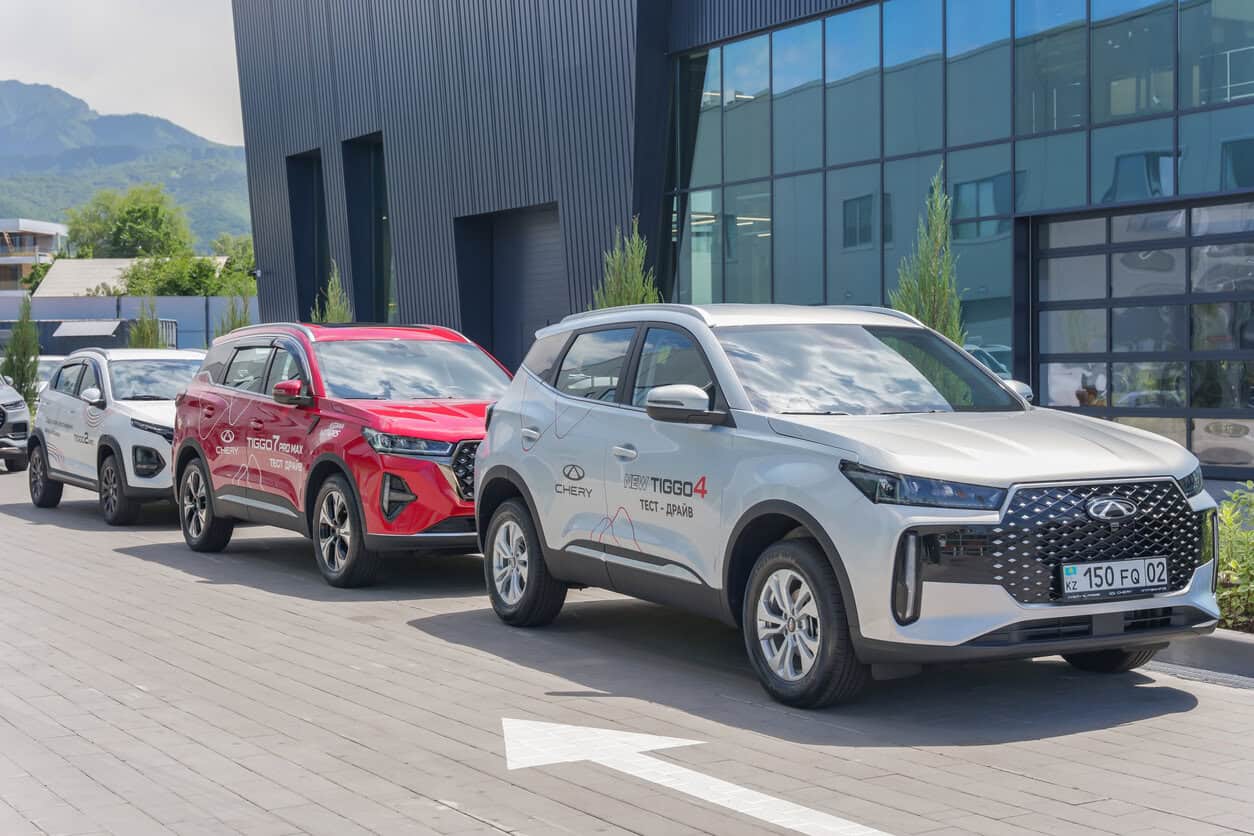
More than 23 000 Chery and Omoda vehicles are being recalled, but concerns extend beyond the latest safety notices. Chinese brands now account for more than 19% of new vehicle sales in South Africa. When consumer journalist Wendy Knowler checked in October, only one Chinese-owned brand appeared in this year’s recall notices from the National Consumer Commission (NCC). Even that fault, a driver’s seat problem on the MG3, only came to light in European New Car Assessment Programme (NCAP) crash testing. On Tuesday, that changed. The NCC announced the recall of more than 23 000 Chery and Omoda vehicles for a rear-axle welding fault on the Tiggo 4 and Omoda C5, and a brake pipe that can wear against the turbocharger on the Tiggo 8 Pro Max. It would be easy to read the new recall as the system working. The dates say otherwise. A recall is not a scandal. Knowler calls it “the sign of consumer protection working as it should”. SA’s recall rate is normal, too. Knowler told The Money Show that NCC announced 57 vehicle recalls last year, while Australia recalled 135 models in a new car market double the size of ours. So, when brands with almost a fifth of the market barely appeared on the list until Tuesday, the right response was to ask questions. Are these cars built better, or are we simply not being told of the issues? Knowler put the question to the NCC. It confirmed Chery, the biggest Chinese brand in SA, has effectively been running what it calls silent recalls. A brake campaign affected 3 474 of the roughly 9 500 Tiggo 8 Pro Max vehicles sold here, more than a third. When Chery responded to Knowler last month, it said it had repaired 1 294. That left 2 180 on SA roads at the time with a brake pipe that could come off its clip and end up too close to the turbo’s exhaust housing. On 25 June, Chery told its dealers to treat the campaign as a priority, contact affected customers and check unsold stock. The public was not told until the NCC’s notice on 10 November, 138 days later. Chery’s website has a VIN checker, but you have to know about it to find it. The group says it informed NCC on 1 July and heard nothing back. NCC says the e-mail asked for a recall form and guidance, went to the wrong place and doesn’t count as notification. In fact, Chery had reported a recall correctly in May 2024. NCC has now said publicly that it is investigating Chery over allegations of earlier recalls that were not reported to it. The Consumer Protection Act puts the duty to notify on the supplier. A recall that reaches dealers, but not owners, doesn’t protect anyone who doesn’t know to check. This is not about where a car is built. A rival, BYD, known as China’s electric car giant, told Knowler when one of its models was recalled in another market, it checked the cars sold in SA and told the NCC what it found. The Automobile Association (AA) has run into the same issue. Jetour, part of the Chery Group, raised the payload rating of its T1 and T2 from 300kg to 475kg, a 58% increase, with no mechanical upgrades. The National Regulator for Compulsory Specifications (NRCS) approved it based on global lab reports supplied. The AA questioned it and NRCS ran independent weighbridge tests with us present. The T2 Xplora fell 20kg short. The T1’s new rating was still awaiting approval, although Jetour had announced it as approved. Owners’ licence discs still carry the old figure, which is the number a traffic officer reads. Both stories share the same red flags. Information travels from the manufacturer to a dealer or a regulator and stops before it reaches the person actually driving the car. Malaysia suspended approval within 10 days of the axle failure. In Malaysia, on 6 October, an Omoda 5’s rear axle detached in Johor Bahru. Malaysia’s Road Transport Department did not wait. It temporarily suspended type approval for the pre-facelift petrol Omoda 5, stopping new registrations while it investigated. Chery’s campaign there covers 8 878 vehicles. It is not the first time. In 2024, after an earlier axle failure, Chery inspected 600 Malaysian vehicles and blamed a supplier for failing to recalibrate its welding equipment. Chery says it is screening other export markets that share components from the affected batches. On Tuesday, SA owners heard part of the answer from the NCC. The Omoda C5 sold here, the same model Malaysia sells as the Omoda 5, may have faulty rear axle welding that could let the axle dislodge. That was 35 days after the Johor Bahru failure. Chery has not said whether SA’s cars come from the batches identified abroad. The AA has spent this year asking manufacturers and regulators to put what they know in front of the motorist. In February, when Global NCAP gave the Tiggo 7 Pro two stars for adult protection, we asked for the gaps to be fixed. Last month, we asked Chery to submit its internal truck crash test to Global NCAP. The Jetour weighbridge test showed asking can change what a regulator does. The proposals that follow come from that work: Carmakers: if you recall a car anywhere for a fault that could affect cars sold in SA, tell the NCC and SA owners straight away. Do this in writing. NCC: finish the Chery investigation and publish the outcome, including the date Chery first notified the commission of each campaign now on its list; NRCS: make local testing standard for every new entrant. The Jetour weighbridge proved it can be done; When a car’s approval is suspended abroad for a safety fault, find out if the cars sold in SA are affected; and Buyers: if you drive a Tiggo 4, Omoda C5 or Tiggo 8 Pro Max, ask a Chery dealer whether your car is part of the recall, the repair is free. If you see a recall abroad, check your VIN on the brand’s South African website. Silence is not a safety rating. Chinese brands have given SA real choice and buyers should be free to buy them. But the rules must be in place before the cars arrive, not after. The question for every brand selling here is simple: when you know, who do you tell first?
Chinese car recall debacle pops the Chery
Full Article
Original Source
Read the full article at Citizen →KhanList aggregates and links to publicly available news content. We do not host full articles from third-party sources. Always verify important information with original sources.