
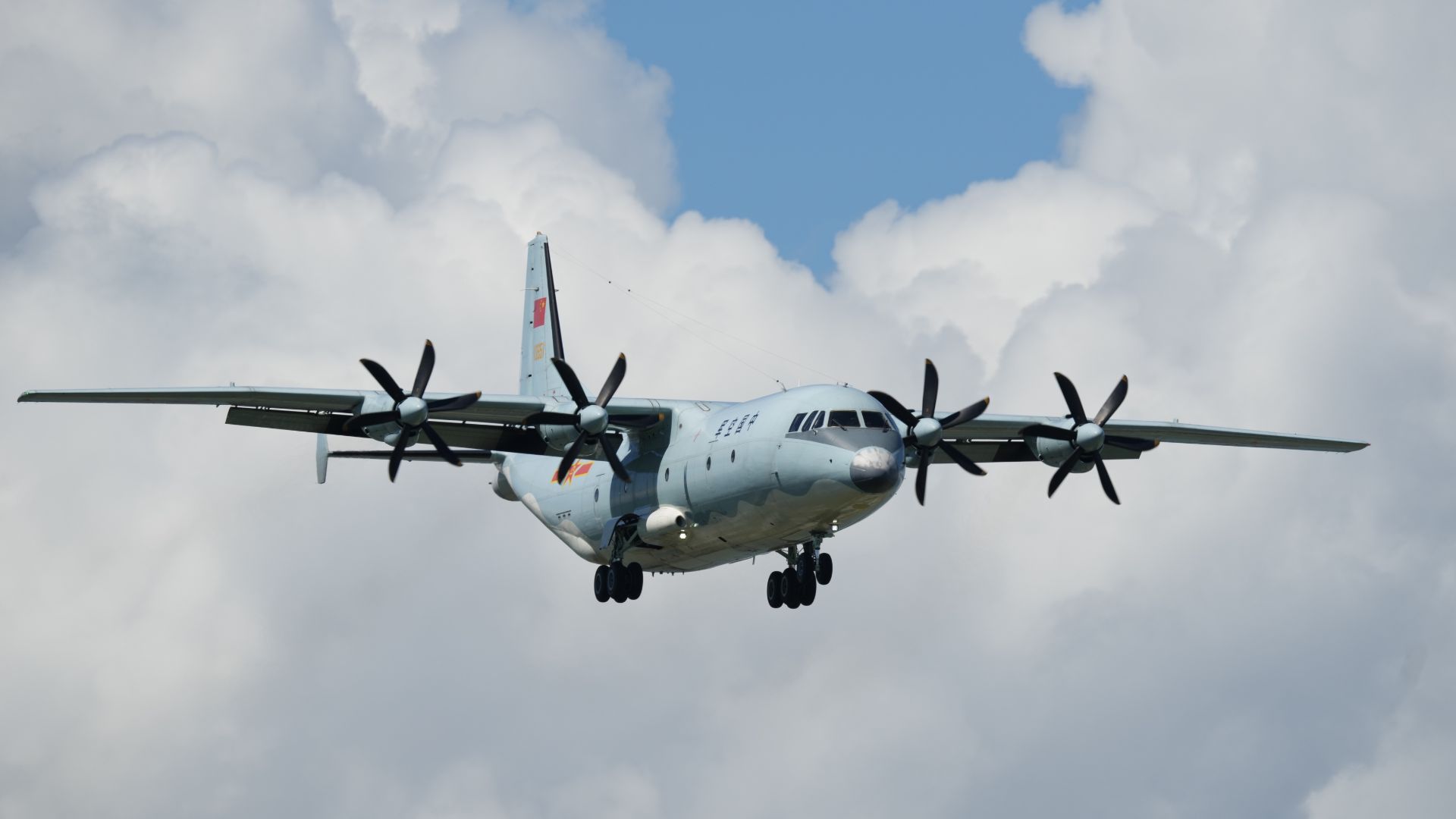
China’s military has revealed an upgraded version of its Y-9 anti-submarine patrol aircraft during recent naval exercises. This marks the plane’s first official use in training since it was shown at the 2025 Victory Day parade. Photos from official PLA media this week show the aircraft is now being used in active service training. Military analysts believe the new Y-9 variant has reached early combat capability, based on recent images. The upgraded plane seems to have better sensors for finding submarines and is built to survive missions more effectively. New sensors improve submarine detection The updated Y-9 looks different from the version shown at the September 3, 2025 parade. According to Chinese military expert Zhang Junshe, the aircraft now carries a new active phased-array radar under its nose. This radar should cover a wider area, detect targets from farther away, and scan more broadly than the older model. Zhang also pointed to a redesigned magnetic anomaly detector (MAD) mounted at the tail. This design helps cut down on interference from the plane, makes maintenance easier, and improves the ability to find submarines under the sea. The aircraft carries many sonobuoys along both sides of its fuselage. According to Zhang, it can drop up to 100 sonobuoys in one mission, creating a network that covers dozens of kilometers to track submarines underwater. Compared to the older Y-8, the Y-9 can fly farther, cover a bigger area, carry more weight, and stay in the air longer. These upgrades strengthen China’s anti-submarine warfare capabilities. Realistic exercises test operational readiness The PLA Southern Theater Command recently held search-and-attack training with several anti-submarine patrol planes over the South China Sea, according to the South Sea Fleet. The drills did not follow preset scenarios or fixed tactics. They also included teamwork with other military units for maritime patrol and anti-submarine missions. Training teams added surprises like electromagnetic interference and equipment failures. Pilots had to make quick decisions and react in real time, just as they would in real combat. According to the South Sea Fleet, repeated search-and-attack missions help crews get better at working together, staying aware of their surroundings, and handling anti-submarine tasks day and night. Military photos showed both Y-8 and Y-9 planes in the exercises. Analysts see early combat capability Zhang said the appearance of the upgraded Y-9 in these exercises shows it has started operational training and reached its first level of combat ability, including basic submarine search and attack roles. He explained that anti-submarine missions in the South China Sea are harder than in the East China Sea or Yellow Sea because the water is much deeper, often over 3,280 feet (1,000 meters), which makes submarines harder to find. The upgraded aircraft should be better at searching, attacking, and surviving in these tough conditions. The Y-9 anti-submarine patrol aircraft was first shown to the public at China’s 2025 Victory Day parade, alongside the Y-9 electronic reconnaissance and radar-jamming aircraft. According to Xinhua News Agency, this homegrown aircraft has several search systems and plays a key role in monitoring the seas and supporting the navy. Recommended ArticlesGet the latest in engineering, tech, space & science - delivered daily to your inbox.A versatile writer, Sujita has worked with Mashable Middle East and News Daily 24. When she isn't writing, you can find her glued to the latest web series and movies.
China’s upgraded Y-9 submarine hunter enters military drills with new radar systems
Full Article
Original Source
Read the full article at Interestingengineering →KhanList aggregates and links to publicly available news content. We do not host full articles from third-party sources. Always verify important information with original sources.