
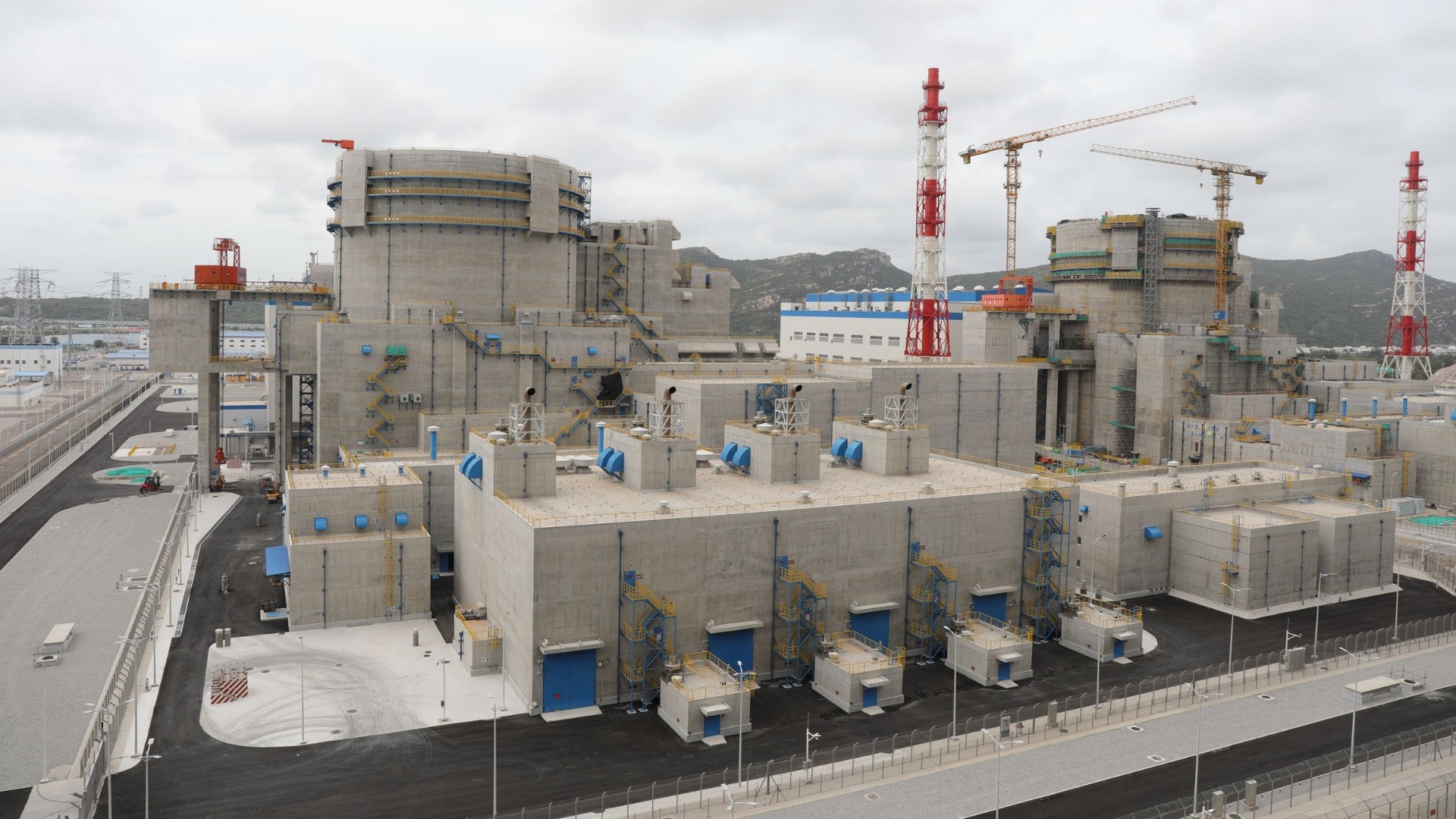
Russia has delivered the first fuel for the eighth and final reactor at China’s Tianwan nuclear power plant, bringing the site a step closer to becoming the world’s largest by installed nuclear capacity. The plant, on the Yellow Sea coast in Jiangsu province, is expected to reach about 9.1 gigawatts once all eight units are operating. Rosatom’s nuclear fuel division, managed by TVEL, supplied the initial core load and a reserve batch of fuel assemblies for Unit 8’s VVER-1200 reactor. China National Nuclear Power said the unit also completed hot tests on Wednesday, marking a separate milestone in preparations for startup. Unit 8 completes hot tests The hot tests subjected reactor systems to the temperatures and pressures they are designed to encounter during normal operation. The checks covered equipment on both the nuclear and conventional sides of the plant to verify that it met design requirements. They followed earlier cold tests that checked the primary circuit and its components for leaks. The Novosibirsk Chemical Concentrates Plant in Russia manufactured the fuel. The delivery was made under a contract that TVEL signed in July 2019 with two companies under China National Nuclear Corporation to supply fuel for Tianwan’s Units 7 and 8. Unit 7 is being prepared for commercial operation, while Unit 8 remains in commissioning. The two units were scheduled to enter commercial service in 2026 and 2027, respectively. Tianwan targets 9.1 GW of capacity Tianwan’s expansion adds two Russian-designed Generation III+ VVER-1200 reactors to a site that already has six units. The first four use Russian-designed VVER-1000 reactors and entered commercial operation between 2007 and 2018. Units 5 and 6 use Chinese-designed ACPR1000 reactors. Russia and China signed agreements in June 2018 to build the final two units. Construction began on Unit 7 in May 2021 and on Unit 8 in February 2022. Rosatom’s engineering division designed the nuclear island, which houses the reactor and its principal systems, and took responsibility for supplying key equipment and supporting installation and commissioning. At about 9.1 GW, the completed Tianwan plant would overtake Japan’s 8.2 GW Kashiwazaki-Kariwa plant in the nuclear capacity rankings. It would also rank among the world’s 10 largest power stations by capacity, including those that use other energy sources. Russia supplies fuel for another Chinese site Tianwan is one of two sites in China receiving initial fuel loads for Russian-designed VVER-1200 reactors. TVEL is also supplying fuel to the Xudapu nuclear power plant, where two reactors of the same design are under construction in Liaoning province in northeastern China. “Since late 2025, we have already delivered three complete VVER-1200 core loads — for Units 7 and 8 at Tianwan and for Unit 3 at Xudapu,” said Anton Ivanov, TVEL’s vice president for commerce and international business. Ivanov said the deliveries set a record for the volume of nuclear fuel TVEL supplied to a single country in a year. He added that the company expects to manufacture the initial core load for Xudapu Unit 4 and have the customer accept it by the end of 2026. Get the latest in engineering, tech, space & science - delivered daily to your inbox.Atharva is a full-time content writer with a post-graduate degree in media & amp; entertainment and a graduate degree in electronics & telecommunications. He has written in the sports and technology domains respectively. In his leisure time, Atharva loves learning about digital marketing and watching soccer matches. His main goal behind joining Interesting Engineering is to learn more about how the recent technological advancements are helping human beings on both societal and individual levels in their daily lives.
China’s Tianwan nuclear plant gets final reactor fuel, eyes record 9.1 GW capacity
Full Article
Original Source
Read the full article at Interestingengineering →KhanList aggregates and links to publicly available news content. We do not host full articles from third-party sources. Always verify important information with original sources.