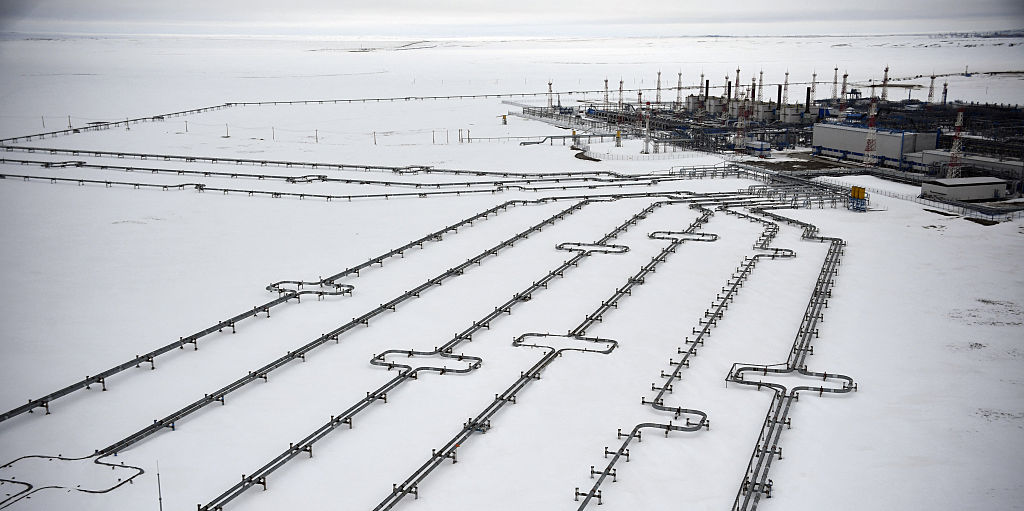
China and Russia purport to have a “no limits” partnership, but recent developments in the Arctic suggest otherwise. Citing a Russian government presentation originally reported by Russia’s Vedomosti newspaper, the Kyiv Post reported on July 18 that China would only supply specialized propulsion and steering systems for Russia’s large ice-class vessels if the United States eased sanctions. Moscow cannot produce these components domestically, and Western firms will not supply them. Beijing also seems unwilling, though its support for other parts of Russia’s heavily sanctioned Arctic energy sector remains. China, which considers itself a “Near-Arctic State” and has made significant investments in Russia’s Arctic energy sector, recently exported two sanctions-linked modules for Russia’s largest Arctic liquified natural gas (LNG) project, Arctic LNG 2. It has also imported record volumes of Russian Arctic LNG, and invested in a new import terminal to handle larger LNG shipments. Beijing’s support continues in large part because Washington is failing to enforce its sanctions aggressively against the Chinese buyers, ports, and financial institutions supporting the growth of Russia’s Arctic energy sector. Trump Administration Shifts to Lax Sanctions Enforcement Posture in the Arctic In November 2023, then-Assistant Secretary for Energy Resources Geoffrey Pyatt told Congress that the United States aimed to “kill” Arctic LNG 2, which Russia’s largest privately held natural gas company, Novatek, hoped would propel Russia to the status of the world’s largest LNG exporter. The Biden administration later sanctioned dozens of firms, vessels, and individuals tied to the project. This aggressive posture appears to have prompted the Chinese vessel Wei Xiao Tian Shi to reverse course in July 2024 after setting sail for Russia with two 14,000-ton modules for use in the Arctic LNG 2 project. Washington later sanctioned the Chinese fabrication yard which constructed the modules, leading the yard’s parent company, Wison New Energies, to sell the yard to a Chinese state-owned company controlled by the Nantong municipal government. Amid practically no enforcement against Russia’s Arctic energy buildout by the Trump administration, the same modules reached Arctic LNG 2 two years later in July 2026. U.S., EU Fail To Target Chinese Ports, Buyers of Russian Arctic LNG Russian strategic planners view the Arctic as critical to Moscow’s energy security and geopolitical influence. China’s state-owned PipeChina plays an important role in supporting that strategy. Its Beihai terminal has received 41 Arctic LNG 2 cargoes totaling 2.6 million tons since August 2025, while its new Longkou terminal could soon add 5 million tons of annual capacity and provide another outlet for sanctioned Russian LNG. The United Kingdom sanctioned Beihai in October 2025, but the United States and European Union have targeted neither terminal nor the Chinese buyers receiving discounted cargoes. Washington has also left Novatek’s Yamal LNG plant untouched. Yamal continues to supply Europe even as the European Union moves to ban Russian LNG imports beginning January 1, 2027. Leverage Over China Is the Key To Effective Russia Sanctions Washington should sanction the Beihai and Longkou terminals facilitating Russia’s sanctioned LNG trade, along with the Chinese buyers, shipowners, and financial institutions involved. Treasury should also warn PipeChina and the Nantong municipal government’s Zhoushan Tongzhou Offshore Engineering that continued dealings with Russia’s sanctioned Arctic energy sector will be met with specific sanctions designations targeting those firms. Washington should also sanction Yamal LNG but delay the measure until January 1, 2027, aligning it with the European Union’s import ban. The United States should also work with EU partners to require that proceeds from recently permitted third-country sales of Yamal-linked LNG remain in escrow rather than reach Russia. China’s reluctance to supply propulsion and steering equipment shows that U.S. sanctions still create leverage, but Beijing may also be using sanctions risk to demand lower prices, better terms, or greater control over Russian Arctic projects. Either way, Washington should not mistake restraint for goodwill. It should impose clear and sustained costs on Chinese firms that continue enabling Russia’s Arctic energy expansion. Max Meizlish is a research fellow for the Center on Economic and Financial Power (CEFP) at the Foundation for Defense of Democracies (FDD). For more analysis from Max and FDD, please subscribe HERE. Follow FDD on X @FDD and @FDD_CEFP. Follow Max on X @maxmeizlish. FDD is a Washington, DC-based, nonpartisan research institute focusing on national security and foreign policy.
China’s Support for Russia’s Arctic Energy Buildout Complicated by Sanctions — But Not Prevented
Full Article
Original Source
Read the full article at Fdd →KhanList aggregates and links to publicly available news content. We do not host full articles from third-party sources. Always verify important information with original sources.