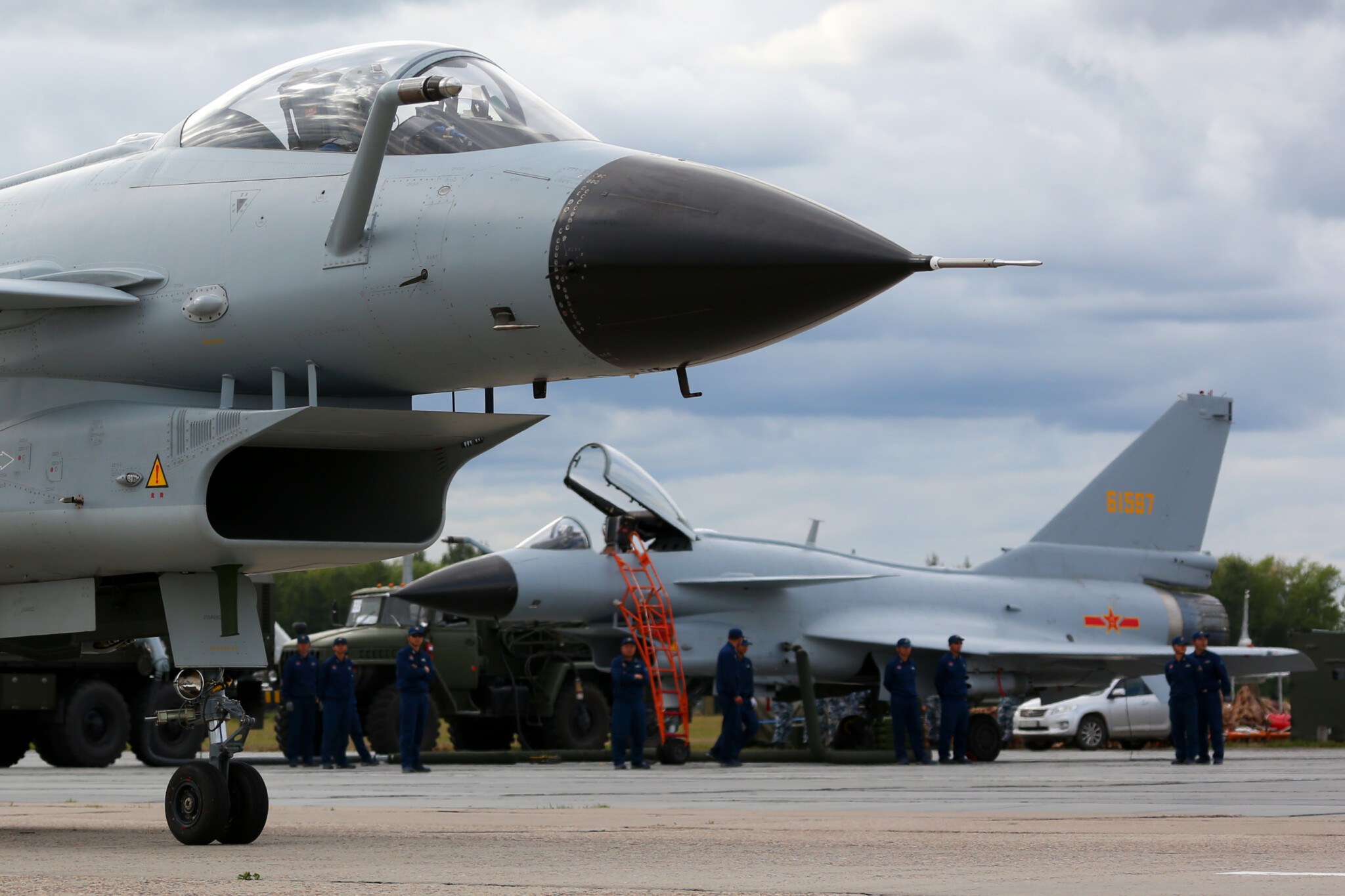
When Chinese J-15 jets locked targeting radar on Japanese aircraft near southern Okinawan islands late last year, it should have been front-page news. Instead, China’s behavior passed almost unnoticed. A similar incident in which the Japanese Coast Guard intercepted two Chinese Coast Guard vessels occurred earlier this month, prompting scant commentary in Washington. The US national security apparatus had its eyes where they usually are: the Taiwan Strait, with an occasional glance toward the Philippines. While there is certainly a risk of Chinese bad behavior in both places, America cannot afford to ignore China’s mounting pressure campaign against Japan in the East China Sea. The Senkaku Islands have been administered by Japan since 1895 as part of its Okinawa Prefecture, but China claims historical sovereignty based solely on ancient texts, rather than any modern history. The contest here is not really about a cluster of uninhabited islands, but what they confer—a 200-nautical-mile exclusive economic zone (EEZ), rights to the continental shelf, and the natural resources that lie beneath. Tokyo argues that the maritime boundary should be established by a median line between the two countries. Beijing, of course, rejects their approach and claims a continental shelf stretching to the Okinawa Trough—almost to Japan’s shore. In 2008, the two governments reached a consensus on the joint development of the seabed, but a deal was never finalized, and China has drilled on its own ever since, adding platform after platform near the contested median line. But this behavior is not merely “first-come-first-served”; China is pilfering natural gas from fields that straddle the boundary, and the rigs it has established double as forward-deployed militarized nodes, complete with military-grade surface radars and surveillance equipment that monitor Japanese forces. The United States administered the Senkakus after World War II and returned them, along with Okinawa, to Japan in 1972. When Tokyo nationalized three of the islands in 2012, Beijing seized the moment to launch a Coast Guard presence that has never been withdrawn. American policy is consistent: the United States takes no position on sovereignty but recognizes Japan’s administration of the islands, meaning that Article 5 of the US-Japan mutual defense treaty, which states that an armed attack on Japanese territory will be treated as an armed attack on both nations, applies. Secretary of Defense Pete Hegseth reaffirmed exactly that in early 2025. China is only turning up the heat. In November, Japanese Prime Minister Sanae Takaichi asserted that a forcible move against Taiwan would threaten Japan’s survival. Beijing then mounted a whole-of-government pressure campaign against Japan, including statements from half a dozen ministries and all five People’s Liberation Army commands, letters to the United Nations, a reinstated ban on imports of Japanese seafood, advisories against travel and study in Japan. It repeated Coast Guard vessel invasions into waters surrounding the Senkakus. Chinese Communist Party-controlled media even called for nuclear strikes on Japan. Unfortunately, this behavior is not novel. The 2010 and 2012 Senkaku Island disputes each ended with China normalizing its intrusions with no return to the 2008 consensus. And the crisis has been greeted with nothing but disinterest. Japan has always been clear about its stake in Taiwan’s security—the late Prime Minister Shinzo Abe affirmed that “a Taiwan contingency is a Japanese contingency,” and Takaichi’s remarks merely reinforce the link between Taiwan’s fate and her nation’s survival. Takaichi took a political risk by openly declaring Tokyo’s firm position. The United States should provide Japan the same treaty-backed clarity. Despite the Pentagon’s reaffirmation of defense agreements between the United States and Japan, there has been no public condemnation of China’s aggressive diplomatic, informational, military, and economic behavior. While vocal support is not a substitute for potential military force, it shapes Beijing’s decision calculus. Silence does, too. In the absence of leadership by America’s executive branch on the issue, Chairman of the Senate Foreign Relations Committee Senator Pete Ricketts (R-NE) has proposed legislation affirming America’s “unwavering support” for the US-Japan alliance. It would commit the United States to upholding Article V and clearly state that the Senkaku Islands fall within its scope. This proposed legislation should be passed into law and accompanied by a broad campaign in which Washington says, loudly and often, that it supports Japan’s claims to the Senkakus, that Article V covers the islands, and that this protection extends to Japan’s economic rights along the median line, including against China’s EEZ encroachments and natural resource theft. In this way, the United States can deny China the ambiguity it continuously exploits. Exercise Resolute Dragon—which paired US Marine littoral units with new Japanese amphibious ships in the Nansei Chain this summer—was a step in the right direction, but the pace and scale need to increase, not plateau. The United States and Japan should conduct combined exercises—coast guard, navy, and air forces—not in the direct vicinity of the Senkakus, which would give Beijing a pretext to cry “militarization,” but in similar geographic regions across the East China Sea. These exercises should become routine and unmistakable, demonstrating US capabilities and the alliance’s readiness to defend the Senkakus jointly. RADM (Ret.) Mark Montgomery is a senior fellow and the senior director of the Center on Cyber and Technology Innovation (CCTI) at the Foundation for Defense of Democracies. Follow Mark on X: @MarkCMontgomery. Johanna (Jo) Yang is a policy analyst at the Center on Cyber and Technology Innovation at the Foundation for Defense of Democracies, where she works on issues related to nation-state cyber threats, allied cybersecurity posture, critical infrastructure protection, and US cyber and national security policy. Follow Jo on X: @JohannaYang.
China’s Senkaku Incursions Are Flying under US Radar
Full Article
Original Source
Read the full article at Fdd →KhanList aggregates and links to publicly available news content. We do not host full articles from third-party sources. Always verify important information with original sources.