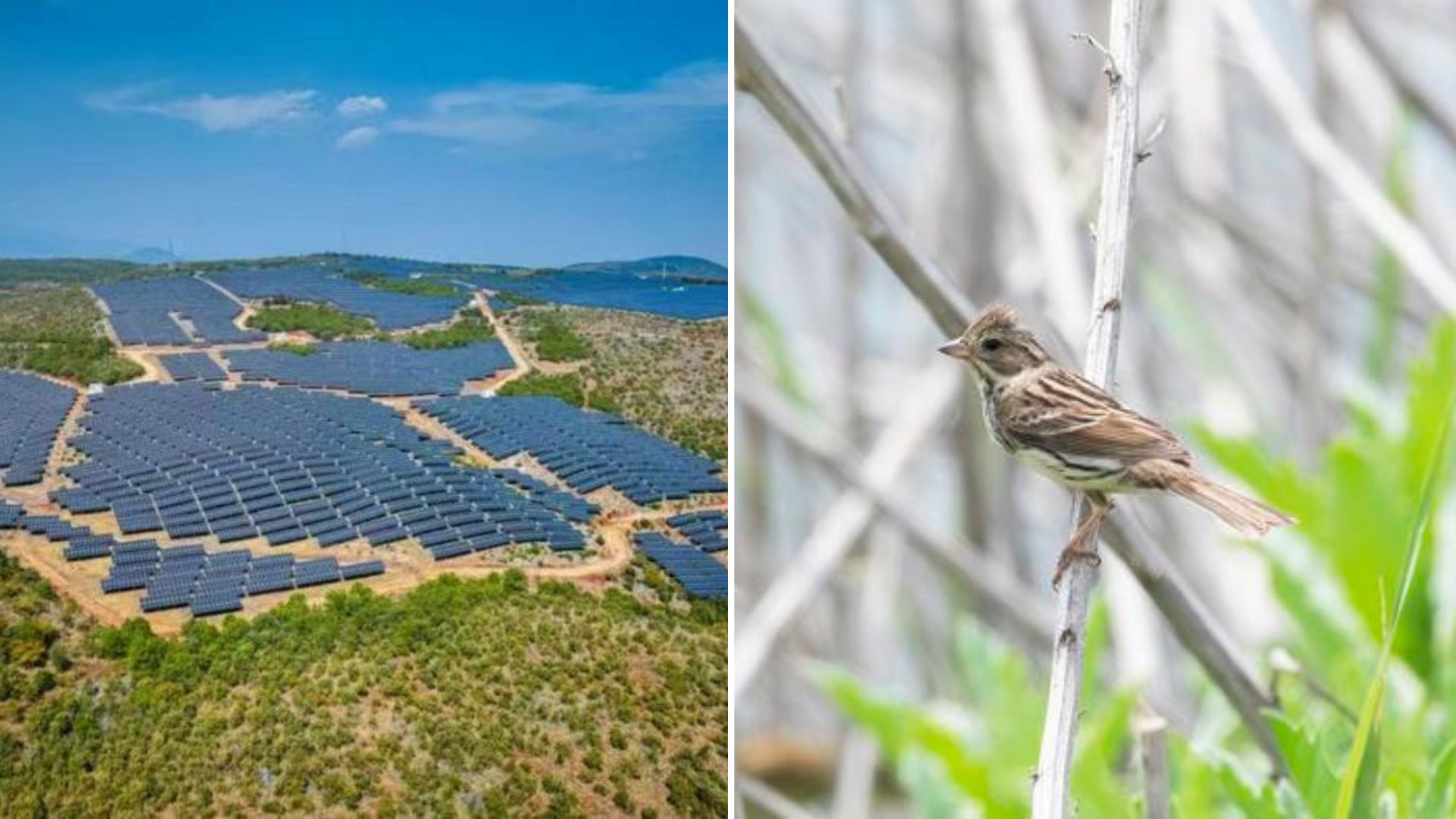
There is always some bad side to the good things as well. The global rush toward clean power is delivering an unexpected ecological blow. Solar power is vital for fighting climate change, but its rapid growth comes with a hidden catch: habitat destruction and fragmentation. A decade-long study examining 2,344 Chinese counties reveals that aggressive solar energy policies are driving local declines in bird diversity. As photovoltaic arrays replace open meadows and farmland, avian populations are taking a direct hit. Led by researcher Huiming Zhang from Nanjing University of Information Science & Technology, the team analyzed nationwide bird observations, solar infrastructure expansion, and regional economic data from 2014 to 2023. The findings quantify a troubling trend: for every one-standard-deviation increase in a county’s solar-promoting policy intensity, local bird diversity indices dropped by 2.10 percent. “The findings revealed that stronger policies promoting solar expansion were associated with significant declines in bird diversity – a one-standard-deviation increase in policy intensity corresponded to a 2.10% reduction in the bird biodiversity index,” the researchers stated. Paving over paradise As the uncontested titan of renewable energy, China leads the world in solar manufacturing and generation, driving a transition that surpassed its target of 1,200 gigawatts of combined solar and wind capacity years ahead of its 2030 deadline. However, this dizzying pace of deployment requires an unprecedented physical footprint. As mega-scale photovoltaic installations require vast tracks of continuous space, thousands of square kilometers of rural land are rapidly being converted. In China, where strong government policies dictate the vast scale and location of photovoltaic infrastructure, thousands of square kilometers of land are being transformed. Birds are sensitive indicators of ecological changes. Monitoring their shifts shows that fast solar development degrades critical vegetation and food sources, threatening local biodiversity in ways other metrics often overlook. The damage was clearest in wealthier, non-desert regions due to rapid land conversion. Rather than building on barren deserts, developers often claimed rich grasslands and farms, replacing vital bird habitats with concrete and glass. Surprisingly, widespread bird species suffered the steepest losses. The study also uncovered a deceptive ecological illusion dubbed “inferior greening.” Satellite monitoring revealed that solar installation areas often scored higher on the Leaf Area Index — appearing greener from orbit. On the ground, however, vegetation diversity plummeted, turning vibrant ecosystems into simplified, degraded habitats. “Without such valuation, policy analysis gives insufficient weight to conservation,” noted researcher Yuanning Liang in an accompanying Perspective. Experts stress that just as carbon pricing reshaped global manufacturing, policymakers must assign concrete economic value to biodiversity loss, and ensure that green energy doesn’t cost the natural world. Threats with wind energy The trade-offs surrounding solar deployment are part of a broader challenge across the renewable energy sector, where decarbonization efforts often clash with local ecosystem health. Wind energy, while vital for replacing fossil fuels, faces scrutiny over bird and bat mortality caused by turbine blade collisions. Similarly, large-scale hydroelectric dams disrupt freshwater ecosystems by fragmenting rivers, blocking migratory fish species like salmon, and altering natural sediment flows. Solar habitat loss shows that clean energy must also become nature-positive. To prevent climate solutions from causing a biodiversity crisis, green development requires smarter planning. Perhaps building on degraded land, sharing space with agriculture, and designing eco-friendly infrastructure. Get the latest in engineering, tech, space & science - delivered daily to your inbox.Mrigakshi is a science journalist who enjoys writing about space exploration, biology, and technological innovations. Her work has been featured in well-known publications including Nature India, Supercluster, The Weather Channel and Astronomy magazine. If you have pitches in mind, please do not hesitate to email her.
China’s rapid solar expansion causes 2.1% drop in bird diversity in 2,300 counties, study finds
Full Article
Original Source
Read the full article at Interestingengineering →KhanList aggregates and links to publicly available news content. We do not host full articles from third-party sources. Always verify important information with original sources.