
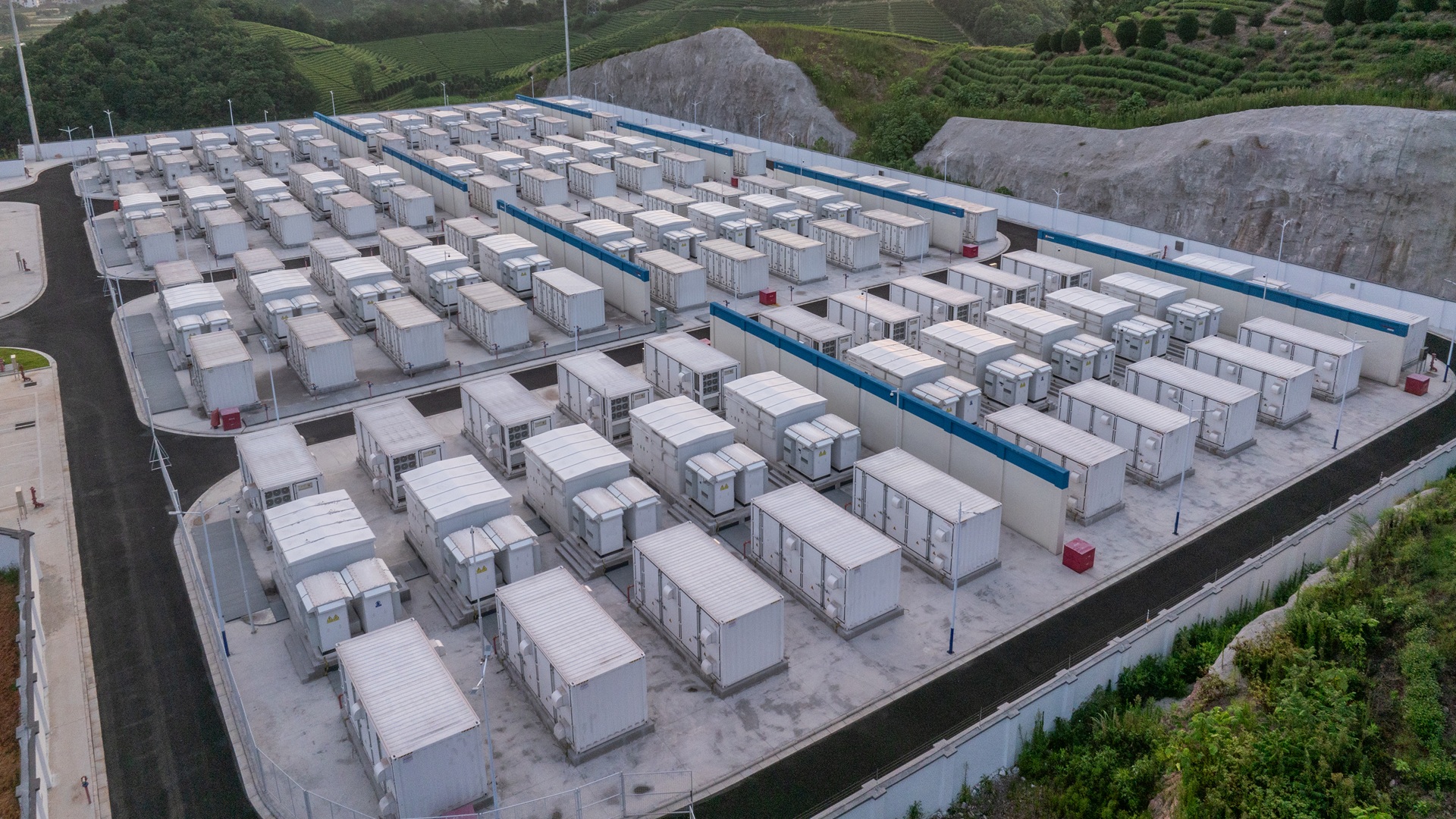
China-based energy storage company HiTHIUM has unveiled a 4MWh sodium-ion energy storage system designed to operate for 30 years, as the battery industry looks beyond lithium-ion for large-scale power storage. The company introduced the ∞Power N4.0MWh system on September 16 alongside its ∞Cell N785Ah sodium-ion battery. HiTHIUM said it plans to begin full-scale production and deliveries of the system in 2027. The move targets one of the biggest challenges facing grid-scale energy storage: reducing dependence on lithium and building battery supply chains around more widely available materials. “Energy storage technologies must overcome two barriers to achieve large-scale deployment: affordability and availability,” said Dr. Nazar Yi, Chief Technology Officer of HiTHIUM. Sodium is considerably more abundant and widely distributed than lithium, potentially giving sodium-ion batteries an advantage in resource availability. But the technology still has to demonstrate the performance, cost and manufacturing scale needed for widespread deployment. Sodium chemistry scales up HiTHIUM’s ∞Cell N785Ah is designed specifically for energy storage and has a claimed service life of 20,000 cycles. The company says it can support storage durations ranging from two to eight hours. The cell is also designed to work with HiTHIUM’s existing 1,000 Ah lithium-ion manufacturing platform, including cell and system integration production lines. This could allow the company to scale sodium-ion production without building an entirely separate manufacturing infrastructure. “We started from the most fundamental chemistry and materials, retracing the 30-year journey of lithium-ion batteries,” said Dr. Aileen Wang, Director of Battery Research Institute. The company used that approach to develop the sodium-ion cell while adapting its existing manufacturing expertise to the new chemistry. The ∞Power N4.0MWh uses a stacked-cell architecture and a dedicated battery management system. HiTHIUM claims its state-of-charge estimation has an accuracy of 2.5% or better, while the system can operate with power conversion systems rated between 800 and 1,500 volts. HiTHIUM also says power-conversion-system utilization is more than 20% higher than its previous-generation sodium-ion system. Longer life, lower overhead The system’s architecture reduces its footprint by 30%, according to the company, while its 24-hour comprehensive efficiency exceeds 88%. Cooling is another area where HiTHIUM has targeted operating costs. The system combines air and liquid cooling with automated thermal management and integrated weather monitoring. Weather data can be used to select cooling modes, which the company says cuts auxiliary power consumption during operation by 30% and standby consumption by 50%. The company has designed the system for a 30-year service life, equivalent to 10,950 days of operation. “30 years means 10,950 days of validation—a long-term commitment to our customers,” said Wang. “It means electrochemical energy storage can be viewed, evaluated and held to the service-life standards of infrastructure.” HiTHIUM plans to expand its sodium-ion systems beyond utility-scale projects into commercial and industrial storage, residential applications and energy-access projects. The company has also launched its ∞Edge Pioneer Program to test sodium-ion batteries and systems in extreme environments. It plans to disclose progress over the next three years and introduce technology packages for extreme environments, with a stated goal of moving energy storage toward a levelized cost of storage of RMB 0.1 per kWh. Get the latest in engineering, tech, space & science - delivered daily to your inbox.With over a decade-long career in journalism, Neetika Walter has worked with The Economic Times, ANI, and Hindustan Times, covering politics, business, technology, and the clean energy sector. Passionate about contemporary culture, books, poetry, and storytelling, she brings depth and insight to her writing. When she isn’t chasing stories, she’s likely lost in a book or enjoying the company of her dogs.
China’s new 4MWh sodium-ion battery system targets 30-year life for grid storage
Full Article
Original Source
Read the full article at Interestingengineering →KhanList aggregates and links to publicly available news content. We do not host full articles from third-party sources. Always verify important information with original sources.