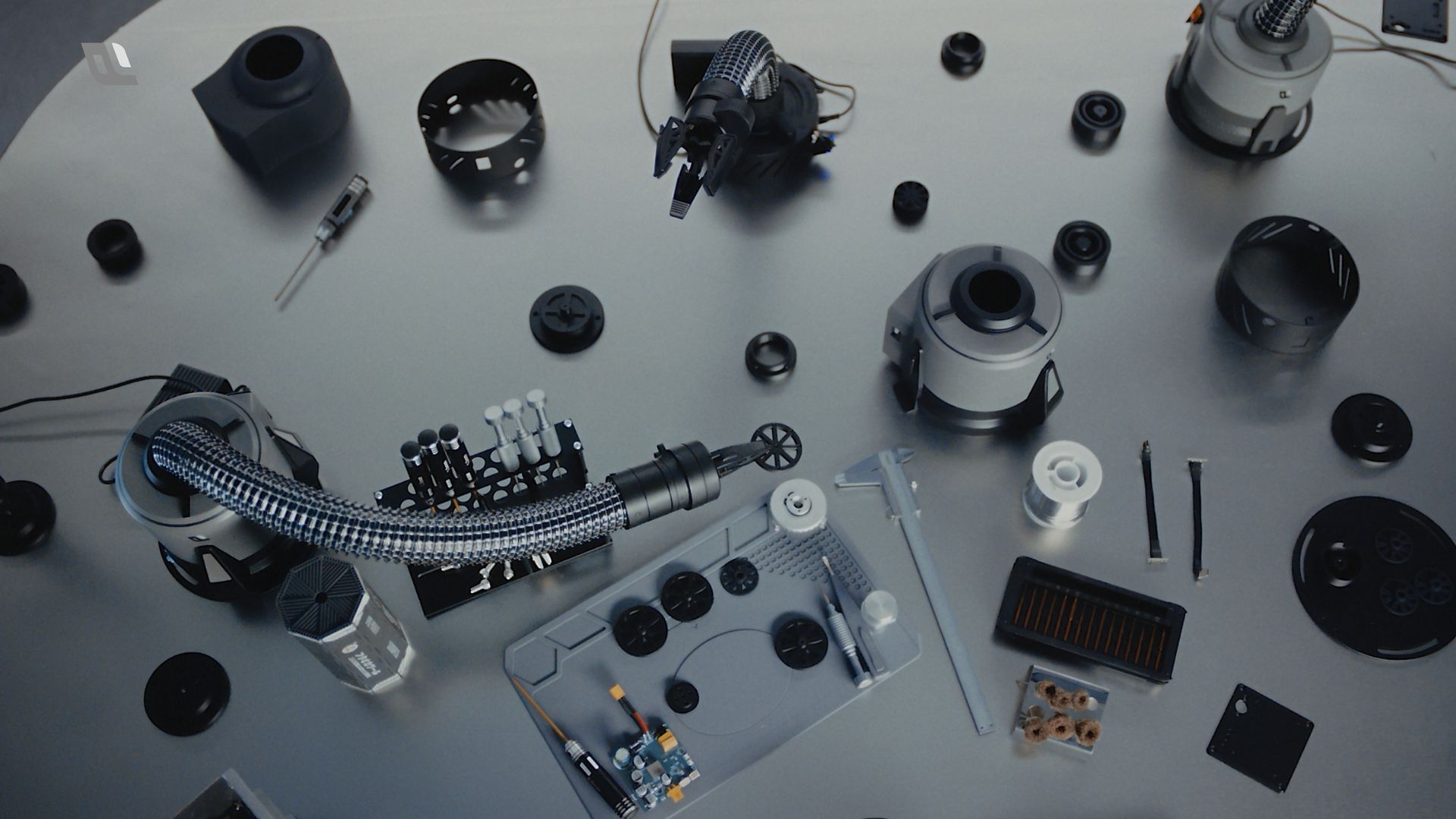
Most robot AI systems have an awkward dependency. Change the robot, and much of the intelligence controlling it may have to change too. Feagine Robotics is taking a different approach. The company has introduced Fi0, a cross-embodiment foundation model designed to retain task knowledge across robots with different physical structures. Alongside it, Feagine has introduced three tendon-driven soft manipulators, A01, A02 and A03, that provide different lengths, segment counts and degrees of freedom for testing that idea. The underlying problem is becoming increasingly important as robotics moves beyond standardized industrial arms. Research into cross-embodiment learning is already showing that exposing models to more diverse robot bodies can improve their ability to generalize to unfamiliar machines. Feagine The body is part of the problem A robot’s physical structure determines what it can actually do. An arm with two segments has a different reachable workspace from one with three. A longer manipulator can approach an object from an angle that a shorter one cannot. A soft, continuously bending arm introduces another layer of complexity because its shape changes during operation. Feagine’s three manipulators are intended to make those differences systematic. The A01 has one flexible segment and two degrees of freedom, weighs 750 grams, and carries a 200-gram payload. The A02 has two segments, four degrees of freedom, and a 400-gram payload, while the A03 has three segments, 6+1 degrees of freedom, a 50-centimeter arm length, and a 600-gram payload. Rather than treating each robot as an entirely separate machine, Fi0 represents its physical structure and current state as part of the information used to generate actions. That is the key idea behind “cross-embodiment” intelligence. The task can remain the same even when the physical method of accomplishing it changes. One demonstration, different robots Feagine also wants Fi0 to reduce the amount of retraining required when robots encounter unfamiliar tasks. According to the company, if Fi0 encounters a task outside its existing capabilities, a human can provide a single demonstration. The model uses that demonstration as context at inference time rather than updating its parameters through another training cycle. For example, a person could demonstrate how to move an object from one location to another. The important information is not necessarily the precise trajectory of the person’s hand. The model instead attempts to extract the task’s objects, sequence, important contact events, and desired end state. The robot then has to work out how to accomplish the same task with its own body. This approach reflects a broader direction in robotics research, where foundation models are increasingly being developed to share knowledge across different robot embodiments rather than learning isolated policies for every machine. Why soft robots are an interesting test Feagine is deliberately using soft, tendon-driven manipulators to explore the concept. Traditional robotic arms are comparatively easy to describe mechanically: their joints have defined positions and ranges of motion. A soft manipulator can bend continuously, change shape and interact compliantly with its surroundings. That means the robot’s physical configuration becomes part of the problem the AI must understand. Fi0’s architecture therefore incorporates information about the robot’s morphology, sensing, actuation, and current state. Feagine calls this representation an Embodiment Graph. The model also includes components intended to understand the physical environment, interpret demonstrations and predict what could happen after different actions. The company describes this combination as soft embodied intelligence. The broader significance is that robotics may not ultimately converge on one universal machine. Different environments could favor very different bodies: rigid arms for precision manufacturing, soft manipulators for delicate interaction, specialized machines for confined spaces, and completely different platforms for hazardous environments. If the intelligence layer can move between them, hardware no longer has to carry the entire burden of generality. A different path beyond humanoids Humanoid robots have attracted enormous attention because human environments are already designed around human dimensions and capabilities. But general-purpose intelligence does not necessarily require a humanoid body. Feagine’s approach reverses the assumption. Instead of asking “What single body can do everything?”, it is asking whether one intelligence can operate many specialized bodies. Fi0 is still an early-generation system, and the company’s claims will ultimately need to be demonstrated across broader hardware, tasks, and real-world environments. But the concept addresses a genuine bottleneck in embodied AI. Ensuring that intelligence accumulated through one robot does not become useless when the hardware changes. If that problem can be solved, the future of robotics could involve not one universal robot, but a growing family of specialized machines sharing an increasingly capable intelligence layer. Get the latest in engineering, tech, space & science - delivered daily to your inbox.Kaif Shaikh is a journalist and writer passionate about turning complex information into clear, impactful stories. His writing covers technology, sustainability, geopolitics, and occasionally fiction. A graduate in Journalism and Mass Communication, his work has appeared in the Times of India and beyond. After a near-fatal experience, Kaif began seeing both stories and silences differently. Outside work, he juggles far too many projects and passions, but always makes time to read, reflect, and hold onto the thread of wonder.
China’s ‘Doctor Octopus’ robots get a brain that can learn across bodies
Full Article
Original Source
Read the full article at Interestingengineering →KhanList aggregates and links to publicly available news content. We do not host full articles from third-party sources. Always verify important information with original sources.