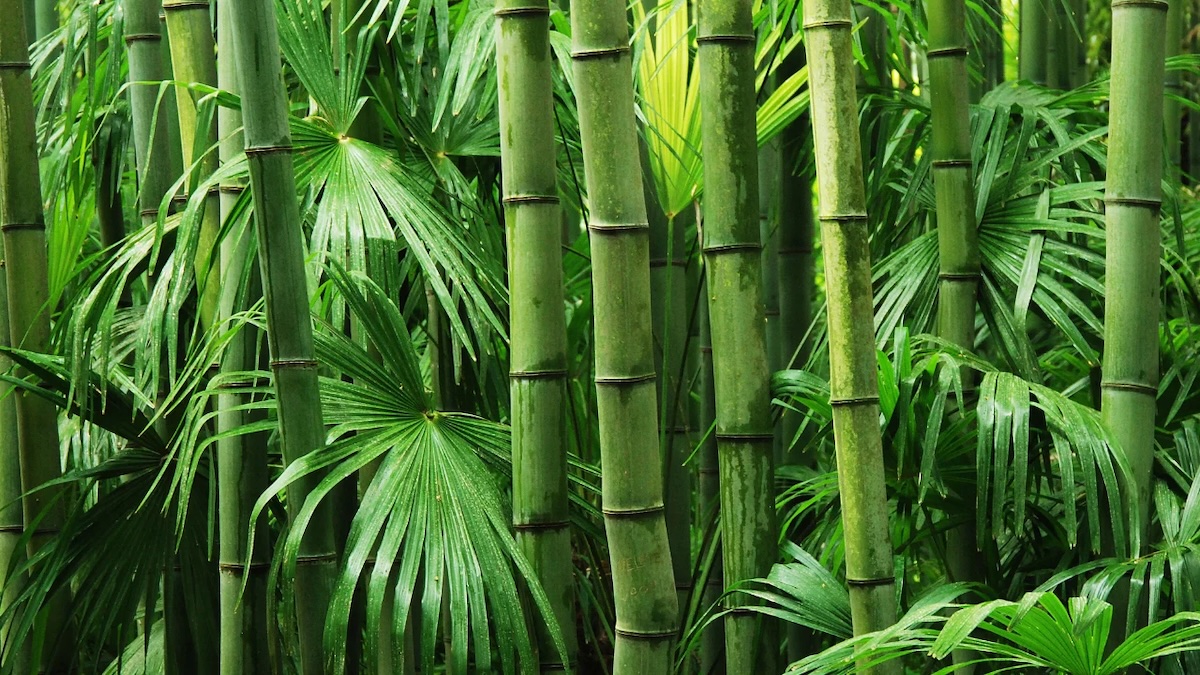
Nature offers unexpectedly good lessons in strategy. As a child, I was fond of bamboo shoots, though none grew in our farmland. My mother, noticing my enthusiasm, suggested that I plant some myself. A neighbor gave me a stalk about three feet tall, which I planted, watered and fussed over. Nothing happened. A year passed without so much as a new shoot. By the second year, the plant had begun to wither from the top, alive only at its base. “This bamboo will never grow,” I complained to my mother; “all that effort, wasted.” My mother was unmoved. “Bamboo spends its first three or four years growing roots underground,” she said. “Then it grows on the top.” The shoot eventually came in the middle of the third year, breaking through a crack in the soil that no one had noticed. By the fourth year, several more shoots had appeared; by the fifth, the plant had swallowed the whole farmland corner. The story is more than bamboo harvesting. It is a fair description of how China has grown and how India has failed to grow over the past 75 years. I call it the Chinese “bamboo growth model”: years of invisible effort spent building foundations, followed by growth so rapid that it looks sudden only to those who were not watching the roots. The Chinese “bamboo growth model”: years of invisible effort spent building foundations, followed by growth so rapid that it looks sudden only to those who were not watching the roots None of this is to say that either country planned matters with the tidiness that hindsight imposes. Chinese policy in the Mao Zedong years was often criticized as “chaotic” and “cruel,” by the West and East alike and Indian planners in the 1950s had good reasons, given the country’s poverty and its inherited colonial legacies, to think that a technical elite might pull the rest of the economy up behind it. The point of the comparison is not to flatter my borthen neighbor’s intentions over its southern’s, but to notice which bet actually paid off. Different departure points India, freed from British rule in 1947, and China, remade as a people’s republic under Mao in 1949, began their modern histories within two years of each other with similar legacies. Both were poor, hungry, in poor health and mostly illiterate. Neither had much of an industrial base. Almost eight decades on, the two countries could hardly look comparable in any matrix. One is the world’s second-largest economy and its leading manufacturer; the other, for all its much-hyped demographic dividend, trails behind on almost every measure of national hard power from patents, scientific papers, semiconductors, artificial intelligence and warships to space technology. Explaining that gap takes more than admiring China’s growth rates or lamenting India’s shortfalls. It requires comparing what each government actually chose to prioritize in education, in health,and in the state machinery, and how faithfully each carried its choices out. It is easy to believe that China’s economic success can be attributed to cheap labor, an (allegedly) undervalued currency or scale, while India’s failure is a result of democracy itself, since plurality and prosperity cannot go hand in hand. However, such an explanation appears too convenient. It is much more informative to compare India and China during the 1950s and 1960s, when both nations were trying to allocate their limited financial resources. China decided to spread its resources across the country, while India opted to allocate its funds selectively. Difference between the Chinese foundation and the Indian axis China and India approached the education of their citizens from opposite ends. China built the roots first; India reached straight for the treetop. No sooner had the revolution been won in 1949 than China’s new leaders made basic literacy a matter of national pride, launching mass campaigns and roughly doubling the number of primary schools even as the country lurched through the political convulsions of the next three decades. The logic was simple: a country cannot industrialize on the back of citizens who cannot read a factory manual. Many believe Mao’s schools also served a less benign purpose, turning out disciplined citizens loyal to the party and state. Still, the by-product was a workforce that showed up, followed instructions and pulled together whenever the government launched a big project or policy. By the time most developing countries were still debating literacy targets, China had already achieved universal primary enrollment and a literacy rate far ahead of India’s. India took the opposite path. Newly independent and short of money, it poured its limited resources into a handful of excellent institutions, the IITs, the IIMs, the IISc, rather than into universal primary education. This, in time, produced a formidable technical elite. It also left most Indians without basic literacy, condemned many of the children who did enroll to drop out, and concentrated the fruits of India’s best education in a narrow upper crust. Because that Indian elite did not owe its skills to a mass system in which the whole country had invested, it felt correspondingly less obliged to stay.Many of its brightest members left India. In addition, India paid another price due to its dependence on a small number of technically competent people. Since only a very small number of people in India were ever able to attend properly functioning elementary schools, labor markets in the country became segmented over many years, with a relatively small group of internationally competitive individuals placed above a significantly large number of literate workers. Implementation capacity and public trust differences Good policy on paper is worth little unless a state can deliver it to the village level, and that depends on politics as much as on money. China’s one-party system, whatever its other costs, proved unusually good at pushing policy through without the encumbrances India faced of coalition bargaining and judicial review. It also genuinely enjoyed the trust of most citizens, who treated the government’s education drive less as a bureaucratic diktat than as a national campaign worth joining. That combination of authority and trust let China pass its landmark nine-year compulsory-education law in 1986 and enforce it nationwide with something close to military urgency. By contrast, India’s federal, multiparty democracy makes for messier progress. Education is a shared responsibility of states and the center, a recipe for turf wars over money and curricula. Each change of government, in Delhi or in the states, tends to scramble the previous administration’s plans. Corruption, red tape, and public cynicism about state schemes did the rest. It was not until 2009, six decades after independence and under Prime Minister Manmohan Singh, that India made elementary education a legal right for children aged six to fourteen. China had reached the same landmark 24 years earlier. None of this is an argument against democracy. It is an argument that democracies pay a price for federal squabbling and short electoral cycles when the policy in question, universal schooling, takes decades rather than years to bear fruit. And it is an argument that India has yet to find a durable way around that price. The interrelationship of poverty alleviation and child nutrition China’s most insightful move was to treat education as inseparable from health and the reduction of poverty, rather than as a matter for the classroom alone. A hungry child does not learn algebra and geometry well, however good the curriculum. So, alongside its literacy drive, China ran an aggressive campaign against poverty and child malnutrition, guaranteeing children the food needed for a functioning brain as much as a functioning body. The government says it lifted almost 800 million people out of extreme poverty over 40 years. China’s present dominance in science and technology owes at least as much to that campaign as to any university reform. India, in contrast, has traditionally kept education, nutrition and public health as distinct domains, overseen by different ministries without proper coordination among them. While its mid-day meal scheme aims to attract kids to school and feed them when they are there, it has been slow and inconsistent. Malnutrition, resulting from both poverty and government apathy in almost equal measures, has left deep marks on several generations of Indian children, and the scars have appeared in classrooms. According to the Annual Status of Education Report, more than half of children in primary and secondary schools fail to perform at an arithmetic and reading level two grades below their current grade. None of this should surprise anyone who has watched a hungry child struggle through a math lesson. Yet the numbers on malnutrition itself are stark. According to the National Family Health Survey (2019-21), 35.5% of Indian children under five are stunted, 19.3% are wasted, and 32.1% are underweight. The Global Hunger Index for 2025 ranks India 102nd out of 123 countries, with a score of 25.8, placing it in the “serious” category on the index’s scale. By its reckoning, 12% of India’s population is undernourished, 32.9% of children are stunted, 18.7% are wasted, and the under-five mortality rate stands at 2.8%. A country in which nearly a third of children go hungry is not well placed to out-compete one that has all but eliminated the problem. The Chinese industrial demand and the vicious cycle of Indian brain drain A university system earns its keep only if the economy has jobs for its graduates. China made sure that would happen. In the 1990s, it launched Project 211 and Project 985, showering billions of dollars on selected universities to turn them into research powerhouses, and then built the factories, laboratories, and firms to employ what those universities produced. Chinese students who studied abroad tended to return home to work rather than settle in America or Europe. The result is a homegrown roster of global companies, including Tencent, Alibaba, Huawei, BYD, ByteDance and Xiaomi, that has turned China into the world’s workshop and its second-largest economy. No comparable system of absorptions was created in India. The most prestigious technical programs in India were devised primarily with the Western labor market in mind, rather than for India and small and medium-sized businesses, which had failed to build a manufacturing base that could have ensured that its finest students did not leave the country. So, the finest brains of India, who had been trained at great public cost at institutions like IITs and IIMs, all went abroad to the United States and Europe. India can take justifiable pride in having produced so many alumni who are now CEOs of Fortune 500 companies – from Google’s Sundar Pichai to Microsoft’s Satya Nadella and Adobe’s Shantanu Narayan. I call this phenomenon the “Indian CEO syndrome.” But lurking behind this pride is a hard truth– despite 70 years of independence, India has produced only 11 Fortune 500 companies headquartered and operated in the country (more than half of them state-owned enterprises) compared with 124 such companies in China. India’s skilled labor force has made foreign multinationals rich but not India itself. Table 1: Comparison of the Education Systems of India and China Strategic Basis of ComparisonChinese Education System (Bamboo Growth Model)Indian Education System (Eucalyptus Growth Model)Initial Strategic FocusMass literacy, universal primary and basic educationElite, class-focused specialized higher education (IITs / IIMs / IISc)Decision-making, Policy and ImplementationCentralized party-state leadership; rapid execution and long-term policy continuityMultiparty democratic and federal structure; policy ambiguity and procedural delaysChild Health, Nutrition and EducationPoverty alleviation, child nutrition and education implemented as a single integrated national strategyNutrition and education kept under separate policies and ministries for decades, worsening malnutritionUtilization of Human Capital and TalentManpower absorbed domestically; home-grown multinationals and Fortune 500 tech companiesWidespread brain drains; foreign companies dominate for lack of a domestic industrial ecosystemModern Efforts of the 21st CenturyDouble Reduction Policy (2021) and Education Modernization 2035 Plan (digital and vocational education)National Education Policy (NEP) 2020 attempts structural and vocational reform via a 5+3+3+4 model Source: Author’s compilation Weaknesses of the eucalyptus model of Indian education India’s approach to education and development resembles nothing so much as a eucalyptus tree: fast-growing, impressive from a distance, but shallow-rooted and inclined to leach the surrounding soil dry rather than nourish it. Instead of digging in on primary and basic education for the many, India spent its energy raising the canopy of tertiary education. That strategy produced real, visible growth among the elite in a handful of cities and in India’s reputation abroad. But it never reached the country’s actual base: the rural poor, Dalits, Scheduled Caste and Scheduled Tribes and other marginalized groups who make up most of the population. Because India never adopted anything resembling China’s comprehensive, inclusive approach to mass education, its individual triumphs in higher education sit atop roots that remain shallow. A moderate wind can topple a eucalyptus with weak roots; India’s social and economic structure carries a comparable vulnerability to economic crises or to social unrest. That vulnerability is not merely theoretical. A work force that is only partly literate cannot easily be retrained when old industries decline or new technologies arrive. A population whose children are stunted in early life carries the economic consequences of that stunting for decades, in lower earnings and worse health, long after any single government has left office. Eucalyptus groves look magnificent in a photograph. They do not survive as well as a bamboo forest during a drought. The inevitable journey to the bamboo growth model The comparison points to a simple lesson, however unfashionable it may be to draw one. China’s growth looked slow, even invisible, for its first three decades, much like bamboo in my backyard, because the effort was going into roots: universal basic education, national literacy and child nutrition. Once those roots were established, especially after the “reform and opening up” that began in 1978, growth followed swiftly and lasted. Chinese universities now top the Nature Index. They produce more engineers and file more patents than anywhere else. And Chinese industry sits at the top of most manufacturing supply chains. All of those advances trace back to decisions made about primary schools and child nutrition, not just to industrial policy. India, meanwhile, has produced excellent managers, engineers, and bankers for the world market while neglecting the basic education and nutrition of its own pupils, a decision that still shows up in aggregate productivity and industrial capacity. The National Education Policy of 2020 belatedly gestures towards the Chinese approach, promising vocational training, early-childhood care and skills-based learning. It faces a considerable challenge. Policies of this kind are easy to announce and hard to fund for implementation. India’s states, which do most of the actual teaching, have neither the money nor always the will to carry them out uniformly. And the center cannot simply order compliance the way Beijing can. Building a rich and strong nation requires undertaking the unglamorous task of investing in quality education from an early age, regardless of where children come from or their parents’ incomes. Good nutrition, vaccinations, and proper health care go hand in hand with quality curricula and textbooks. Until such time as India’s human capital is healthy and educated, growth in the country will continue to remain more promise than reality, just as it has been for three quarters of a century. India’s strength lies not in the height of its buildings but in its depth. China took 30 years to turn its patience into power. India, as it is now, is still struggling to dig deep. Follow Bhim Bhurtel on X at @BhimBhurtel. Subscribe to his Substack here.
China’s bamboo growth model vs. India’s eucalyptus growth model
Full Article
Original Source
Read the full article at Asiatimes →KhanList aggregates and links to publicly available news content. We do not host full articles from third-party sources. Always verify important information with original sources.