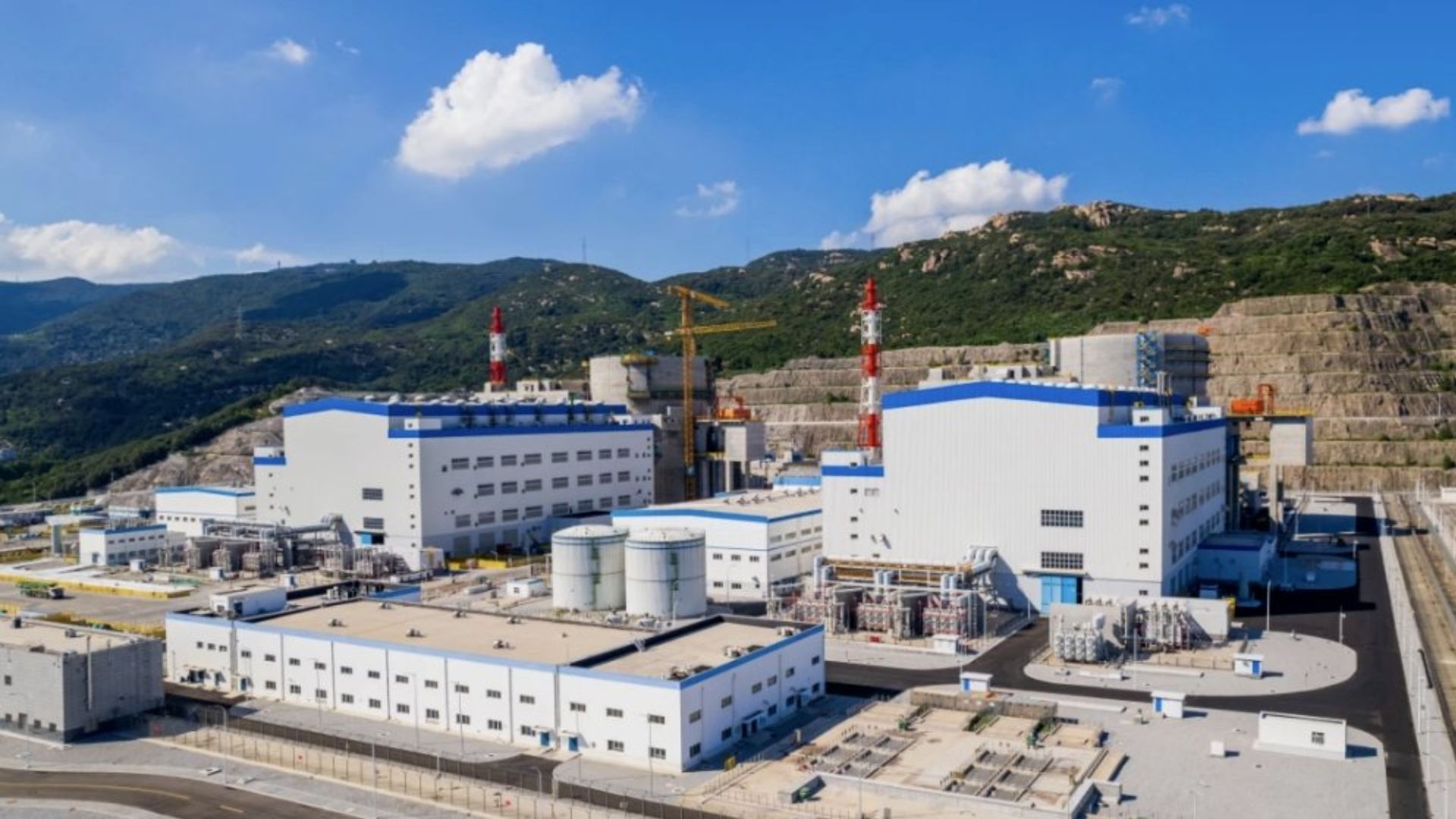
China’s nuclear energy sector is advancing several major projects, led by critical technical tests at the Tianwan nuclear power plant in Jiangsu Province. Operators at Tianwan Unit 8 completed cold functional testing on August 3. This milestone signals that heavy mechanical construction is finished and systems testing is actively underway. “The No.8 unit of the Tianwan nuclear power plant completed its cold functional test on Monday in east China’s Jiangsu Province, fully entering its debugging stage,” said China Science. Cold functional testing serves as the first comprehensive evaluation of a reactor’s structural infrastructure. Engineers fill the primary cooling loop, including the reactor pressure vessel, pressurizer, and connecting pipes, with ultra-pure demineralized water. They then pump the liquid to pressures well above standard operating levels. Sensor networks monitor how the steel welds, pipe joints, and valve seals handle this high stress. The process confirms that the primary circuit is completely leak-tight before any nuclear material enters the plant. Enters final commissioning sequence Tianwan Units 7 and 8 utilize Russian-designed VVER-1200 third-generation pressurized water reactors. When both units reach full capacity, they will generate 18.8 billion kilowatt-hours of electricity each year. “The plant’s units 7 and 8, each with a capacity of over 1.2 million kW, are estimated to generate a total of 18.8 billion kWh of electricity every year once fully operational,” added China Science. With cold testing finished, Unit 8 enters its final commissioning sequence. The facility will next undergo containment pressure tests to ensure the outer shield can withstand extreme pressure spikes. Afterward, operators will perform hot functional tests. During these tests, the massive main coolant pumps run at full power to heat the water through friction, simulating real operating temperatures without live nuclear fuel. Once those tests pass, technicians will load nuclear fuel assemblies, bring the core to criticality, and synchronize the generator with the East China Power Grid. Reactor developments for decarbonization goals Regional grid operators plan to use this steady output to displace fossil fuels across heavy industrial sectors in Jiangsu Province. Similar technical progress is occurring at other coastal facilities across the country. In Hainan province, an indigenously designed Hualong One reactor connected to the local power grid for the first time. The Hualong One utilizes a 177-fuel-assembly core that improves fuel burnup efficiency. For emergency cooling, it combines active electric pumps with passive safety systems. A thick double-shell containment structure surrounds the reactor building to protect against severe external impacts. Meanwhile, at the Xudabao plant in Liaoning Province, Unit 3 finished its own hot functional testing phase. Engineers brought the primary loop fluid to operating conditions above 300°C (572°F) and 15.5 megapascals of pressure. These systematic engineering developments reflect China’s strategy to expand its third-generation nuclear fleet, supporting baseline energy security while working toward a peak in carbon emissions by 2030 and net-zero emissions by 2060. Recommended ArticlesGet the latest in engineering, tech, space & science - delivered daily to your inbox.An active and versatile journalist and news editor. He has covered regular and breaking news for several leading publications and news media, including The Hindu, Economic Times, Tomorrow Makers, and many more. Aman holds expertise in politics, travel, and tech news, especially in AI, advanced algorithms, and blockchain, with a strong curiosity about all things that fall under science and tech.
China’s 1,200 MW nuclear reactor unit successfully completes cold test milestone
Full Article
Original Source
Read the full article at Interestingengineering →KhanList aggregates and links to publicly available news content. We do not host full articles from third-party sources. Always verify important information with original sources.