
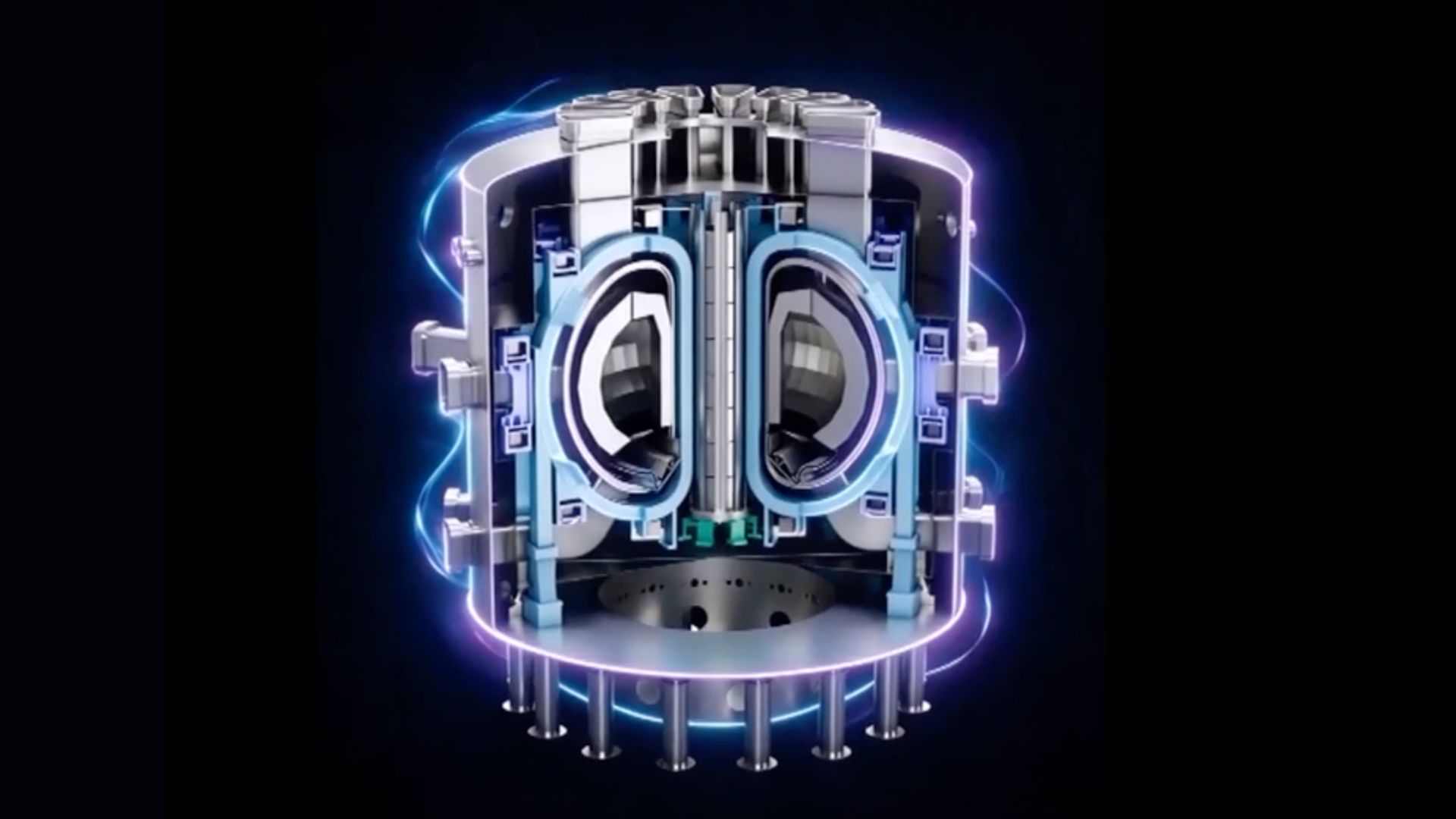
China has recently offered a first look at its next-generation fusion reactor. It has unveiled the blueprint and concept art for its upcoming HL-4 tokamak at the Shanghai Fusion Energy Conference & Fusion Week 2026. The HL-4 tokamak is designed to tap the same process that powers the sun, which is nuclear fusion. To pull this off on Earth, tokamak reactors use donut-shaped magnetic fields to trap and twist superheated plasma into place. Fittingly, that very motion gives the reactor its name: Huanliu translates directly to “circulation” or “toroidal flow.” China’s journey with this technology began more than half a century ago. Since the 1980s, the Southwestern Institute of Physics (SWIP) in Chengdu has spearheaded the design of the Huanliu series, from HL-1 through HL-4. While HL-3 mimics the core physics of a true burning reactor, it relies on conventional copper coils. Because copper magnets overheat quickly, the machine cannot run continuously, as reported by Nuclear Engineering International. The new HL-4 facility, now under construction in Shanghai, aims to solve this operational bottleneck. Its primary mission is to achieve steady-state burning operation, meaning it can run continuously without overheating. It will become the world’s first high-temperature superconducting, high-field steady-state burning experimental platform. Major advantages driving the project Engineers at China Fusion Energy point to three major advantages driving the project. The first is its fully high-temperature superconducting magnets, which generate a field of 25 tesla. This intense magnetic field keeps the plasma trapped while dramatically shrinking the overall size of the reactor. A smaller footprint also speeds up the technical iteration cycle. Second, the facility incorporates AI-driven intelligent operation technology to manage reactor performance. Third, the powerful magnetic field lets physicists study plasma behavior under conditions that were previously out of reach. Building such a strong magnetic system presents steep engineering hurdles. Teams are currently carrying out preliminary process development on site to keep the construction schedule on track. Researchers are scheduled to relocate next year to a purpose-built facility in Shanghai. “By June next year, the R&D team will move into a new 500-meter-long super factory here, where full-scale magnet manufacturing and testing will begin,” reported China’s state-run media platform CGTN, noting that the project’s goal is to verify the reliability of high-temperature superconducting magnets under complex fusion conditions. An essential stepping stone Scientists view the project as an essential stepping stone rather than an end product. The immediate target is to prove that high-temperature superconducting magnets can operate reliably under complex fusion conditions. Essentially, HL-4 serves as a scaled-down engineering validation device. Domestic teams in China are exploring multiple technical paths toward fusion, but the broader development path follows a clear, multi-stage sequence. Once engineers validate these core scientific and engineering questions with the HL-4, the program will construct a demonstration reactor to prove the technology commercially. “The next stage is the demonstration reactor — demonstrating commercially what has been validated. Only after that do we move to the commercial reactor phase,” concluded Chen Zhe, Deputy Director of the Fusion Engineering Design Department at China Fusion Energy.Get the latest in engineering, tech, space & science - delivered daily to your inbox.An active and versatile journalist and news editor. He has covered regular and breaking news for several leading publications and news media, including The Hindu, Economic Times, Tomorrow Makers, and many more. Aman holds expertise in politics, travel, and tech news, especially in AI, advanced algorithms, and blockchain, with a strong curiosity about all things that fall under science and tech.
China unveils HL-4 tokamak as world’s first HTS steady-state ‘burning’ fusion facility
Full Article
Original Source
Read the full article at Interestingengineering →KhanList aggregates and links to publicly available news content. We do not host full articles from third-party sources. Always verify important information with original sources.