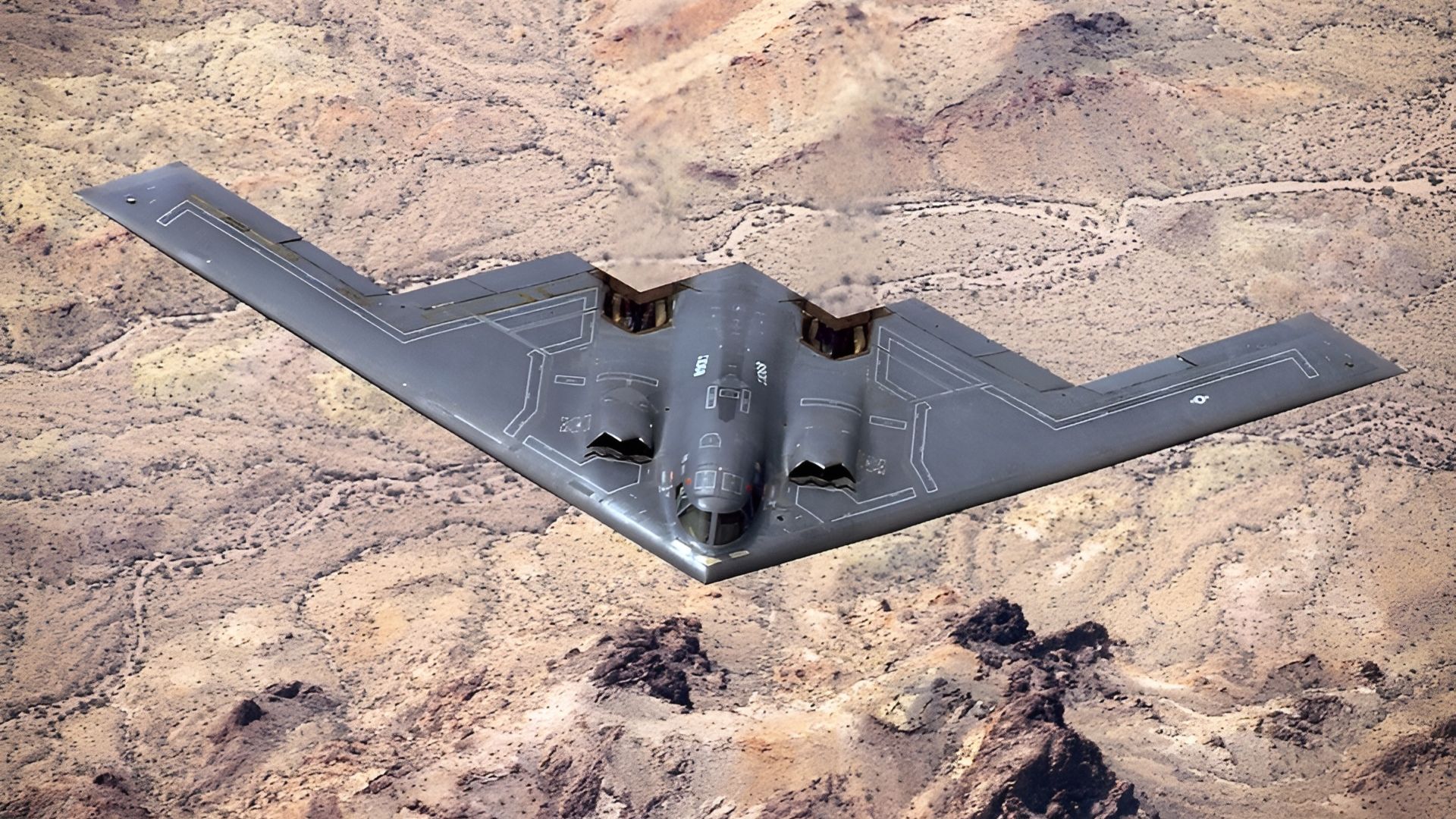
China is exploring a radical passenger aircraft design that could carry more than 800 people, potentially creating one of the largest airliners ever conceived. The aircraft abandons the familiar tube-and-wing layout used by Boeing and Airbus. Instead, nearly the entire structure forms a broad flying wing that generates lift. Researchers at the China Aerodynamics Research and Development Center, or CARDC, have already begun testing a scale model. Their work examines the aerodynamic behavior of an exceptionally large flying-wing configuration. At 85 meters wide, the proposed aircraft would have a wingspan roughly 1.6 times greater than the B-2 Spirit. The aircraft would measure 43 meters from front to back. That size puts the concept in a different category from today’s commercial aircraft. Airbus A380 configurations typically seat about 555 passengers, well below the Chinese design’s proposed capacity. The researchers have not announced plans for a full-scale prototype. For now, the project serves as a research platform for studying future large passenger aircraft. Giant wing targets efficiency Flying-wing aircraft combine the fuselage and wings into a single lifting structure. That approach can reduce aerodynamic drag and increase the amount of lift generated across the aircraft. Li Yonghong and his research team believe the configuration offers major aerodynamic advantages. Higher lift-to-drag ratios could support longer flights and lower energy consumption. The proposed aircraft has a reference wing area of about 1,395 square meters. Its leading edge sweeps back 37 degrees, with a 28-degree sweep along the trailing edge. The design targets a cruise speed of Mach 0.8, similar to many modern widebody passenger jets. CARDC initially developed the concept around a 250-seat aircraft. Researchers later scaled the configuration toward the 800-passenger category. Wind tunnel puts design CARDC built a stainless-steel model at a scale of 1:52 to investigate the concept. The model measures roughly 0.8 meters long and has a wingspan of 1.6 meters. Engineers tested it inside the institute’s 2.4-meter transonic wind tunnel. Test speeds ranged from Mach 0.4 to Mach 0.8. The team studied aerodynamic performance, airflow transitions, stability and structural deformation. Researchers also examined measurement techniques for slender flying-wing shapes. The model achieved a maximum lift-to-drag ratio of about 20 below Mach 0.7. At its target cruise speed of Mach 0.8, that figure dropped to 17.6. Those results give researchers a benchmark for studying similar aircraft configurations. They could also help engineers improve computational models and wind-tunnel testing methods. The flying-wing research adds another branch to China’s large-aircraft ambitions. CARDC has contributed to projects including the C919 passenger jet and Y-20 military transport. China also continues work on the C929, a planned 280-seat long-range widebody. Officials expect its first flight around 2030. The country has separately explored the C949, a proposed supersonic passenger aircraft. That project has attracted comparisons with NASA’s X-59 research. For American aerospace observers, the flying-wing project presents an unusual civilian application for a configuration associated with the B-2 bomber. Turning that shape into an 800-passenger airliner would create major engineering challenges. Get the latest in engineering, tech, space & science - delivered daily to your inbox.Aamir is a seasoned tech journalist with experience at Exhibit Magazine, Republic World, and PR Newswire. With a deep love for all things tech and science, he has spent years decoding the latest innovations and exploring how they shape industries, lifestyles, and the future of humanity.
China tests flying wing aircraft 1.6 times wider than the B-2 bomber for 800 passengers
Full Article
Original Source
Read the full article at Interestingengineering →KhanList aggregates and links to publicly available news content. We do not host full articles from third-party sources. Always verify important information with original sources.