
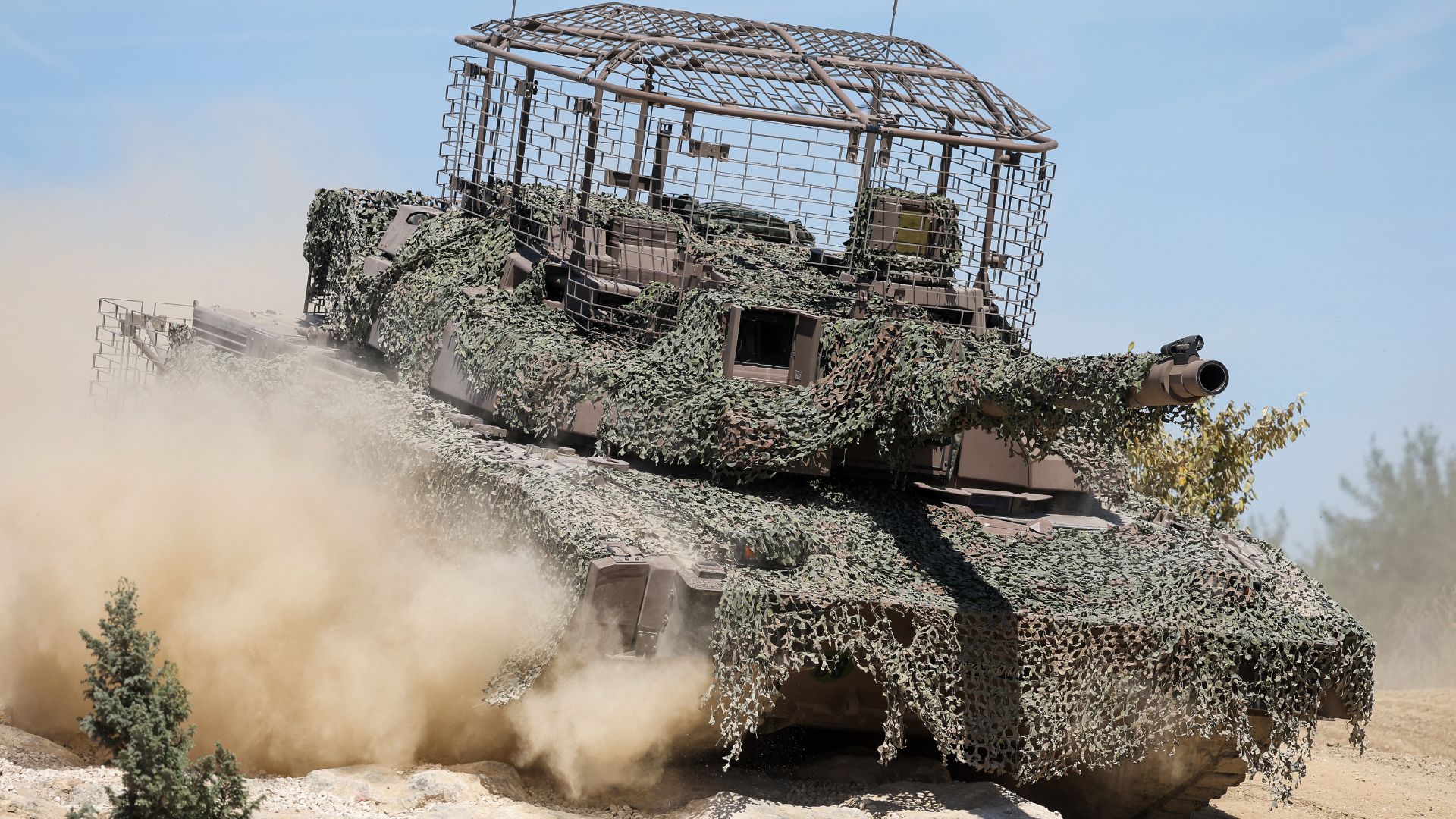
Chinese researchers have outlined a future tank that could generate its own power and strike targets hundreds of miles away. The concept combines a compact nuclear reactor with a 50-megajoule electromagnetic railgun. The proposed vehicle would weigh about 60 tonnes. A 10-megawatt-class small modular reactor would supply its electrical power. Researchers estimate the railgun could accelerate projectiles to roughly 3.5km/s. That could give the weapon a theoretical range of about 280 miles. Three steps to nuclear power The development path starts with conventional propulsion. An initial tank would use a 1,500-horsepower diesel generator. Its 10MJ electromagnetic gun could reach roughly 93 miles. Supercapacitors and flywheels would provide additional energy for high-demand systems. The first design would also feature 2MJ electromagnetic armor. A second-generation vehicle would increase weapon energy to 20MJ. Its projected range would rise to roughly 186 miles. That version would carry 10MJ electromagnetic armor and about five tonnes of advanced energy storage. Researchers also envision solid-state batteries and superconducting storage. An onboard microgrid would coordinate the vehicle’s electrical systems. The final stage would introduce nuclear propulsion after 2045. That would replace the diesel generator with a compact reactor. Fitting the tiny reactor The proposed reactor would use lead-bismuth cooling and produce 10MW of thermal power. Researchers want the reactor package to fit inside just two cubic meters. Its radiation shielding would weigh no more than three tonnes. The reactor would also need a fuel replacement interval of at least five years. Those targets create a difficult packaging problem. Engineers must fit the reactor, shielding and power-conversion equipment inside a combat vehicle. Thermal management presents another hurdle. The reactor would produce substantial heat that engineers must remove from the vehicle. The system would also need to survive punishing off-road conditions. The researchers say it should withstand shocks approaching 30g. The railgun creates an even tougher electrical challenge. A 50MJ weapon must release enormous energy within an extremely short pulse. The reactor could provide steady power, but it cannot instantly deliver the entire firing pulse. Energy storage would need to accumulate power between shots. That makes the vehicle’s capacitors, batteries, and power electronics critical. Researchers say additional multiphysics simulations and vehicle-level testing remain necessary. Feeding 50MJ railgun A nuclear reactor could provide continuous electricity for energy-intensive weapons and sensors. Yet it would also consume space and weight needed for armor, ammunition and crew protection. A military equipment expert told South China Morning Post that installing a fission reactor in a battle tank remains unrealistic. The expert also pointed to shielding and heat-dissipation requirements. The expert questioned the practical value of effectively unlimited onboard electricity. Crews still need rest, while tanks still require ammunition and maintenance. Survivability creates another concern. A destroyed crewed vehicle carrying a reactor could introduce risks beyond losing the platform. The expert suggested an uncrewed alternative. Such a vehicle could use abundant electricity for lasers, microwave weapons, radar, and electronic warfare. That approach could transform the concept from a conventional tank into an autonomous, high-power battlefield platform. The nuclear tank remains a long-term research concept. Its central challenge may be delivering enormous electrical pulses inside a mobile combat vehicle. The study is published in the peer-reviewed Chinese journal Acta Armamentarii. Get the latest in engineering, tech, space & science - delivered daily to your inbox.Aamir is a seasoned tech journalist with experience at Exhibit Magazine, Republic World, and PR Newswire. With a deep love for all things tech and science, he has spent years decoding the latest innovations and exploring how they shape industries, lifestyles, and the future of humanity.
China plans 60-ton 10MW nuclear-powered tank with 50MJ railgun for 280-mile strikes
Full Article
Original Source
Read the full article at Interestingengineering →KhanList aggregates and links to publicly available news content. We do not host full articles from third-party sources. Always verify important information with original sources.