
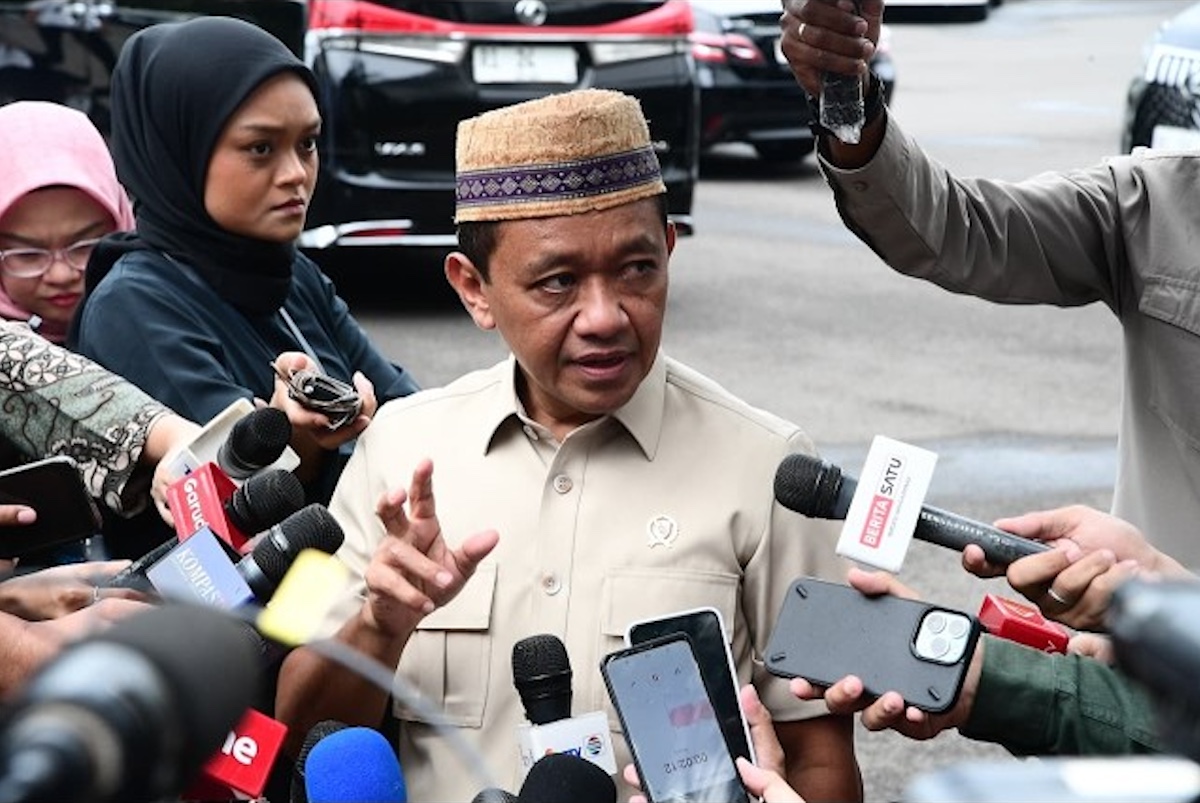
Last week in Shenzhen, Indonesia and China signed a US$1.8 billion agreement to turn Indonesian coal into ethanol, a liquid that can be mixed into petrol. President Prabowo Subianto oversaw the signing. The partners include state oil company Pertamina, Indonesia’s Ministry of Higher Education, Science and Technology and Beijing Petrochemical Engineering. The stated goal is to reduce Indonesia’s petrol imports. A few days later, Energy Minister Bahlil Lahadalia announced in Jakarta that the Bakrie Group, one of Indonesia’s best-known business families, will join the project. He also announced that construction had already started. But Pertamina says the deal is still only a memorandum of understanding, a first step before any binding contract. A full study of costs and risks has not yet been done. Nobody yet knows where the plant will be located, how much it will produce or where the coal will come from. So the partner was picked before the numbers were known. There are three key problems with all this. Who benefits? Bahlil is not only the energy minister. Since August 2024, he has also led Golkar, one of the country’s biggest political parties. Aburizal Bakrie, the senior figure of the Bakrie family and former Golkar chairman, sits on the party’s honorary council. When a minister who also runs a party hands a role in a state-backed project to a group linked to his party’s elder, without any study, the public has every right to ask why. The license matters, too. Bahlil said the Bakrie Group’s old coal contract has been turned into a new special mining license. In Indonesia, large coal miners who want longer contracts must promise to build plants that process coal at home. In 2023, the energy minister at the time confirmed that these coal processing projects would go ahead as part of that deal. Put simply, a coal company can keep mining for decades if it promises to build a factory. Whether the factory ever makes money is someone else’s problem. This kind of industrial policy rewards political closeness and protects old coal interests. It does not grow a new industry. In 2022, then-President Joko Widodo broke ground on a $2.1 billion plant in South Sumatra to turn coal into dimethyl ether, or DME, a gas meant to replace imported cooking gas. A year later, the main investor, US firm Air Products, walked away. A senior energy ministry official admitted that the project simply did not make economic sense. Air Products also left a coal-to-methanol plan in East Kalimantan that involved Bakrie companies. The Institute for Energy Economics and Financial Analysis calculated that making DME would cost almost twice as much as importing cooking gas, and that the plant would need a state subsidy of at least $354 per tonne to earn a profit. By 2025, state miner Bukit Asam said its possible new partners wanted to invest far less than Air Products had planned. Coal-to-ethanol faces the same basic problem. Turning solid coal into liquid fuel needs huge machines, a lot of energy and a lot of water. That makes the fuel costly. When oil prices fall, the plant loses money and the government is asked to cover the gap through subsidies, tax breaks or cheap loans from state banks. In the end, taxpayers pay. China’s green headfake In 2021, President Xi Jinping promised the United Nations that China would help developing countries build green energy and would stop building new coal power plants abroad. A coal-to-fuel plant is not a power plant, so it slips through a gap in that promise. But it carries the same environmental harm. Inside China, this industry is already a worry. The Center for Research on Energy and Clean Air found that coal-to-chemicals was the only major sector where China’s emissions were still rising, and that its planned growth could add 2% to the country’s total emissions by 2029. Some analysts warn that China risks repeating old mistakes and being left with plants nobody needs. Sending the same technology to Indonesia exports that risk. A plant like this runs for 25 to 30 years. Once built, it gives Indonesia a reason to keep digging coal long after other countries have moved on. And if climate rules get stricter or clean fuels become cheaper, the plant could lose its value long before its time. The cost would land on Pertamina, on state banks and finally on the public. Indonesia should still work with China on energy. China makes most of the world’s solar panels, wind turbines and batteries, and builds them cheaply. Indonesia has plenty of sun and a fast-growing need for power. If the real aim is to import less petrol, the better path is to switch motorbikes and buses to electric and charge them with solar and wind power. Jakarta should pause this project until an independent study of its costs and risks is made public. And if Beijing wants to be seen as a green partner, it should spend its money where its promises are. Bhima Yudhistira Adhinegara is the executive director of the Center of Economic and Law Studies (CELIOS), a Jakarta-based think tank. Muhammad Zulfikar Rakhmat is the director of the China-Indonesia and MENA-Indonesia desks at CELIOS.
China-Indonesia coal-to-ethanol deal is neither green nor clean
Full Article
Original Source
Read the full article at Asiatimes →KhanList aggregates and links to publicly available news content. We do not host full articles from third-party sources. Always verify important information with original sources.