
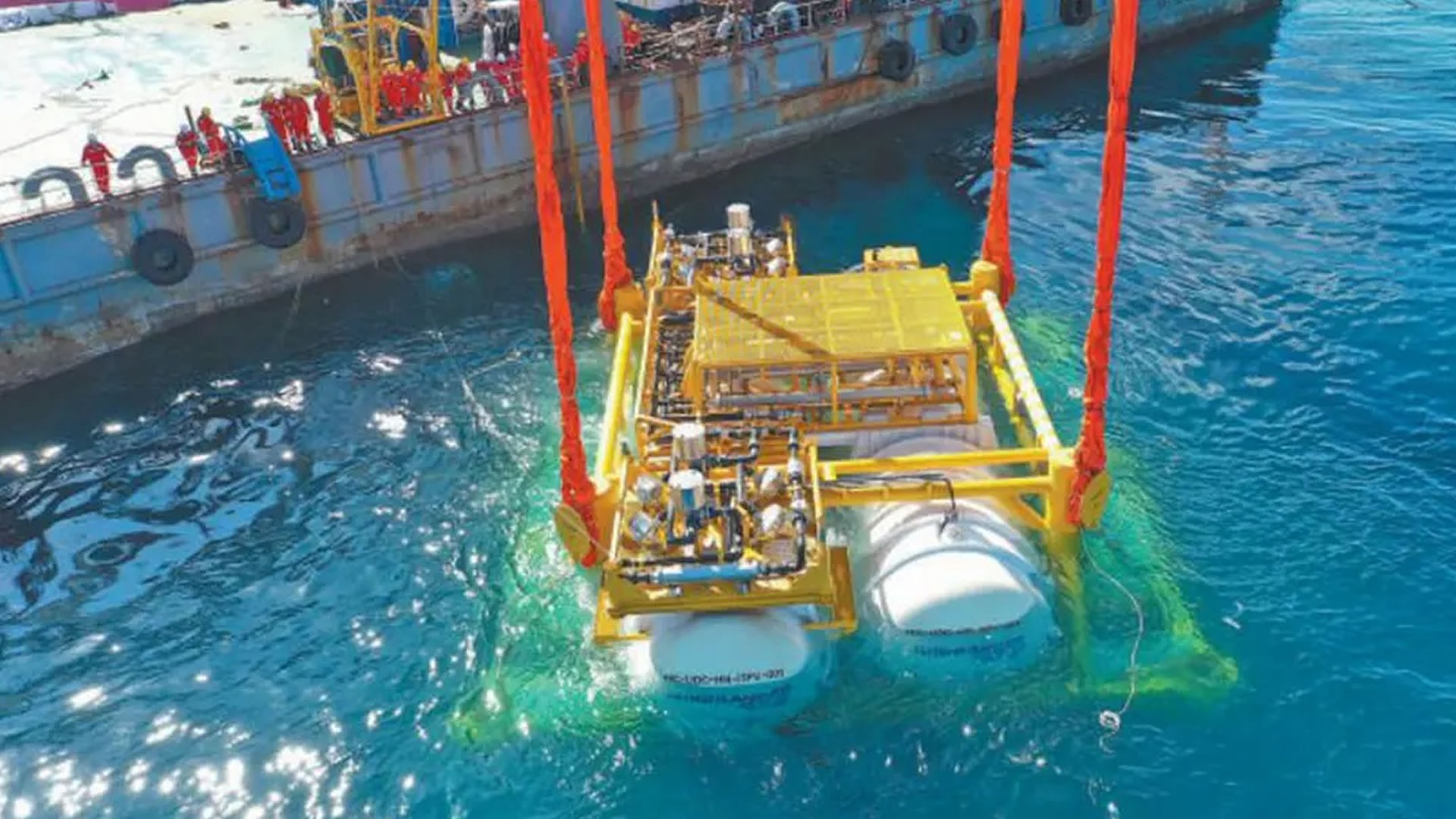
A new study has found that China owns around 80 percent of all global underwater data center patents. That’s not to say China owns much of the technology used in these setups, but it does reveal how active it has been in patenting in this field. The study’s findings come from two Chinese researchers analyzing 168 patents filed between 2006 and 2026. It appears to show that technological focus has shifted quite dramatically over this time. Before about 2014, patents were dominated by American, Norwegian, and Canadian researchers exploring underwater enclosures and pressure protection. Between about 2015 and 2020, attention turned to cooling, electrical supply, and long-term reliability. From 2021, Chinese researchers became the dominant source for patents, particularly focusing on modular construction and maintenance. They also found that China holds the lion’s share, with South Korea owning around 17, and the rest split between the US and Europe. China appears to hold the most patents Chinese patents in particular focus on the actual construction, installation, connections, and maintenance of them at scale. This appears to show that China is shifting focus to the more practical elements rather than proving experimental technology. All very interesting, but why all the interest? Well, data centers generate an enormous amount of heat when in operation. This comes from the conversion of electricity into heat by the vast number of computer processors. Typically, this is handled by using a combination of fans, chillers, cooling towers, and liquid-cooling systems to manage temperatures. That is costly in terms of hardware and additional electricity costs. If the centers could be placed underwater, they could take advantage of the ocean’s near-limitless supply of very cold seawater. Obviously, you can’t just submerge the hardware directly into the ocean, so they need to be placed inside sealed, pressure-resistant containers first. These are then lowered and secured to the seabed, and connections are made to the shore for power and data cables. Once there, the heat from the servers can be transferred to the cold ocean water using special internal cooling systems. To this end, the seawater acts as a massive heat sink, potentially eliminating much of the mechanical cooling equipment needed on land. This doesn’t make the computers themselves consume less electricity, but it can reduce the energy spent keeping them cool. China is taking the lead in underwater data centers And it is not just a theoretical technology either. Famously, Microsoft deployed one, called Project Natick, off the coast of Scotland in 2018. The project ran for around two years, and results were very encouraging. According to Microsoft, the underwater data center had just one-eighth of the failure rate of similar land-based setups. Yet despite this, Microsoft chose not to commercialize the technology, and confirmed in 2024 that the project had been discontinued. So, is the 80 percent figure something other nations should sit up and take notice of? Yes, and no. It is clear China has established some kind of lead here in terms of patents, but the engineering challenges of actually deploying them are enormous. The shift in focus to modularity likely reflects China’s ambitions to scale the technology commercially. But it is important to note that patents tend to be territorial in nature. Holding a large share of patents in a particular field doesn’t automatically give a country control of the technology worldwide. Get the latest in engineering, tech, space & science - delivered daily to your inbox.Christopher graduated from Cardiff University in 2004 with a Masters Degree in Geology. Since then, he has worked exclusively within the Built Environment, Occupational Health and Safety and Environmental Consultancy industries. He is a qualified and accredited Energy Consultant, Green Deal Assessor and Practitioner member of IEMA. Chris’s main interests range from Science and Engineering, Military and Ancient History to Politics and Philosophy.
China holds 80% of underwater data center patents in past 20 years, can boost AI energy use
Full Article
Original Source
Read the full article at Interestingengineering →KhanList aggregates and links to publicly available news content. We do not host full articles from third-party sources. Always verify important information with original sources.