
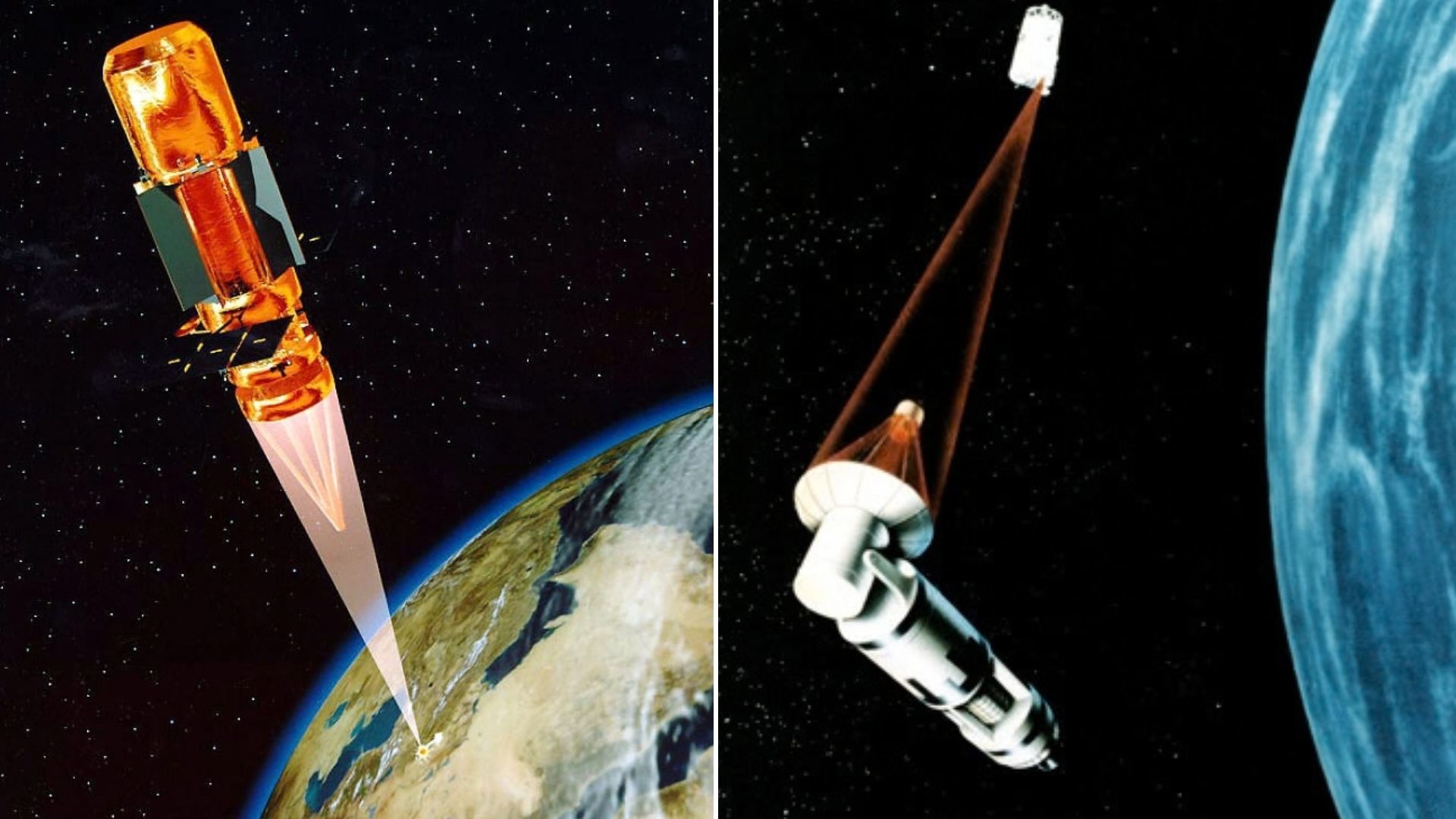
The United States has publicly acknowledged that it has weapons deployed in orbit, marking a significant shift in how Washington describes its military capabilities in space. Air Force Secretary Troy Meink said on September 14 that the United States has “on-orbit space control weapons” capable of defending U.S. forces against hostile action. He did not identify the systems or disclose where they are deployed. The statement quickly became a subject of concern at the Beijing Xiangshan Forum, where defense experts warned that openly acknowledging weapons in orbit could undermine longstanding restraint and encourage other countries to expand their own counterspace arsenals. What weapons does the US have in orbit? That remains unclear. The Pentagon has not publicly identified the systems Meink was referring to. The U.S. has long operated satellites and ground-based capabilities designed to protect its space assets, while developing technologies that can disrupt or interfere with adversary satellites. Experts cited by the South China Morning Post suggested the newly acknowledged weapons could involve non-kinetic systems such as jammers or spoofers. These technologies can interfere with communications, navigation, or other satellite functions without physically destroying a spacecraft. The U.S. government has not confirmed that interpretation. The distinction is important because physically destroying satellites can generate large clouds of orbital debris. A 2007 Chinese anti-satellite missile test, for example, created thousands of trackable pieces of debris and remains one of the most prominent examples of the long-term consequences of kinetic anti-satellite testing. The latest U.S. statements therefore establish the existence of on-orbit weapons, but not their specific capabilities. Why China says a taboo has been broken The timing of the announcement was particularly significant because the 13th Beijing Xiangshan Forum was taking place from September 15 to 17, with one of its sessions focused specifically on outer-space security governance. At the forum, Guo Xiaobing, director of the Center for Arms Control Studies at the China Institutes of Contemporary International Relations, described the deployment of conventional weapons in space as a longstanding taboo. “The taboo was broken yesterday,” Guo said, according to SCMP. “We are at a breaking point in history.” Other experts went further, warning that the disclosure could trigger a new cycle of military competition. Almudena Azcarate Ortega, a senior program analyst at the Secure World Foundation, told the forum that the deployment itself does not violate the 1967 Outer Space Treaty, which prohibits placing nuclear weapons and other weapons of mass destruction in orbit but does not impose a blanket ban on conventional weapons in space. However, she cautioned that the announcement could be escalatory because other nations could respond by deploying similar systems. The treaty does not ban all weapons in space The legal situation is more complicated than the phrase “weapons in space” might suggest. Article IV of the Outer Space Treaty prohibits states from placing nuclear weapons or other weapons of mass destruction in orbit or stationing them in outer space. It also prohibits military installations and certain military activities on the Moon and other celestial bodies. It does not explicitly prohibit conventional weapons from being placed in Earth orbit. That means the U.S. acknowledgment does not, by itself, establish a violation of the treaty. Other international law still applies to activities in space, however. Ortega told the Xiangshan Forum that the legal situation could change if the use of such a weapon reached the threshold of a prohibited use of force. China and the US see different threats The debate also exposes a fundamental difference in how Washington and Beijing describe the space-security problem. The United States has repeatedly warned about China’s growing counterspace capabilities, including anti-satellite missiles, electronic warfare, directed-energy systems and other technologies that could threaten American and allied satellites. Beijing, meanwhile, has criticized what it describes as Washington’s pursuit of dominance in outer space. That creates a classic security dilemma: a capability developed by one country as a defensive measure can be interpreted by another as preparation for an offensive attack. China has already responded publicly to the latest disclosure. Its foreign ministry urged Washington to stop what it described as a military buildup in outer space and warned against turning space into a battlefield. Reuters has also reported Chinese state media warning that the move could fuel a global arms race. Space is becoming part of the battlefield Modern military forces depend heavily on satellites for communications, navigation, intelligence, missile warning and battlefield coordination. That makes space systems increasingly valuable targets during a major conflict. The United States is simultaneously expanding its defensive and offensive space capabilities. Meink’s September announcement came alongside discussion of new proliferated satellite constellations and the Space-Based Interceptor program, which is intended to place missile interceptors in low Earth orbit. Space Force Chief Gen. Douglas Schiess subsequently made the U.S. position even clearer, saying that Guardians now operate on-orbit weapons capable of defending against space-enabled attacks. The concern raised at the Xiangshan Forum is therefore not simply about one newly disclosed weapon. It is about what happens when the United States, China, Russia and other space powers increasingly assume that their satellites could be attacked and begin placing more systems in orbit to protect, disrupt or potentially disable those of their rivals.The U.S. disclosure does not prove that a new space arms race has begun. But it does show that the competition has moved beyond discussions of hypothetical future weapons. Some of the systems intended to fight for control of space are already there.Get the latest in engineering, tech, space & science - delivered daily to your inbox.Kaif Shaikh is a journalist and writer passionate about turning complex information into clear, impactful stories. His writing covers technology, sustainability, geopolitics, and occasionally fiction. A graduate in Journalism and Mass Communication, his work has appeared in the Times of India and beyond. After a near-fatal experience, Kaif began seeing both stories and silences differently. Outside work, he juggles far too many projects and passions, but always makes time to read, reflect, and hold onto the thread of wonder.
China fears US deployment of space weapons raises risks of fresh arms race: Report
Full Article
Original Source
Read the full article at Interestingengineering →KhanList aggregates and links to publicly available news content. We do not host full articles from third-party sources. Always verify important information with original sources.