
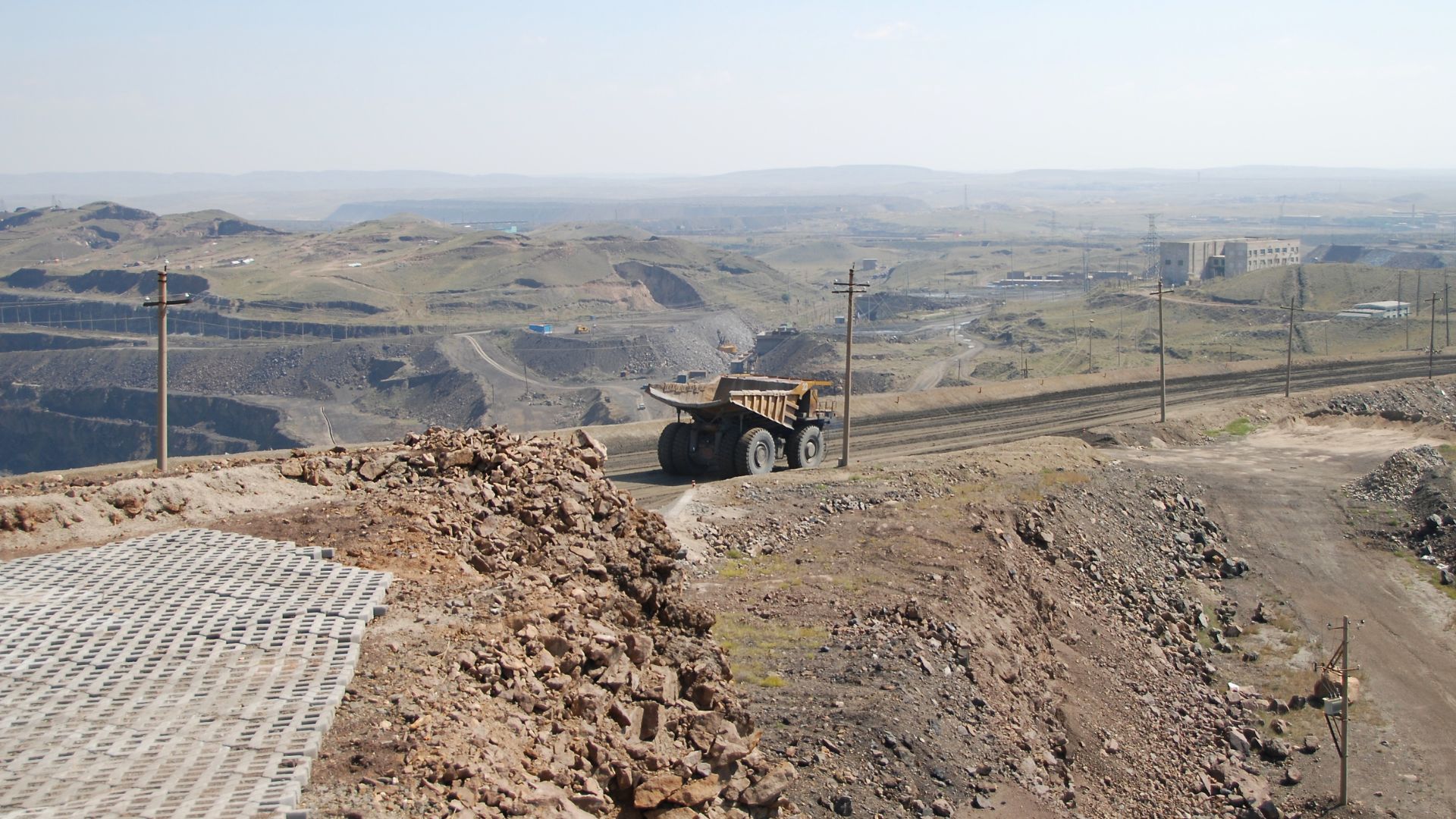
China is moving ahead with a major expansion of the Bayan Obo mining complex in Inner Mongolia, increasing annual mining capacity by 50%. The project targets iron ore production, even though Bayan Obo is also the world’s largest known rare earth deposit. State-owned Baogang Group plans to invest more than 500 million yuan (about US$74 million) to raise annual mining capacity from 10 million tonnes to 15 million tonnes. The expansion includes a larger open-pit operation, a new eastern mining pit, upgraded transport infrastructure, and intelligent mining systems such as 5G-enabled vehicle dispatch and slope monitoring. Iron remains the priority The expansion lands at a time when Washington is pouring billions into domestic critical minerals projects in an effort to loosen China’s grip on strategic supply chains. Yet the additional mining capacity does not automatically mean more rare earths will reach global markets. Baogang Group has said the project primarily aims to extract more iron ore. Rare earth elements are recovered as a by-product from Bayan Obo’s polymetallic ore, which also contains fluorite, niobium, scandium and thorium. A geologist at Peking University said rare earth production remains governed by state quotas, leaving little incentive to mine additional ore solely for those minerals. “Rare earth production is subject to quotas, so there is no need to mine more ore,” he said. He added that iron remains the primary target, with fluorite recovered alongside it. Project documents indicate the wider Bayan Obo mining area contains roughly 600 million tonnes of iron ore with an average iron grade of about 35%. Although that grade trails many Australian deposits, the mine remains one of China’s most strategically important mineral assets because of its unique mix of critical minerals. Policy controls supply The expansion increases China’s mining flexibility, but it does not automatically increase rare earth production. Beijing manages rare earth mining and downstream separation through annual production quotas. Those limits determine how much material reaches refiners and manufacturers, regardless of how much ore comes out of the ground. As a result, a 50% increase in mining capacity does not translate into a comparable increase in separated rare earth oxides. Processing capacity, government allocations and commercial economics still shape final output. That distinction matters as the United States accelerates investment in domestic mining, refining and magnet manufacturing. Expanding mine capacity is only one step in the supply chain. The ability to separate, refine and process rare earths remains the more difficult strategic advantage. Processing defines dominance Bayan Obo has supplied much of the world’s rare earth production for decades, but China’s leadership extends well beyond its mineral deposits. China Northern Rare Earth, one of the country’s largest processors linked to the Bayan Obo ecosystem, produced about 95,000 tonnes of rare earth oxides in 2025. The figure illustrates that China’s strength lies as much in downstream processing as in the resources themselves. Researchers recently reported that Bayan Obo’s underground rare earth resources could be several times larger than the current reserve estimate of 100 million tonnes. Even if future studies confirm those estimates, larger resources alone would not guarantee higher production. Mining economics, processing infrastructure and government quotas would continue to determine how much material ultimately reaches global markets.Recommended ArticlesGet the latest in engineering, tech, space & science - delivered daily to your inbox.Aamir is a seasoned tech journalist with experience at Exhibit Magazine, Republic World, and PR Newswire. With a deep love for all things tech and science, he has spent years decoding the latest innovations and exploring how they shape industries, lifestyles, and the future of humanity.
China expands world’s largest rare earth mine by 50% to 15 million tonnes annually
Full Article
Original Source
Read the full article at Interestingengineering →KhanList aggregates and links to publicly available news content. We do not host full articles from third-party sources. Always verify important information with original sources.