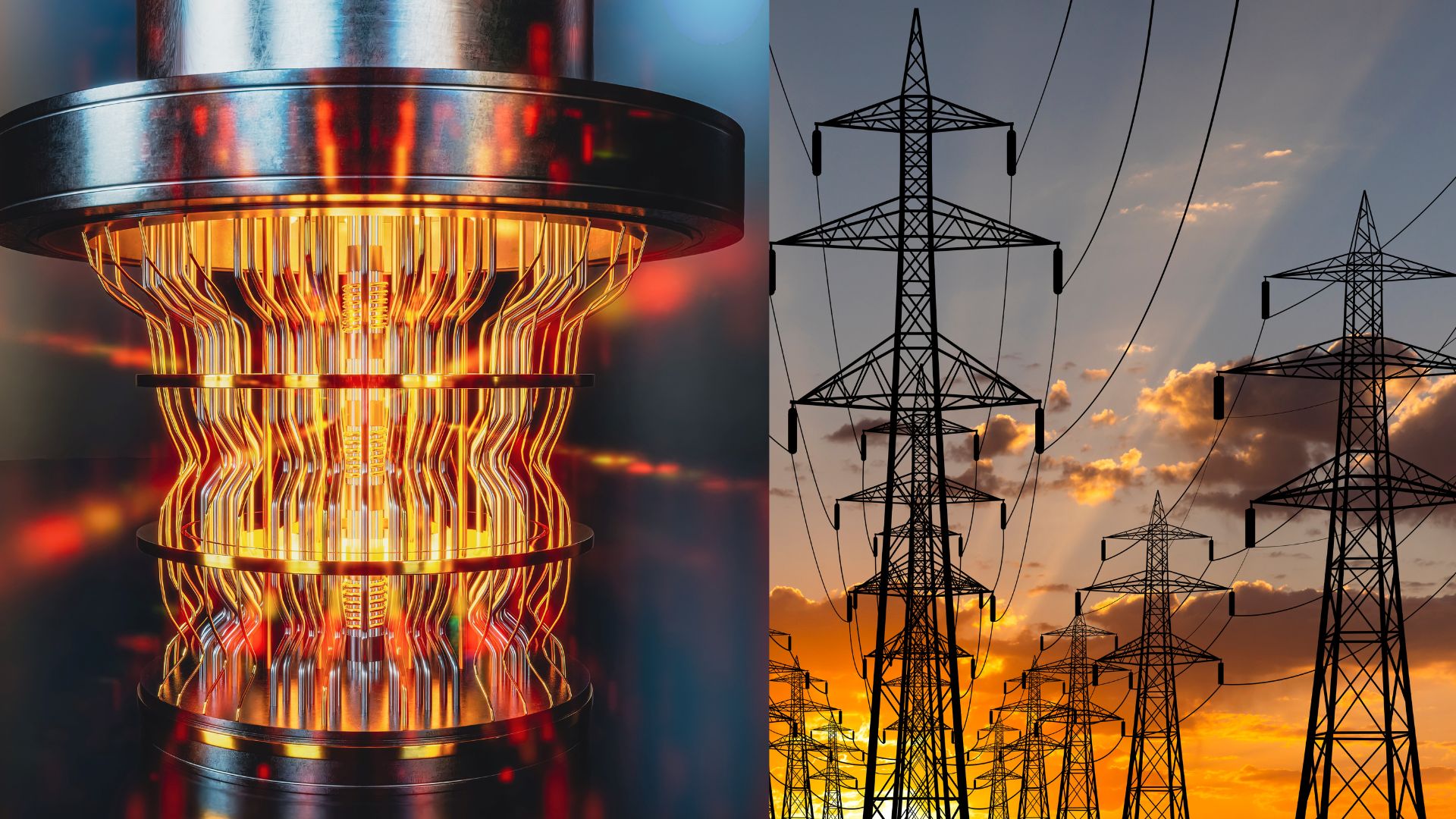
China is testing quantum technology as a practical tool for keeping its power grid reliable, using quantum sensors, secure communications and computing to detect faults, improve measurements and model grid operations. The work follows an 18-month trial at a substation in Hefei, Anhui province, where quantum technologies were used to detect and diagnose equipment defects and faults. The facility, officially commissioned in November 2024, has developed and applied dozens of quantum solutions across measurement, communication and computing. The project is being positioned as a way to address some of the limits of conventional grid technology. These include delayed equipment monitoring, measurement errors, data-security risks and the computational load involved in analyzing complex power systems. One of the technologies deployed at the substation is a quantum sensor that monitors tiny changes in temperature and humidity inside a switchgear room. It can also detect weak partial electrical discharges, which can damage equipment and potentially lead to outages. Quantum sensors watch grids Another quantum sensor measures the current flowing through power lines and can help locate faults more quickly. Researchers have also developed systems to detect cracks in ferromagnetic materials such as iron and cobalt, as well as identify potential fire hazards. The technology is being used to improve electricity measurement as well. Researchers developed a diamond-based quantum precision measurement system that can detect very small changes in electrical current. According to the report, the technology could reduce electricity measurement errors at the substation by more than 500,000 kilowatt-hours per year. That could improve the accuracy of electricity monitoring while helping grid operators identify discrepancies between the amount of electricity transmitted or consumed and what conventional meters record. Quantum technology is also being used to secure communications. The facility has integrated quantum encryption equipment into fiber-optic links and 5G communications used by the power system. “The operation has proved that quantum technology is not a ‘showpiece’, but a ‘hard support’ for guaranteeing the power supply and promoting development,” Tian Teng, a researcher with Anhui Electric Power Company, was quoted as saying. Quantum computing models outages The Hefei facility is also using quantum computing to simulate possible operating conditions across the power grid. It draws on Origin Wukong, China’s third-generation superconducting quantum computer, for simulation and verification. The goal is to help grid operators analyze complex operating states more quickly and improve their ability to respond to changing conditions. China’s push comes as its electricity system faces the challenge of managing a huge and growing power network. The country is the world’s largest electricity producer and has experienced power shortages and blackouts in recent years, driven by factors including high demand, coal supply constraints and extreme heat. The Hefei project is now being used as a model for additional demonstrations at higher-level substations. Multiple quantum products developed in Anhui are also being rolled out more widely across the country. Researchers are continuing to develop new applications. One of the systems under development is designed to detect gas leaks caused by equipment defects earlier than conventional technologies.If the technology proves effective at larger scales, quantum sensing and computing could become another layer of the infrastructure used to monitor China’s power grid, detect problems before they become outages, and improve the security of its communications.Recommended ArticlesGet the latest in engineering, tech, space & science - delivered daily to your inbox.With over a decade-long career in journalism, Neetika Walter has worked with The Economic Times, ANI, and Hindustan Times, covering politics, business, technology, and the clean energy sector. Passionate about contemporary culture, books, poetry, and storytelling, she brings depth and insight to her writing. When she isn’t chasing stories, she’s likely lost in a book or enjoying the company of her dogs.
China expands quantum technology to protect power grid with smarter fault detection
Full Article
Original Source
Read the full article at Interestingengineering →KhanList aggregates and links to publicly available news content. We do not host full articles from third-party sources. Always verify important information with original sources.