
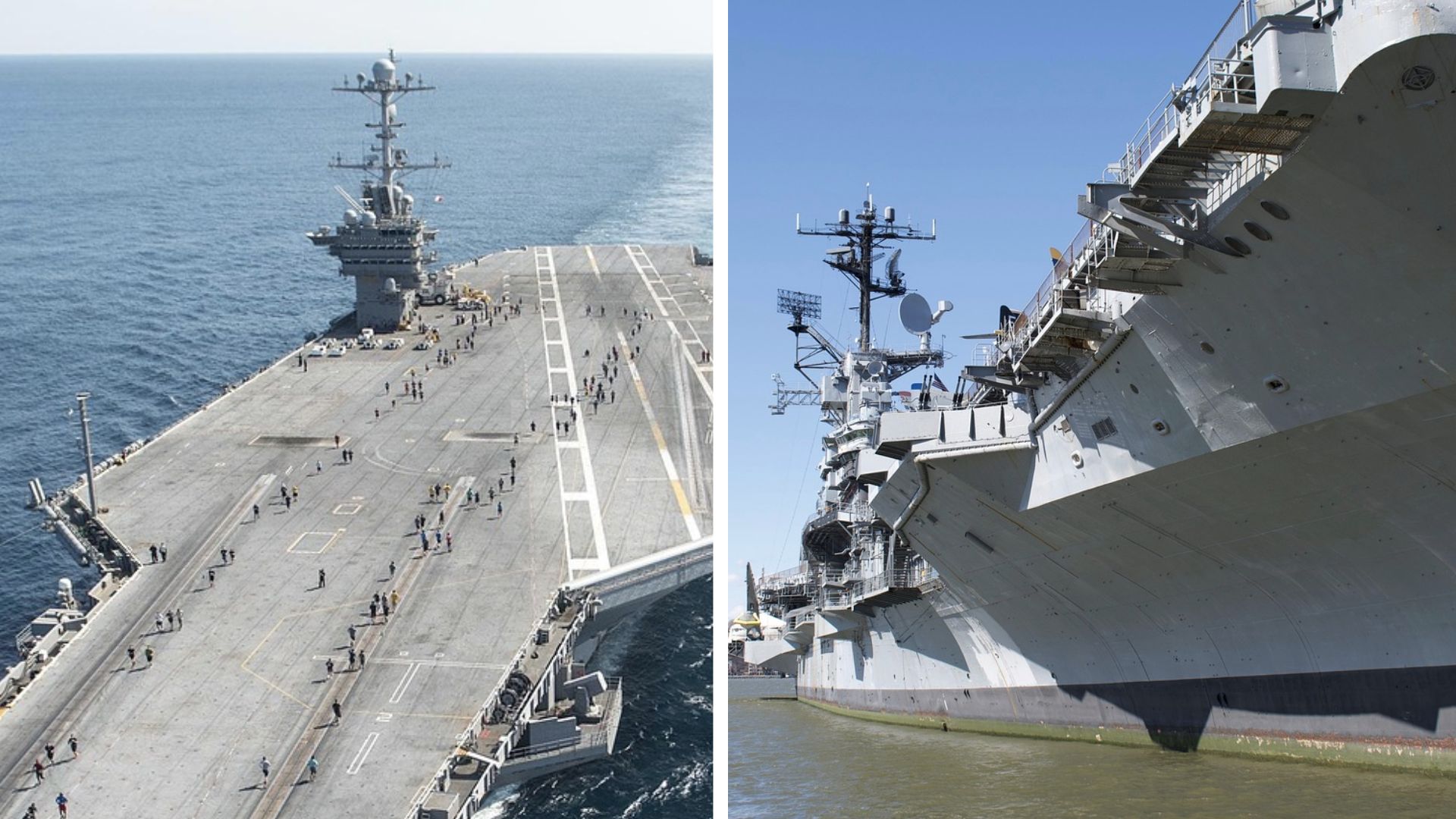
Key TakeawaysThe adoption of nuclear propulsion would represent a major advancement in China's naval capabilities.Unlike conventionally powered carriers, nuclear-powered vessels do not require regular refuelling for propulsion.Such vessels can sustain high-speed operations for extended periods. China could possibly launch its new aircraft carrier by the end of next year, according to a report. The vessel could be China’s first carrier with a nuclear-powered system. Released by the Centre for Strategic and International Studies (CSIS), the report revealed details citing recent satellite images at the Dalian Shipyard in northern China. Aircraft carrier being built at rapid pace The vessel is possibly known as the Type 004 and it’s being built at a rapid pace. CSIS revealed that in less than two years, prefabricated hull components that first appeared in a Dalian dry dock in early 2025 have been assembled into a clearly recognizable hull—highlighting the speed and scale of China’s maritime industrial base.The vessel’s hull measures approximately 1,056 feet (322 meters) in length from the unfinished bow to stern, and it has a beam (or width) of approximately 150 feet (46 meters). This is far larger than any other class of surface combatant in China’s navy, as per the report.CSIS stated that the vessel’s hull configuration makes clear that it is not a civilian commercial ship. It does not match the configuration of other vessels, such as ultra-large container ships, cargo ships, or tankers. Additionally, the hull’s shape and configuration closely match those of other Chinese aircraft carriers at roughly similar stages of construction. Aircraft carrier could have four fighter jet launch catapults It’s also being claimed that the vessel could have four aircraft launch catapults, which bolsters its aggressive presence for the naval warfare. A larger flight deck and hangar would allow the vessel to accommodate more aircraft and improve the flexibility of flight operations. This would enhance China’s ability to conduct sustained naval aviation operations over greater distances.However, the significance of the Type 004 extends beyond its physical dimensions. Its propulsion system could prove to be its most important technological feature.The adoption of nuclear propulsion would represent a major advancement in China’s naval capabilities. Unlike conventionally powered carriers, nuclear-powered vessels do not require regular refuelling for propulsion. They can sustain high-speed operations for extended periods and reduce some of the logistical constraints associated with long-distance deployments. Aircraft carrier’s nuclear propulsion provides substantial energy-generation capacity Nuclear propulsion provides substantial energy-generation capacity for advanced onboard systems, including electromagnetic aircraft launch technology.If nuclear propulsion is confirmed, the Type 004 would mark a particularly important milestone, potentially giving China the ability to operate a more capable and enduring carrier force.China launched Fujian aircraft carrier with three electromagnetic catapults recently. The 80,000-ton vessel was rapidly developed. After the launch of Fujian, the construction of a new carrier in China poses major threat to Western powers. China’s expanding naval capabilities could alter regional military calculations, particularly in areas where maritime disputes and competing territorial claims already exist. Get the latest in engineering, tech, space & science - delivered daily to your inbox.Prabhat, an alumnus of the Indian Institute of Mass Communication, is a tech and defense journalist. While he enjoys writing on modern weapons and emerging tech, he has also reported on global politics and business. He has been previously associated with well-known media houses, including the International Business Times (Singapore Edition) and ANI.
China could launch its first aircraft carrier with nuclear-powered system after 80,000-ton vessel
Full Article
Original Source
Read the full article at Interestingengineering →KhanList aggregates and links to publicly available news content. We do not host full articles from third-party sources. Always verify important information with original sources.