
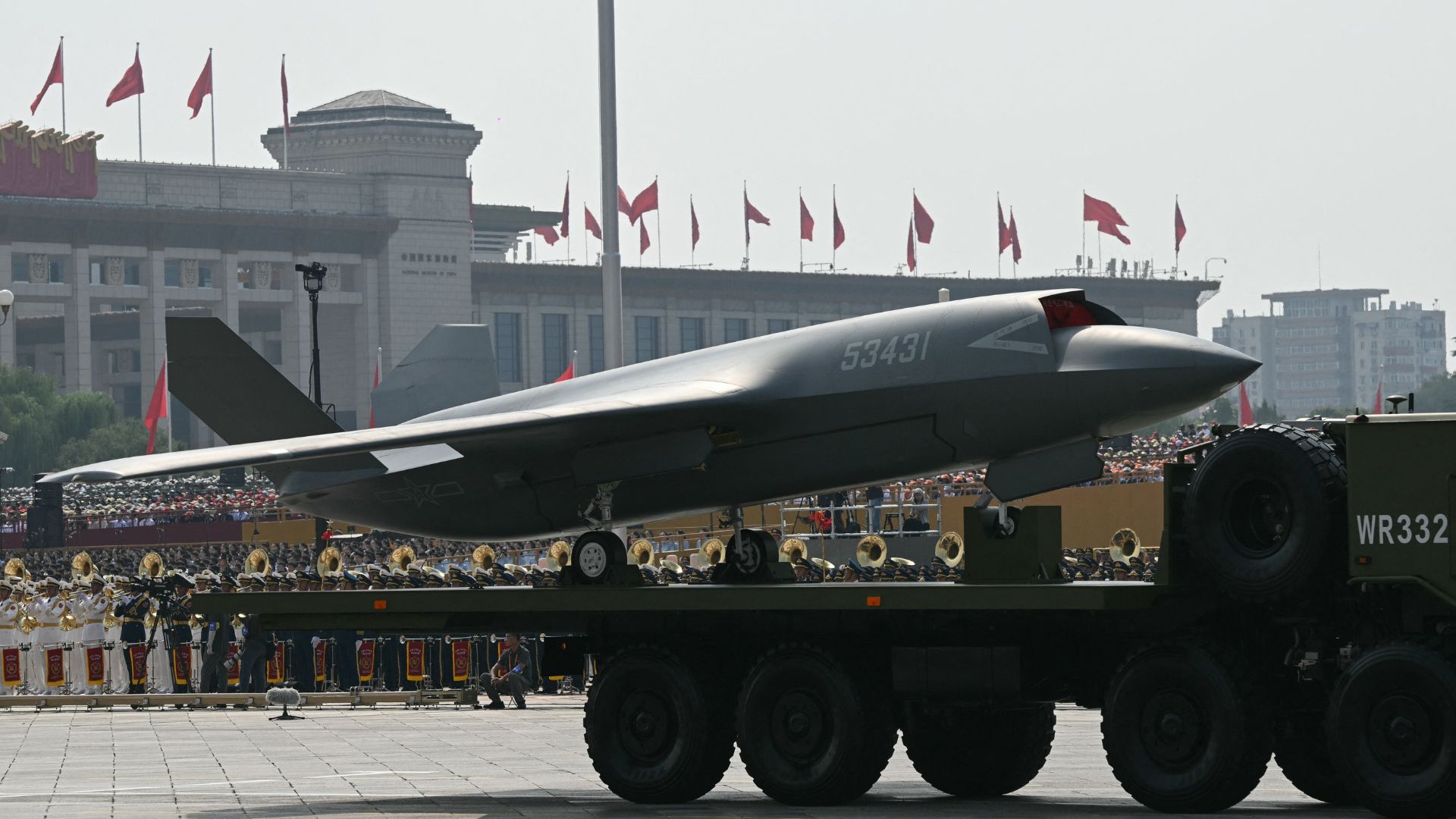
China’s enormous drone industry may still struggle to keep pace with a sudden, high-intensity conflict. Even after industrial mobilisation, the country could fulfil only around 60% of its military drone orders, according to a new study. Researchers at the Beijing Institute of Technology reached the estimate using an AI model that simulated a threefold rise in wartime demand. The study also examined how inventories, suppliers, funding and converted civilian factories would respond after war began. Wartime demand overwhelms production The research was led by Professor Zhang Jihai, director of the National Defence Mobilisation Research Centre. His team modelled a multilevel supply chain connecting component and subsystem suppliers with drone assembly plants. “Modern warfare competition is no longer merely about the performance of weapon systems, but more fundamentally about industrial capacity – especially the comprehensive capability of production mobilisation for military equipment,” the researchers wrote. In one scenario, military demand rose to three times its normal level. Factories released stored equipment, increased overtime, added production lines and converted civilian capacity, but cumulative order fulfilment reached only 63.4%. “Under high-intensity demand shocks, the supply chain, although possessing certain mobilisation and recovery capabilities, still faces a significant supply-demand gap,” the team said. AI improves drone deliveries The researchers compared three responses across 30 simulations: no mobilisation, rule-based mobilisation and an AI-led strategy. Median order fulfilment stood at around 34% without mobilisation and 51% under the rule-based approach. The AI strategy achieved approximately 58%. The AI system examined inventory, production capacity, order pressure and funding before selecting military suppliers for expansion and civilian companies for conversion. Its average fulfilment rate was 8.4% higher than the rule-based approach and 24.3% above the no-mobilisation scenario. Increasing available mobilisation funding from 60% to 140% of the baseline raised fulfilment from 54.9% to 62.3%. Further spending brought smaller gains because factory construction times and conversion limits restricted how quickly new capacity could become operational. Civilian factories could change the result A Chinese weapons specialist cautioned that the findings represented an “argumentative study,” rather than a prediction of what would happen during an actual war. The simulation covered existing military suppliers and civilian manufacturers capable of conversion. A wider mobilisation could bring electronics, battery, vehicle, machinery and consumer technology companies into the military supply chain. “The rapid production capability can fully meet the demand, but the supply of core components is not that simple,” the specialist said. China’s Covid-19 response showed that companies outside the medical sector could rapidly begin producing masks and protective equipment. However, converting factories to manufacture military drones would still require technical adaptations, suitable machinery and specialised components. “Capacity expansion and conversion are not activated continuously, but rather exhibit phased triggering and discontinuous implementation,” the researchers wrote. The findings show that wartime output would depend not only on China’s ability to assemble drones, but also on how quickly it could expand the supply of critical components. Published online in the Journal of System Simulation on July 24. Get the latest in engineering, tech, space & science - delivered daily to your inbox.Atharva is a full-time content writer with a post-graduate degree in media & amp; entertainment and a graduate degree in electronics & telecommunications. He has written in the sports and technology domains respectively. In his leisure time, Atharva loves learning about digital marketing and watching soccer matches. His main goal behind joining Interesting Engineering is to learn more about how the recent technological advancements are helping human beings on both societal and individual levels in their daily lives.
China can meet only 60% of wartime drone demand, study finds
Full Article
Original Source
Read the full article at Interestingengineering →KhanList aggregates and links to publicly available news content. We do not host full articles from third-party sources. Always verify important information with original sources.