
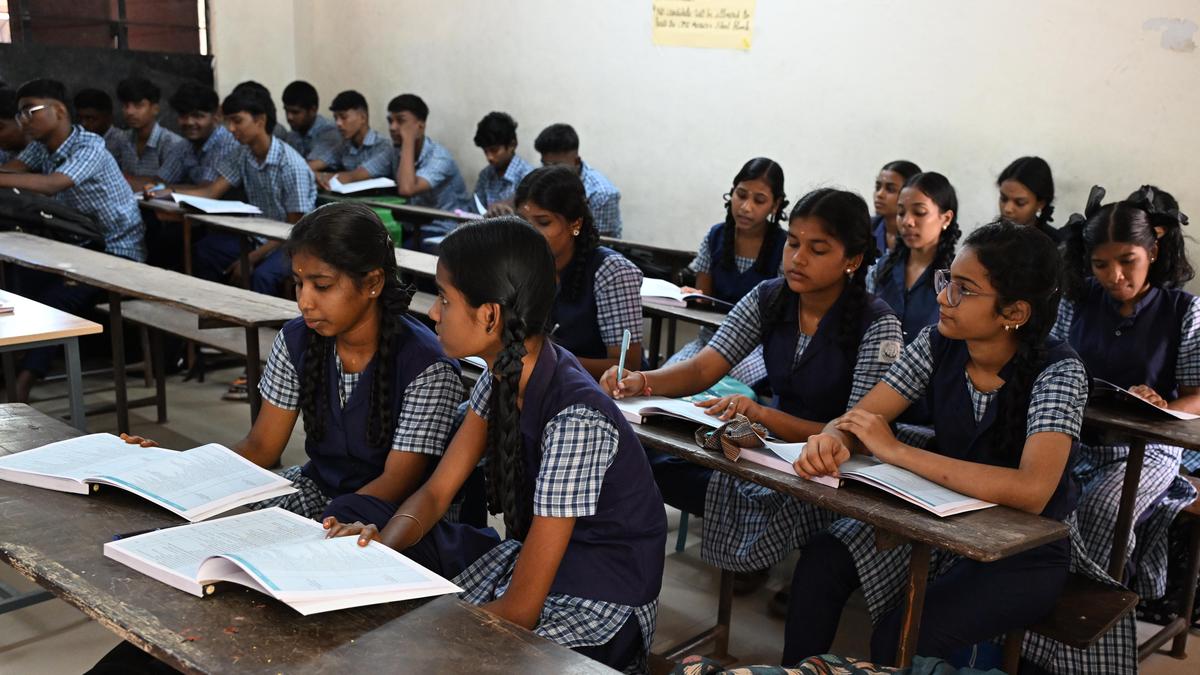
Aradhya Menon, a school-going teenager from Thrissur, Keralam, always felt that being independent is extremely important; the same thought is what inspired her to pick up driving an electric scooty. That is when, on one of the first times, she noticed the difference in how people treat a girl and a boy, even in something as basic as driving a vehicle. From warnings that she’ll crash somewhere to how girls should not be out like this alone, the more she tried to be independent, the more the comments grew.This is not just the story of Aradhya; gender discrimination has always been, unfortunately, a part of our society. Such exposure comes from a very young age in a country like India. 7-year-old Inaarah’s mother talked about how her daughter has often noticed and questioned the difference in treatment she sees around her without even understanding or knowing it’s gender discrimination. “She has not reached a stage to process it or understand the concept fully, but definitely notices and sometimes even responds innocently and brilliantly to people who make such comments,” she adds about her daughter’s encounter with gender discrimination so far.“She has grown up seeing that women are capable of everything, which motivates her to question when she feels something is wrong in the way someone is treated,” Inaarah’s mother adds.Such exposures come from a very young age in a country like India. According to the World Economic Forum Global Gender Gap Report 2026, India ranks 131st out of 145 countries with an overall gender parity score of 64.5%, which trails the global average of 69.2%. Exposure to gender discrimination comes from a very young age in a country like India. | Photo Credit: Getty Images Reactions, impacts and responsesAkarsha G Nair, a 16-year-old from Thrissur, Keralam, talked about one of her first experiences with such gender comments, which came because of her voice. “When I was younger, I had a very loud voice, and I used to speak quite loudly, but then some of my extended family used to ask me to quiet down, saying that I am a girl and not supposed to make so much noise,” she said. “It actually made me switch from being an extrovert to an introvert for a while because of self-doubt and insecurity about my voice due to the constant comments. As I grew older, I realised there was no point in giving in to any of it and started embracing my voice as my identity. Am I being too loud, used to haunt me for a bit,” she added.While trying to react to discriminatory comments after being hurt by them, “they usually just laugh it off”, says Aradhya. “It is quite frustrating to see boys my age being called more responsible drivers even when the reality is the opposite. I get comments from the neighbourhood asking whether I want to become a driver, while a boy of my same age gets called responsible for knowing how to drive,” Aradhya adds. Exposure to gender discrimination comes from a very young age in a country like India. | Photo Credit: Getty Images/Istockphoto “My ambition is to study law and clear the IFS. There were people who told foreign service is such a big position, and asked if I really think a woman could reach there. However, that only triggered me in the opposite way than they intended; now I am just more ambitious.”Akarsha G NairStudent“It’s almost like they are waiting for me to make a small mistake to pounce; the pressure is always high, and I need to be more conscious about it sometimes,” adds Aradhya. Akarsha also talked about how she has started to become more conscious — like carrying a key or a pen if walking outside after 6 pm or changing her dress before receiving an order from the door in her own house.The other sideThe discrimination is not one-sided at all. Boys are also impacted by the comments often arising out of patriarchal and misogynistic ideologies in society. “There are boys in my class who were told, 'Boys don’t cry or be strong, don’t cry,’ as a way of consoling them in various situations,” says Aradhya.Madhav G, a 15-year-old from Alappuzha, Keralam talked about how people often say, ‘Even the boys are being nice and quiet in class or other situations, then why can’t you?’ to girls. It enables the idea that boys are supposed to be noisemakers, and that their being quiet is not the norm,” he adds. Boys being asked not to cry even in schools emerged from multiple students I spoke to, with the exception being of one teacher who asked a student in her class to cry it out.“I used to feel pressurised to participate in sports when I was younger because the majority of the boys were into the same, and I often used to think I was also supposed to do it. It was much later that I found that my interest and skill lie in science rather than sports,” Madhav adds, while talking about how gender might not be a direct conversation or reason stated, but inevitably appears in even small things like choosing between sports and arts.Aradhya, who participates in sports, on the other hand, had a different experience on the same ground. “While participating in sports events as well, one of my first encounters was that some teachers often categorise things as ‘Boys will be boys’, while when it comes to girls, their parents are blamed,” she says while talking about how such comments subconsciously stay with them, often excusing any behaviour on gender differences. Exposure to gender discrimination comes from a very young age in a country like India. | Photo Credit: Getty Images/iStockphotos “Teachers often have a notion that boys are this rowdy group that creates trouble for others and are generally not that smart compared to girls. It is slowly changing in the present generation as compared to before, though.”Joshua16-year-old from Ernakulam, KeralamAre the times actually changing?On a positive note, though, while working on another story related to gender equity in schools, I had talked to Anvesha Gupta, a Class 10 student from Kolkata, West Bengal, who had mentioned how students today are more aware of their surroundings, and they do try to deal with it properly. “There have been moments where my classmates have spoken up against gender based jokes or stereotypes. Many students support one another and encourage equal participation, whether in sports, academics, or cultural events,” she added. Clearly, the youngsters are slaying the game of standing up for themselves. Exposure to gender discrimination comes from a very young age in a country like India. | Photo Credit: Getty Images/iStockphoto Madhav adds that while participating in science competitions earlier, there used to be a large amount of male representation, and girls were often said to be interested only in art events. “That is changing now. Some competitions even have rules that a certain number of girls need to be there for the event, which is also encouraging them to come out more,” he says.“Students are standing up more to such comments nowadays, especially when a teacher tries to target a student in any way,” says Aradhya.Is that conditioning?The root of such misogynistic comments mostly points towards patriarchy. What is that, you ask? Patriarchy is basically a social, political, and economic system in which men hold primary power, moral authority, and social privilege, while women and other marginalised groups are largely excluded or subordinated. This has negative impacts not just on women but also on men for even things like expressing emotions. Even though it is not directly spoken about, the impact of such a system is very much evident in our society.Many of the discriminatory comments often do not come from a very conscious desire to hurt someone or target someone. It is the aftermath of conditioning. Conditioning is the process of mentally influencing a person so that they do or expect a particular thing without thinking about it much.“My grandmother often tells my sister and me not to go out after evening, even if we are together and driving. She does not know it is discrimination or does not intend to hurt us in any way, but the conditioning persists through generations,” adds Aradhya. From subtle comments about how women are bad drivers to boys should provide and not cry, we should not forget that future generations are also listening and subconsciously learning how they are supposed to be or not to be — listen, understand and react!
Children’s Day Special | Facing the differences
Full Article
Original Source
Read the full article at Thehindu →KhanList aggregates and links to publicly available news content. We do not host full articles from third-party sources. Always verify important information with original sources.