
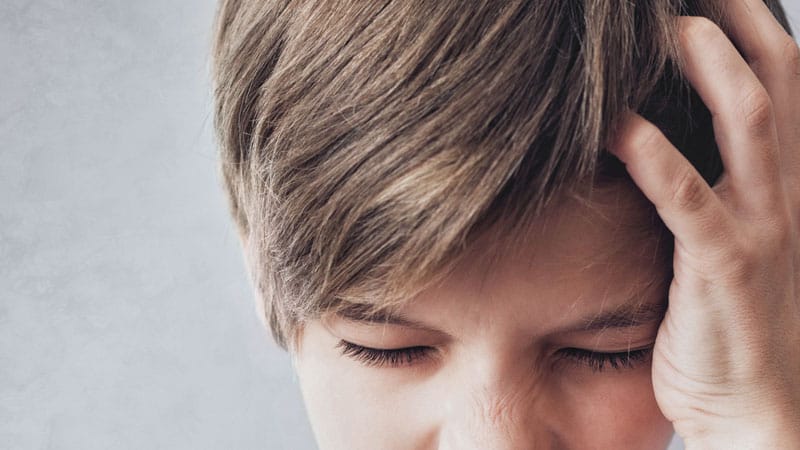
Pediatric migraine, like obesity, is one of several conditions in which the patient’s or family’s lifestyle is a major contributor. Numerous observers have suggested that sleep deprivation or a chaotic schedule are triggers of migraine. While it is easy to tell someone that their lifestyle is causing a problem, getting them to change what has become woven into their daily schedule is an entirely different matter.The first challenge is convincing the family that there is an association between the condition and a particular feature of the patient’s lifestyle.William G. Wilkoff, MDFor the child whose migraine episodes occur only several times a year, mining the family’s memory bank to look for clues can require patience and multiple interviews over time. For example, had excitement kept him up past his usual bedtime (such as a promised trip to an amusement park)? Had the headache come at the end of an unusually long day that failed to include any restorative rest time (such as a long flight or car trip)? Could the child have been in the prodrome of an illness?Often, the best the clinician can do is to raise the parents’ awareness of the situations that are likely to trigger an episode. Young children with migraine seldom describe the aura that is common in adults. Even the most diligent parent can miss the subtle warning signs of incipient fatigue in their child. Nor can a parent always craft a schedule that completely eliminates the kind of events that in the past have triggered a migraine.For the child who is having more frequent migraine episodes — once or twice per month or even more often — finding an association may be more difficult because the child is very likely chronically sleep deprived. The events that trigger an episode may be hidden in the noise of a life already filled with too many activities and too little sleep.There are so few studies showing the effectiveness of lifestyle intervention that two neurologists published a review article titled “Lifestyle Advice for Pediatric Migraine: Blaming the Patient, or Evidence Based?” Although the evidence supporting it is scanty, lifestyle alteration should always be given our first and best effort.Against this backdrop of failure, it is not surprising that clinicians eventually reach for their prescription pads, especially for patients with more frequent episodes of migraine. However, medications used for migraine prophylaxis have a dark side. A recent study from Milan reveals that most medications have an unacceptably high frequency of unfortunate side effects. In examining 40 studies that included more than 2500 patients, the researchers found that 30% had experienced at least one adverse event.Medications have also been shown to have little advantage over placebo for migraine. The often-quoted Childhood and Adolescent Migraine Prevention trial (CHAMP), performed from May 2012 to June 2018, compared the results for children and adolescent patients who were randomly assigned to receive amitriptyline, topiramate, or placebo for 24 weeks. There were no significant between-group differences in the primary outcome, a reduction of 50% or more in the number of migraine days.Nevertheless, clinicians continue to try both novel and traditional medications. This may be because other studies have found that the incidence of childhood migraine and its burden have increased significantly over the past 50 years. For example, in Finland, the prevalence of migraine in 7-year-olds rose from 14.4% in 1974 to 51.5% in 1992. The Global Burden of Disease analysis published in 2025 estimated that incidence of childhood migraine increased from 22% in 1990 to 36.8% in 2021.Recently, I encountered several articles that reported some encouraging findings regarding a recently discovered mechanism associated with migraine. Calcitonin gene-related peptide (CGRP) is a neuropeptide ubiquitous in the sensory nervous system. There is evidence that blocking CGRP can prevent and abort migraine.A study in rats, which were sleep restricted, showed that they responded with migraine-like behavior when exposed to subthreshold levels of CGRP; mice who had not been sleep restricted had no response when exposed to CGRP. There are other studies, again in animals, that suggest that lifestyle stressors known to be associated with migraine may be mediated through a system that includes CGRP.CGRP-receptor antagonists, known as gepants, have been available in the United States for the past 6 years and initially appeared to have a better safety profile than the traditional migraine management drugs, but the FDA has recently required a warning about new-onset and worsening hypertension. Gepants are currently not approved for children and adolescents.However, the researchers whose work on CGRP I have reviewed appear to be optimistic that it will eventually lead to the development of therapies that are far more effective and with fewer side effects than those currently available.Lifestyle is just one of the factors contributing to childhood migraine. We can hope that further research will result in the discovery of other vulnerabilities, probably genetic, that make certain individuals more sensitive to sleep deprivation. Until that time, we must persist in our efforts to influence our patients’ lifestyles.
Childhood Migraine and the Challenge of Lifestyle Influences
Full Article
Original Source
Read the full article at Medscape →KhanList aggregates and links to publicly available news content. We do not host full articles from third-party sources. Always verify important information with original sources.