
Elma*, from Sarajevo, was two months pregnant when she got divorced in 2010. The baby was born premature and needed medical care in Bosnia and Herzegovina as well as neighbouring Serbia. It was only in 2016, however, that a Bosnian court ordered Elma’s ex-husband to pay 250 euros per month in child maintenance, a ruling he challenged several times. To this day, the man has not paid a cent and has never met the child. “That 250-euro support payment of mine is, I think, a precedent,” said Elma. “I only received that amount because of the child’s medical expenses. Otherwise, the normal amount is around 100 to 150 euros maximum.” Elma, 50, is among the 63 per cent of respondents to a BIRN online survey who said they had experienced problems in securing child maintenance payments from their former partners. More than 90 people responded to the survey, from Albania, Bosnia, Croatia, Kosovo, North Macedonia, Montenegro, Serbia and France. Responses were sought from France in order to provide a comparison with Western Europe. Nearly 95 per cent of all respondents were women. Their accounts speak to widespread problems in the various child maintenance systems, from late payments to no payments at all, as well as rates that fall significantly short of real needs. “A very large number of women choose not to initiate any court proceedings in order to protect, or at least not further jeopardise, the relationship between the child and the father,” said Jovana Ruzicic, founder of the Centre for Mums, an NGO in Belgrade. “Then, this becomes a double burden on the mother, who is expected to be the primary parent, initiate court disputes, pay court fees, and deal with all the stress, all while trying to reach compromises with her former partner.” In Montenegro, the law makes clear that a child should not have a lower quality of life just because their parents are no longer together. “Therefore, both parents are obligated to support the child in accordance with their income and assets,” said Dejana Ponos of the Montenegrin NGO Parents’ Association. “However, because of personal emotions and the conflicts that led to the divorce in the first place, parents often try to ignore these things.” ‘Classic story’ Illustration. Photo: PickPik For the nine years since she divorced, 57-year-old Natasa from Belgrade has been working multiple jobs, including at weekends, because her ex failed to make regular child maintenance payments. She described her case as a “classic story” of retribution. “It was clear to me that he was using the children to get revenge on me”, for wanting to divorce him, Natasa told BIRN. She described her former partner’s position as: “‘You want a divorce? Fine, go ahead, live on your own, I won’t give you a single thing, and you have no property.’” Half of all respondents to the BIRN survey said their ex-partner hadn’t paid anything in the form of child maintenance. More than a fifth said payments were often delayed. “He never paid for anything,” said one woman. “In 22 years, he bought one jacket, one toy, and sent a package of fruit and vegetables a few times.” In a 2023 survey by the Centre for Mums in Belgrade, only half of mothers said that their ex-partners pay child maintenance, but half of those mothers said the payments do not arrive regularly. Ponos, in Montenegro, said it is common for the parent with whom the child or children live to have to choose between time and money. “They work more just to survive, and then they have less time for the child,” she told BIRN. “We enter a vicious circle: more work, less emotional availability and literacy, more stress, and more difficulties in the child’s functioning.” In the Balkans, legal intervention to force child maintenance payments are rare. In October 2025, Iskra, an NGO set up by single-parent families in East Sarajevo, Bosnia, welcomed the first known case in the country in which a parent was sentenced to prison for failing to pay child maintenance. The ruling sent a message, said Iskra head Snezana Stojanovic. “The verdict itself restricts this other irresponsible parent and raises awareness in society that this problem exists, rendering us, as single-parent families, visible.” Not enough Baby milk formula for sale at a supermarket. Photo: EPA/QILAI SHEN Beside non-payment or late payments, respondents to the BIRN survey also questioned the size of child maintenance payments. In 2012, Simona* from Skopje, North Macedonia, was granted 3,000 denars, roughly 49 euros, per child, cut to 2,500 denars, or 40 euros, when her ex-husband filed a complaint. “With those 2,500 denars, I can only pay for one child’s sports activities, like swimming, for a single month,” said Simona, 46. “I can buy one backpack, but I can’t even buy sports shoes with that.” The children were infants at the time, and the cost of their upbringing has since risen considerably. Simona sued her ex for more child maintenance, which meant additional legal costs, even more so because, she said, her former husband often fails to show up in court. The case has been dragging on for more than a year. “You have to calculate that you need 1,000 euros for the whole process, which you might just end up throwing away. It’s a risk,” said Simona, and argued that the state should provide legal aid in such cases or cut court fees. Misrepresenting income to dodge payment Photo illlustration. EPA/MAXIM SHIPENKOV According to the responses to the BIRN survey, most child maintenance payments are in the range of 50-99 euros per month. “That’s roughly enough to buy one sports shoe, the other one will have to wait until next month,” remarked Ruzicic of the Centre for Mums. “It’s not enough even to cover food expenses alone. It falls far short of what is needed, although, of course, the costs of raising a child also depend on the child’s age.” More than 40 per cent of respondents said their former partner had reported receiving less income than they really do, in order to reduce potential child maintenance payments. One in five said their former partner reported no income at all. “Parents still find ways to hide their assets, which we must admit is very sad, because, as we said, a child deserves both the love of these parents and financial support, as every parent has responsibilities alongside their rights,” said Ponos. Simona, for example, disputed her ex-partner’s claim he earns only 200 euros per month, pointing out that he runs his own business. “He submitted evidence [to the court] that he works part-time and has no money,” she said. “He said that he works part-time, while I work three jobs to cover all of that [supporting the children], because I have to.” State funds try to fill gaps Photo illustration: PickPik Many states have mechanisms to step in when child maintenance payments are not made. Montenegro, for example, established a fund for temporary child maintenance payments in 2022, Serbia in 2025, and Bosnia’s Republika Srpska entity in 2026. No such funds exist in Albania, Kosovo, or Bosnia’s other entity, the Federation. In Croatia, a more limited mechanism has existed since 2014, but in 2025 a full state fund was created and the process of accessing payments streamlined. To draw from such funds in Montenegro, Serbia and Republika Srpska, a parent must possess a final, binding court ruling ordering the other parent to make such payments; it must also be established that enforcement officers were unable to collect the child maintenance payments through other means, such as asset seizures, for two months. The latter condition no longer applies in the case of Croatia. In Serbia, since the fund was created in mid-2025, payments have been made to support the upbringing of 771 children, 85 per cent of whom live with their mothers. In Bosnia, Stojanovic from Iskra said no one expects the state to bankroll a child’s upbringing in full. The objective, she said, is to “force the debtor to fulfil their obligations”. In Montenegro, according to Ponos, just 256 out of a total of some 36,000 single-parent families draw from the state support fund. That doesn’t mean that ex-partners in the rest of the cases are keeping up their payments, she said. Instead, many single parents find the paperwork too demanding and “don’t want to disrupt the already ‘fragile’ relationships between the parents”. Mothers in France have similar problems Photo illustration: EPA/CJ GUNTHER “According to the French census of 2020, 76 per cent of children under 18 live mostly with their mother, 12 per cent live alternately with each of their parents [shared physical custody], 12 per cent live mostly with their father,” said Emilie Biland, a professor of sociology at Sciences Po in Paris. The burden of raising children, which falls mainly on the mother after a divorce, contributes to a fall in her standard of living, Biland told BIRN. “In the year following a separation, half of the mothers who have physical custody of their child(ren) experience a decline in their standard of living of at least 20 per cent,” she said in a written reply. On average, children also experience a decline in living standards of 15 per cent in the year following the separation or divorce of their parents. In France, child maintenance orders are not automatic. Parents have to claim them. “Claiming for child support is an administrative burden for mothers,” said Biland. “Some of them may abandon their claim, either because they find the process too time-consuming and uncertain, or because it risks poisoning relations with the father.” Because of this, France has one of the lowest rates of child maintenance payments in the EU, according to Biland’s research. “To avoid non-take up, procedures to get child support should be lightened,” she told BIRN. “For example, it could be calculated as soon as a parent comes to the family benefit office to declare he or she does not live with the other parent.” Tax rules for child support, as well as rules regarding social benefits, should be reformed, Biland said. “So far, French parents receiving child support amounts have to pay income tax on them [they can lose some social benefits too], while parents paying for child support will pay fewer amounts of tax income.” In France, the family support allowance, or ASF, provides financial assistance when one or both parents are not contributing to the cost of a child’s upbringing or when court-ordered child maintenance payments are too low. In 2023, a quarter of children in single-parent families received the allowance, said Biland, adding that “1.4 million children are beneficiaries of ASF, which is more than the number of children who get child support payments overall”. “It should be kept in mind that only single parents can receive it: mothers who move in with a new partner are no longer eligible for ASF payments,” Biland added. “Child support payments [from the second parent] do not stop when the parent is repartnering, of course.” A French mother of two said she sees the state fund as her only hope of child support. “The father should also have contributed by paying child support, but he didn’t,” the mother said in answers to the BIRN questionnaire. “You have to go through the court, and irresponsible fathers avoid it. We, mothers, are the ones who are penalised. Only the state provides help.” Yet even a court order is not always enough to ensure that a parent comply with their obligations. “At the hearing, the Family Court Judge ordered the child support to be paid retroactively, but the other parent still has not paid the retroactive amount, even after two years,” said another French mother, who said she waited a full year between filing her application and appearing before the judge. *Some names in this article have been changed to protect the anonymity and safety of the individuals involved. Additional reporting for this article was contributed by Ombeline Duprat in Sarajevo. This article was produced within the framework of MOST – Media Organisations for Stronger Transnational Journalism, a Journalism Partnership funded by the Creative Europe programme that supports independent media specializing in international reporting.
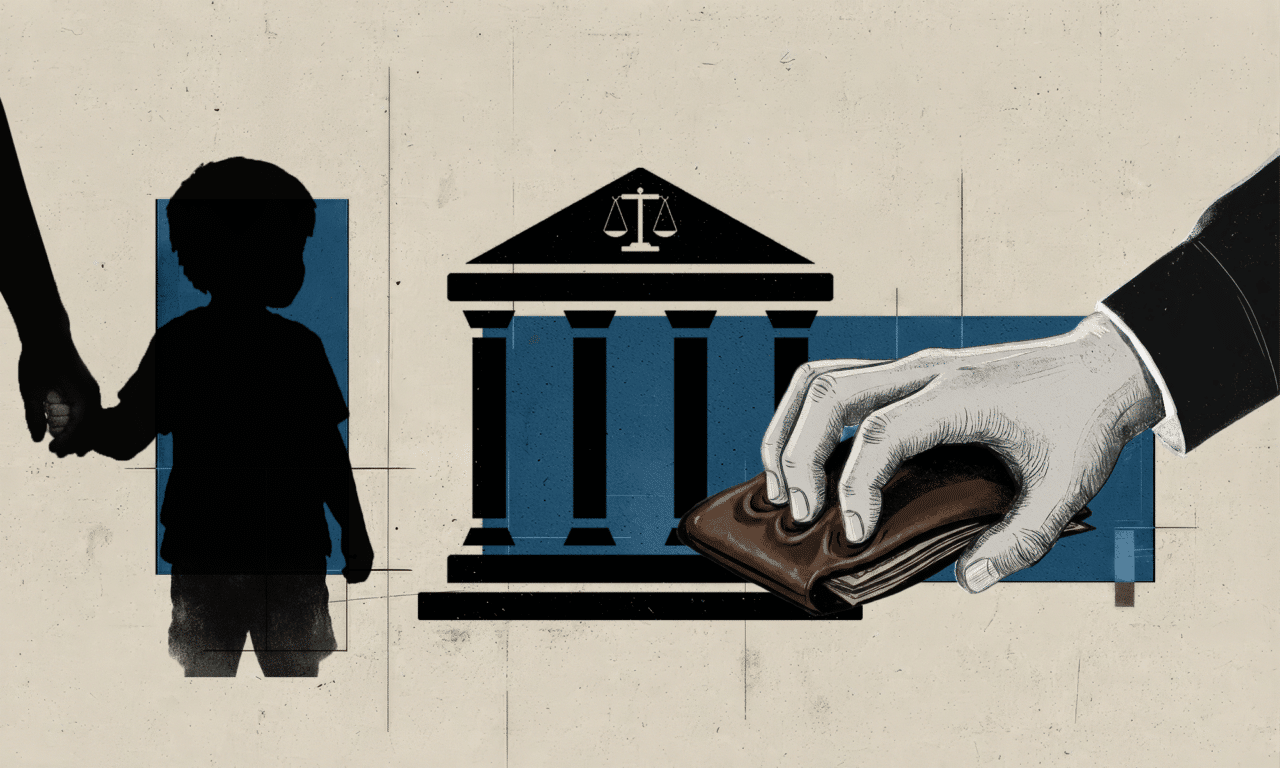
Child Maintenance Systems Failing Single Mothers in the Balkans and Beyond
Full Article
Original Source
Read the full article at Balkaninsight →KhanList aggregates and links to publicly available news content. We do not host full articles from third-party sources. Always verify important information with original sources.