
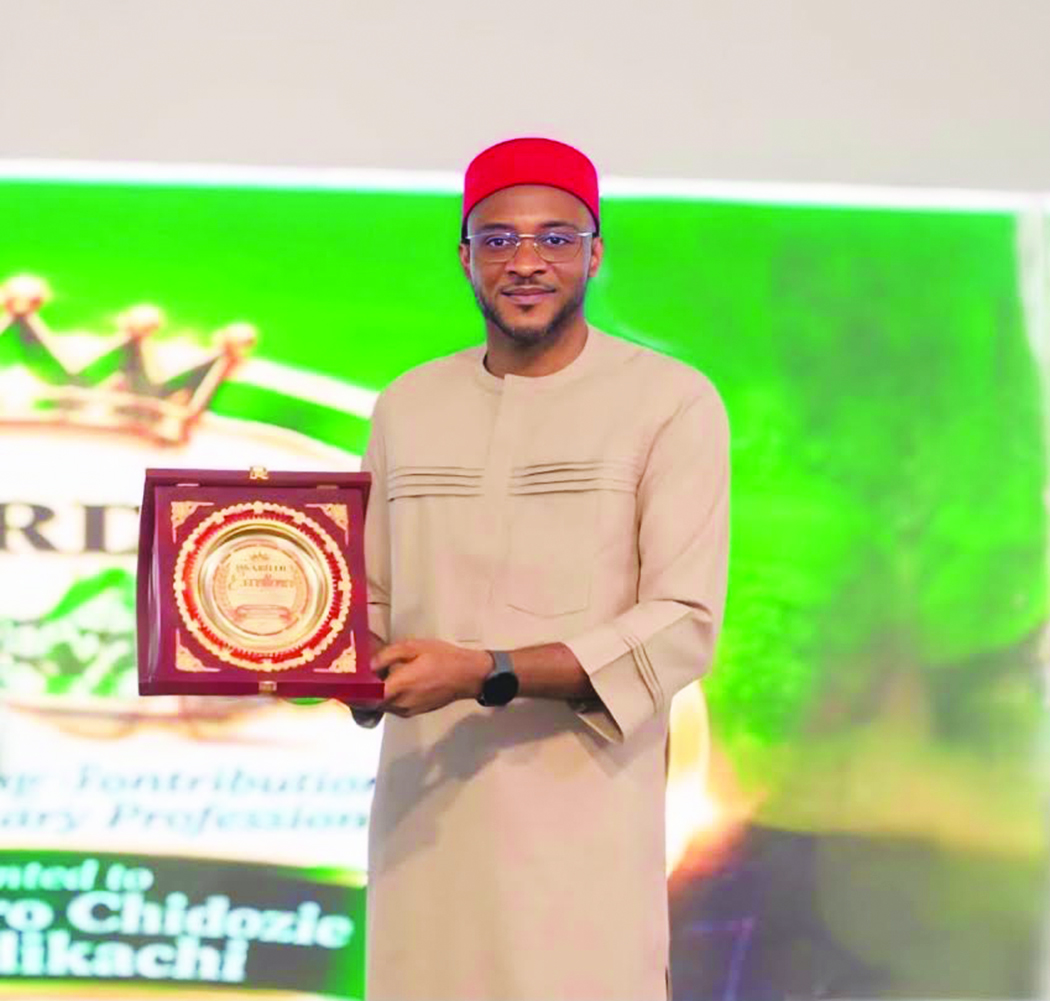
Follow THISDAYLIVE on GoogleAdd us as a preferred source to see more of our stories in Google Follow us on Google Two professional honours in 2026 have drawn attention to Dr Chidozie Anyiro’s work on livestock financing and animal health. Festus Akanbi examines the World Bank agricultural economist’s case for turning Nigeria’s large animal population into higher farm incomes, jobs and a stronger domestic dairy industry Nigeria has an estimated 274 million livestock and 684 million poultry birds, yet it spends an estimated $1.5 billion annually on dairy imports. Those figures, cited by World Bank agricultural economist Dr Chidozie Anyiro at an industry conference in 2026, capture a problem at the heart of the country’s drive to diversify its economy. Nigeria has a sizeable livestock base, but its producers and processors have yet to capture much of the value it could generate. Anyiro put the sector’s contribution to gross domestic product at about two to three per cent. The gap between what Nigeria raises and what it earns runs through Anyiro’s work. It links a farmer’s decisions about feed, breeding and vaccination to a lender’s willingness to finance expansion and a processor’s ability to secure a regular supply. It also helps explain why an agricultural economist has attracted recognition from both animal agriculture specialists and the veterinary profession. Two Honours, One Industry At the ninth All Africa Conference on Animal Agriculture, Anyiro received the Award of Excellent Leadership in Livestock Financing and Development in recognition of his contribution to livestock investment and development across the continent. He was later honoured at the 62nd Annual Congress of the Nigerian Veterinary Medical Association (NVMA), which presented him with its Award of Excellence for Outstanding Contributions to the Veterinary Profession. The Minister of Livestock Development presented the NVMA award at a ceremony where the governors of Enugu and Akwa Ibom states were also among the honourees. The association’s decision to recognise an economist point to the commercial value of veterinary services. An outbreak can wipe out a producer’s income, disrupt supplies to processors and make it harder for borrowers to repay loans. Timely vaccination and reliable veterinary care therefore matter to lenders and buyers as much as they do to farmers. The financing question extends to the cost and timing of investment. A farmer may need to pay for better feed or breeding well before the benefits show up in sales. A dairy processor needs dependable volumes before committing capital to a plant. Those decisions are connected. Where producers have a reliable buyer, they have a clearer basis for investing in output. Where processors can count on regular supplies, they are better placed to invest in collection and processing. From Animal Numbers to Economic Value Anyiro took that argument to the 2026 annual conference of the Animal Science Association of Nigeria and the Nigerian Institute of Animal Science (NIAS). His keynote address, “Innovation in Animal Agriculture: A Catalyst for Nigeria’s Non-Oil Economic Development”, asked policymakers, scientists and investors to consider how gains in animal productivity could translate into higher incomes and employment. The Minister of Livestock Development attended the conference, where the governors of Kwara, Bauchi, Jigawa and Adamawa states, represented at the event, received honorary fellowships from NIAS. The dairy import bill offers a practical test of that argument. Increasing domestic milk output can create income for producers, but the milk must also reach processors in usable condition and at a price that allows them to compete. That requires investment along the chain, from feed and veterinary care on the farm to collection, cooling and transport. Jobs can emerge at each stage as demand grows for those services. The commercial opportunity lies in linking those activities closely enough for producers to sell regularly and for processors to operate reliably. Anyiro welcomed President Bola Tinubu’s establishment of the Federal Ministry of Livestock Development in July 2024 as an opportunity to give the sector clearer institutional direction. The ministry provides a federal focal point for policy, while much of the work of improving animal health services, developing infrastructure and linking producers to markets takes place in the states. How well those efforts are coordinated will shape what farmers and investors see on the ground. Putting Investment to Work Anyiro’s work at the World Bank puts him in that process. As an agricultural economist and co-task team leader of the $500 million Livestock Productivity and Resilience Support (L-PRES) Project, he contributes to efforts to raise productivity, strengthen animal health systems, improve infrastructure and expand commercial opportunities in participating Nigerian states. Those objectives come together in the day-to-day business of keeping and selling animals. Veterinary services protect the farmer’s investment. Infrastructure can improve access to services and markets, while dependable outlets give producers a reason to raise output. For a small producer, the test of these interventions is whether they lead to fewer losses, more predictable sales and a better return on the money spent keeping animals healthy and productive. Climate resilience also figures in Anyiro’s work. At the Nigeria Pavilion during the 31st United Nations Climate Change Conference (COP31) in Türkiye, he joined a panel on livestock development and climate change. For producers, that discussion has immediate implications. Changes in rainfall can affect access to water and the availability and cost of feed. Investments that help farmers manage those pressures can protect incomes and make production more dependable, while careful land and water management matters as livestock production expands. Research, Teaching and Public Debate Anyiro has also made his case in the press. In an article titled “Nigeria’s Next Oil Boom May Be Walking on Four Legs”, he argued that investment in breeding, feed, animal health, financing, processing and marketing could help diversify the economy and create jobs. The oil comparison highlights the size of the opportunity. His proposals focus on the practical business of producing more, reducing losses, and selling into markets that reward quality and consistency. His academic training spans several of those issues. He holds a doctorate in agricultural economics, a master’s degree in agricultural finance and an MSc in agribusiness, awarded with distinction by Lincoln University in New Zealand, where he studied under a New Zealand Aid Development Scholarship. A Mandela Washington Fellow at Syracuse University’s Maxwell School of Citizenship and Public Affairs and a former policy fellow of the African Climate Change Fellowship Programme, he has authored or co-authored more than 40 peer-reviewed publications. He also lectures pro bono in the Department of Agricultural Economics and Extension at Nasarawa State University, Keffi. For Nigeria, the significance of the two honours lies in the attention they bring to work that crosses professional boundaries. A veterinarian may help a farmer avert losses, an economist may help design a financing programme and an investor may build a processing plant. Each decision affects whether the others pay off. The same interdependence applies to public policy. The gains from better breeding or improved feed will matter more to rural households if producers can sell what they raise and retain enough income to invest in the next production cycle. That is where livestock development meets the broader goals of food security, employment and lower import dependence. Progress will be measured by what farmers earn, how reliably processors can buy locally, and whether Nigerian milk gains a larger share of the domestic market. Anyiro captured the work involved in a line that could serve as an industry agenda. “Don’t wait for the future of livestock. Breed it. Feed it. Vaccinate it. Finance it. Build it.”
Chidozie Anyiro and the Business of Nigeria’s Livestock Economy
Full Article
Original Source
Read the full article at Thisdaylive →KhanList aggregates and links to publicly available news content. We do not host full articles from third-party sources. Always verify important information with original sources.