
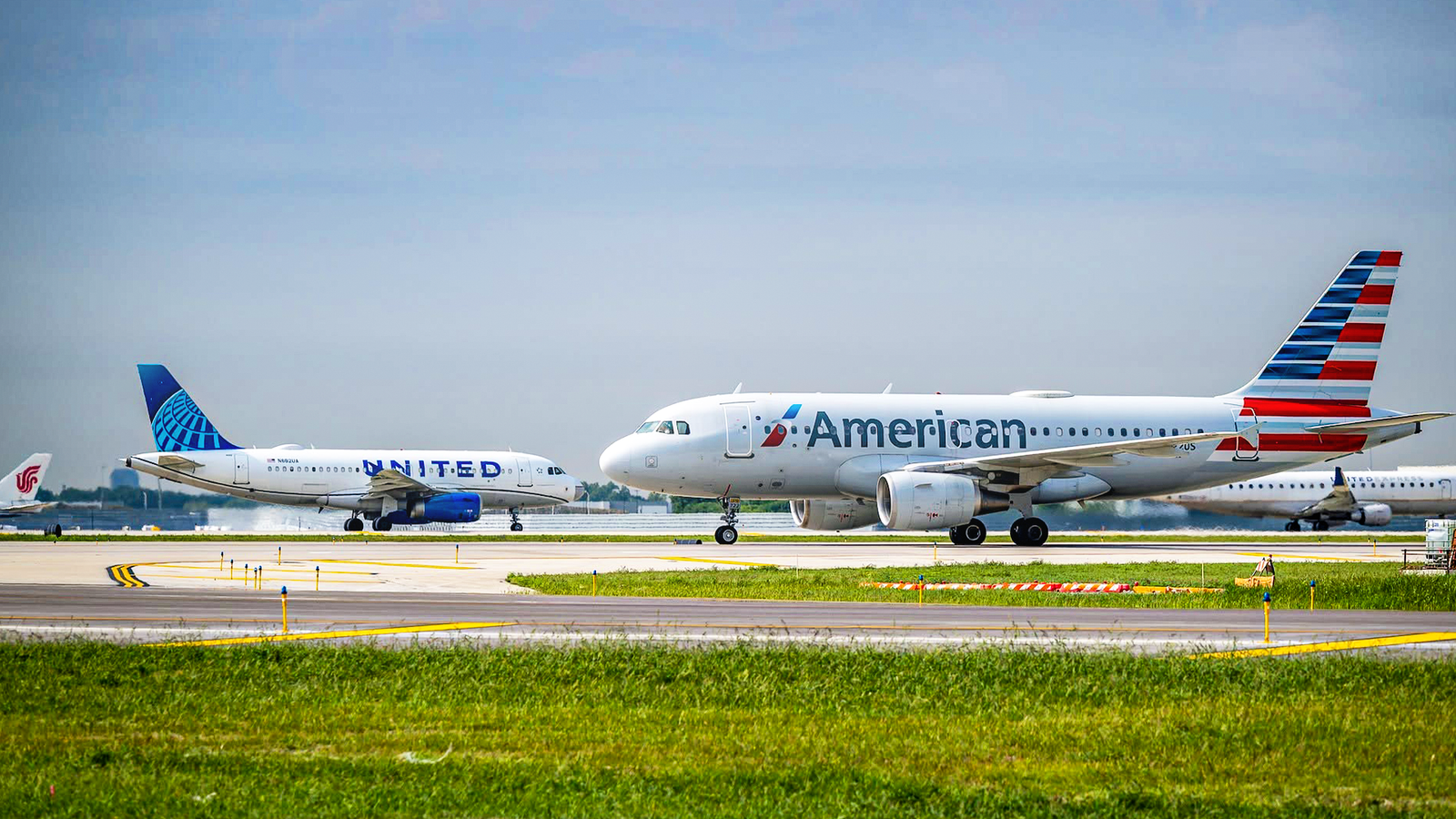
Published Oct 16, 2026, 11:00 AM EDT Daniel comes to Simple Flying with a business focused approach to the aviation world. Daniel enjoys analyzing strategy and how companies move against each other to gain a step ahead in the skies. Besides strategy, Daniel also has a passion for aircraft design and the history of aviation. Based in New York There are some airports that are seemingly connected to all parts of their region and the world. Within the US, the world's largest aviation market, there are multiple hubs that are connected to dozens upon dozens of destinations with hundreds of daily flights. Hartsfield-Jackson Atlanta International Airport (ATL) has long been the country's largest hub because of Delta's large operations there, and it remains the busiest airport in the world by passenger numbers. However, it has been overtaken in another statistic. OAG's 2026 MegaHubs Report provides a detailed compilation of the world's largest hubs and ranks them according to various criteria. When examining the US's most connected hubs, OAG found that it was Chicago O'Hare International Airport (ORD) that took the top position, ahead of ATL (which was the runner-up). Meanwhile, ORD is growing faster than ATL and has become a battleground between the country's two largest airlines, both of which are looking to gain an advantage in America's third-largest city. The Most Connected Megahub In The US Credit: George Wirt I Shutterstock OAG ranks ORD as being the most connected airport in the US. This doesn't factor in capacity, as ATL and Denver International Airport (DEN) offer more domestic seats, but Chicago is connected to significantly more airports and offers more connections than other US megahubs. In total, ORD facilitates 83,647 connections on its busiest day to 227 destinations within the US, plus a robust international network. While it doesn't see the country's highest number of passengers, it is unmatched in those two metrics. ATL, the country's largest hub overall, only facilitates 54,273 connections domestically to 170 destinations within the US. Meanwhile, OAG grants the number three spot to Dallas/Fort Worth International Airport (DFW), which is American Airlines' largest hub. This airport actually serves more domestic destinations than ATL, with 195 spokes versus 170, but its total number of connections is only 47,163. Number four is DEN, with 46,455 connections and 211, while number five (Charlotte) has far fewer connections than DEN. The first thing that differentiates ORD from the rest of America's largest hubs is that Chicago is a massive market. It's the third-largest city in the country, behind only Los Angeles and New York. Those cities, however, are not ideally located for domestic connections, and they're also bloodbaths, as each of the three legacy carriers has a presence in both cities (with Southwest and Alaska also competing in LA, while JetBlue has a hub in JFK). ORD, however, is home to large hubs from just two airlines: American Airlines and United Airlines. 2026 Growth In Chicago Credit: marchello74 I Shutterstock United Airlines planned significant growth in Chicago for the 2026 summer season. It was set to operate up to 750 flights per day, which would have been by far its largest schedule out of ORD ever. United planned five new routes to Midwest cities, added frequencies on over 80 routes, and launched additional domestic and international services. This schedule would have made United's ORD hub the third-largest in the US, behind American's DFW hub and Delta's ATL hub (this was not the case in prior years). American Airlines is hardly sitting around either, as it planned to add 100 additional daily departures to its ORD schedule, bringing its peak daily operation to over 500 daily departures. The airline significantly increased frequencies on more than 75 routes out of ORD and extended the service dates for two seasonal European routes. This built on its summer 2025 expansion in ORD, when it added almost 30 new routes out of ORD, increased service to Mexico and the Caribbean, and raised frequencies to business markets. Because of the massive increases that American and United planned for 2026, the FAA imposed schedule caps in O'Hare to ensure safety and operational reliability. This forced the two airlines to cut back their planned schedules, although the operations currently being run by American and United still represent a sizable increase compared to 2025. The two expanded their ORD operations significantly in 2026, and it's become an increasingly heated battle between the two airlines. The Hub Dynamics Between American & United Credit: George Wirt I Shutterstock United Airlines has been headquartered in or near Chicago since the 1930sand has long operated a major hub there. American Airlines, headquartered in Fort Worth, entered the Chicago market more recently, officially opening a hub at ORD in 1982. Traditionally, United has carried more passengers, held more gates, and operated a larger network out of ORD than American, but the Texan underdog was always competitive. Until 2015, American even captured a larger number of local passengers, while United maintained a larger connecting operation. ORD is one of American's ten hub airports, but it's United Airlines' largest hub. However, the carrier has never grown this operation to a size comparable to American's DFW hub or Delta's ATL hub. In addition, the carrier has also traditionally been weaker than rivals in the domestic US market. The carrier's United Next plan, revealed in 2021, was intended to address the airline's domestic shortcomings, but Chicago didn't initially receive much focus. In fact, 2026 is the first year United's ORD schedule is larger than the pre-pandemic era. American Airlines Hubs United Airlines Hubs Charlotte New York (JFK) Chicago Newark Chicago New York (LaGuardia) Denver San Francisco DFW Philadelphia Guam Washington (Dulles) Los Angeles Phoenix Houston Miami Washington (National) Los Angeles But while United didn't focus heavily on ORD, its size advantage over American has grown. American cut its 2022 ORD schedule compared to the prior year, while 2023 saw even more cuts. American added capacity in 2024, but it was still lower than what it recorded in 2021. In October 2025, the City of Chicago took four gates from American and gave five gates to United, while United is set to lose gates to American as part of the 2026 annual review, which is based on annual usage. The Current State Of The Battle Credit: EQRoy I Shutterstock While United spent the post-pandemic years gradually rebuilding Chicago, American shrank in 2022 and 2023 before beginning to rebuild again. United is now capturing a large share of the local market and has greatly expanded its overall network, but the airline is also much stronger overall than pre-pandemic. The carrier has moved upmarket to compete with Delta Air Lines as one of the US's 'premium airlines,' and it has also greatly expanded its long-haul network. All of these have significantly elevated United's brand in the current market. American, however, moved downmarket during the 2010s and has faced cost issues and a mountain of debt. The result is that United is recording record profits while American's finances are extremely weak. United CEO Scott Kirby, likely sensing blood in the water, has said he intends to significantly grow the carrier's ORD operations at American's expense and may even push its rival out of Chicago entirely. The real issue for American is its current balance sheet. United can sustain a massive expansion in Chicago even if it loses money in the process because the carrier otherwise makes hundreds of millions each quarter. For American, however, such an expensive endeavor would be much harder, and United is therefore aiming to drown out American until it can no longer breathe. Surviving in a hub dominated by a much larger rival can be difficult, and the US has a precedent for such an outcome: in 2005, Delta Air Lines abandoned its hub in DFW, where it had always played second fiddle to American. However, American is also struggling in New York, while its Los Angeles position has faltered relative to rivals, and the airline is trying to win back business and premium travelers. Chicago holds high strategic value as a hub, so American is fighting hard to maintain its market position. The Operations Of The Two Airlines In Chicago Credit: Chicago O'Hare International Airport Even with the FAA-imposed schedule cap, United Airlines remains the largest carrier serving Chicago and holds just under 50% market share. But while United's ambitions for Chicago have drawn significant attention, American has actually grown more since pre-pandemic. Still, the airline is smaller but remains committed to the market, and ORD still serves as American's third-largest hub. American operates out of Terminal 3 at ORD, whereas United uses Terminals 1 and 2. American currently uses 66 gates at ORD, whereas United is entitled to use 99, and both carriers primarily focus on their domestic networks out of ORD. However, United also operates nonstop flights to Tokyo Haneda Airport (HND) and to a significantly larger number of European destinations than American Airlines. Given the importance of the Chicago market, it's extremely unlikely that American will retreat as United grows. United notably has ambitions to grow to a size that rivals DFW and ATL, which could be difficult for American. However, American Airlines doesn't need to outgrow United; it simply needs to occupy its own space profitably as an alternative to United in the market.
Chicago O'Hare Just Retook The Americas Connectivity Crown Despite Losing 300 Daily Flights
Full Article
Original Source
Read the full article at Simpleflying →KhanList aggregates and links to publicly available news content. We do not host full articles from third-party sources. Always verify important information with original sources.