
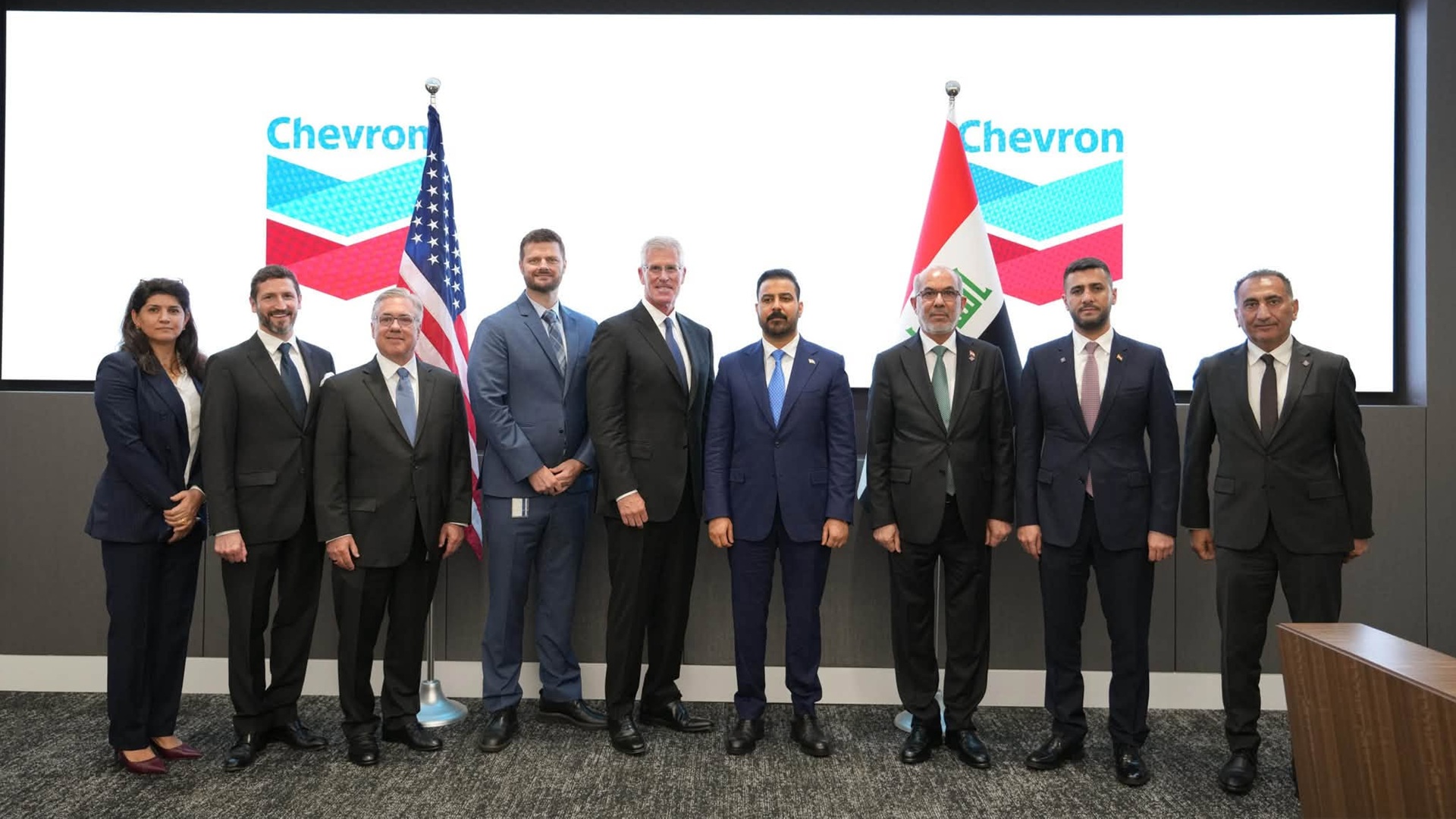
Houston, Texas (IraqiNews.com) – In a major development for the global energy market, U.S. oil giant Chevron is set to sign pivotal memorandums of understanding with the Iraqi government to advance its entry into the West Qurna 2 and Nassiriya oilfields. The preliminary agreements progress crucial commercial terms, paving the way for a definitive contract that would place Chevron in charge of West Qurna 2, one of the world’s largest oilfields, which currently produces approximately 460,000 barrels per day. This milestone follows the historic White House summit between Iraqi Prime Minister Ali Falih al-Zaidi and U.S. President Donald Trump, signaling a profound shift in Baghdad’s geopolitical and economic alignment. The strategic transition at West Qurna 2 comes after Iraq nationalized the massive asset earlier this year to insulate its energy sector from international complications. The move was designed to avoid production disruptions stemming from U.S. sanctions on Russia’s Lukoil, the previous operator of the field. By transferring operations to Chevron, the al-Zaidi administration aims to bring world-class American technical expertise to the southern oil hub. Simultaneously, the upcoming signings will advance an existing agreement in principle to develop the Nassiriya oilfield project, an expansive development consisting of four major exploration blocks alongside other producing reservoirs. Beyond field development, the collaboration introduces critical infrastructure studies as Iraq moves aggressively to secure its energy transit. Chevron is continuing high-level technical talks with Baghdad to evaluate alternative pipeline routes that would allow Iraqi crude exports to bypass the volatile Strait of Hormuz. Finding alternative maritime exit points has taken on absolute urgency for the newly formed Iraqi government as the ongoing U.S.-led maritime blockade against Iran directly threatens commercial shipping through the narrow gulf chokepoint, which historically handles the vast majority of Iraq’s crude oil deliveries. To mitigate these geopolitical shipping risks, a specialized energy consortium including Chevron and Qatar’s UCC signed a foundational agreement with Iraq’s state-owned Basra Oil Company on July 4 to assess and compare potential overland pipeline routes. Part of this strategic evaluation involves exploring the revival of historical transit corridors across the Levant. A U.S. State Department official confirmed this week that the Trump administration strongly supports efforts by Iraq and Syria to rehabilitate the dormant Kirkuk-Baniyas pipeline, a vital export artery that has been largely inactive since suffering extensive structural damage during the 2003 conflict. This flurry of commercial activity was finalized during a high-profile visit by Prime Minister al-Zaidi and his Oil Minister to Chevron’s corporate headquarters in Houston on Thursday. The Texas itinerary served as the economic anchor of al-Zaidi’s five-day diplomatic tour of the United States, positioning Iraq’s “economic geography” policy directly in front of global energy leaders. In an official statement, Chevron Upstream President Clay Neff expressed enthusiasm for the expanding partnership, stating that the company appreciates the opportunity to deploy its global expertise in executing massive oil and gas infrastructure projects to support Iraq as it aggressively modernizes and develops its abundant natural resources.
Chevron to sign major Iraq oilfield pacts, studies routes to bypass Hormuz
Full Article
Original Source
Read the full article at Iraqinews →KhanList aggregates and links to publicly available news content. We do not host full articles from third-party sources. Always verify important information with original sources.