
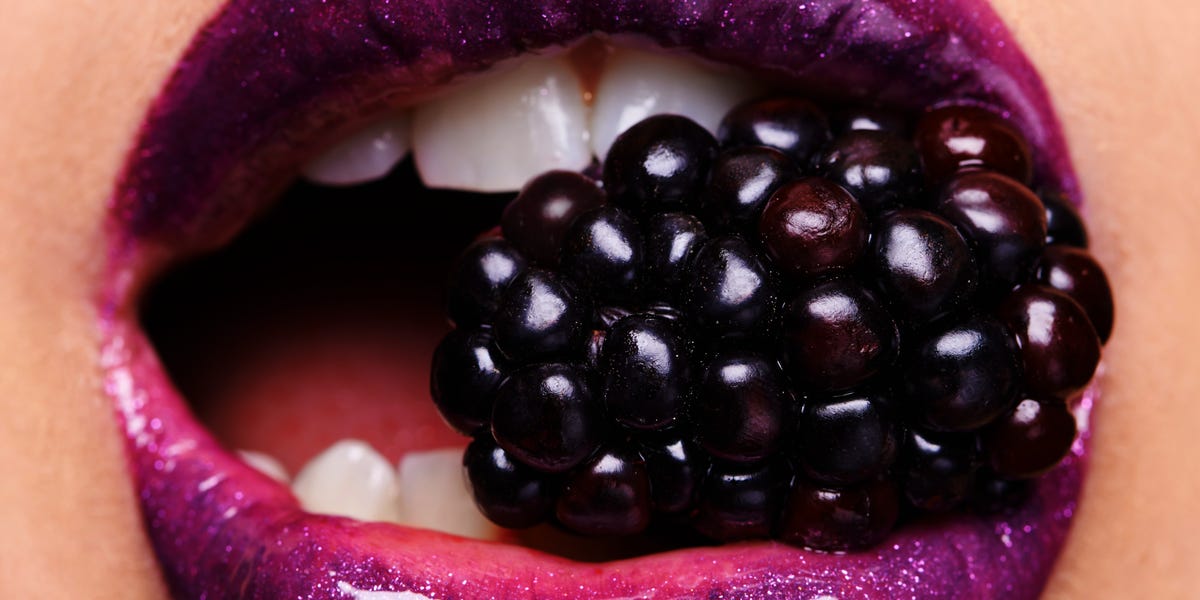
We may earn commission from links on this page, but we only recommend products we love. Promise.Getty ImagesSuddenly, it seems, the beauty world has an appetite. Literally, for food. It’s not just in marketing, where we’ve seen Rhode’s donut campaign with Krispy Kreme, Tower 28’s limited-edition Jell-O lip collection, Glow Recipe’s Buldak-flavored lip balms. But brands and consumers alike seem equally eager to associate beauty with images of food.As the beauty editors of Cosmo, we’ve written about countless trends with yummy names: pumpkin spice hair, matcha nails, glazed donut skin, and on and on. Everything is starting to sound edible. It’s ironic, though, how while the beauty industry has never sounded hungrier, the actual world has never been less so with the current culture around GLP-1s.It started with scentThe link between the aestheticization of food and beauty isn’t new. First, there was dessert perfume. The trend of gourmand fragrances—with notes of cotton candy, praline, and caramel—made its widespread appearance as a market staple during the early 2000s celebrity fragrance epidemic (hi, Britney Spears's Fantasy). But the sugar rush perfume craze has never been bigger in 2026. According to trend-tracking firm Spate, pistachio perfume alone is up 852.5% year over year across search and social. Currently, we’re also seeing milky fragrances, cardamom perfumes, and even marshmallow scents taking over.Beauty’s growing appetiteBut these days, it’s not just scent. These days, a name or a label is enough for our brains to fill in the flavor. Lip products utilize the most literal and largest range of flavors like lemontini, gingerbread, and gummy bear. Nails often get named after the visual texture of the polish, whether that’s glazed donut, coffee, or blueberry jam. Hair colors borrow from the cafe, bakery, and sometimes the soda fountain: milk tea, mocha mousse, and cherry cola. These aren’t just fleeting trends—they are part of a whole new beauty vocabulary.Why does this work? Psychologically, it works a lot like a mukbang—a trend that originated from South Korea—in which creators film themselves eating, and the resulting video is often shot with a high-res camera lingering on every texture so the video feels and sounds as visceral as possible. Viewers then get to vicariously experience their indulgence in a “guilt-free” way: consumption without the calories. A dessert-scented perfume achieves the same kind of synesthesia-like effect in bottle form, and a name can do it without any scent at all.But why?“Heroin chic,” the ultra-thin, ‘90s aesthetic, is back, according to Cosmo. But even though we’re all afraid to eat (or can’t, due to weight-loss drugs that decrease appetite and cause a host of gastrointestinal side effects), food is platformed on every beauty shelf and trend name, especially through our own language. Blame the romanticization of “skinny glutton,” coined by writer Sadie Stein for Jezebel way back in 2009. Carelessly indulging in food while staying skinny has always been sold as the ultimate feminine ideal. Thin is hot, but not eating? Not so hot. And in a female-dominated space like beauty, the pressure to love food (while remaining impossibly slim, of course) shows up in the names themselves. It’s also no coincidence that those names always skew sweet, since sugary foods (especially ones involving honey and chocolate) have long been gendered female. No one’s calling a red manicure meatball nails.Think of every variation of cinnamon-glazed-cocoa-syrup-mocha-mousse hair/nail/makeup trend as an implicit signal rejecting the idea that we may be scared of food. It builds the illusion that, naturally, we all find food desirable, defanging it without anyone having to actually eat it. And beauty is one of the closest things we get to physical consumption that is not eating. We call skincare products “food for skin” and describe our skin as “thirsty” or “quenched,” and even blame breakouts on “purging.” Lotion sinks into our skin barriers, pigments are applied directly onto our faces, and lip gloss you can literally taste. That kind of physical immediacy helps close the psychological gap between beauty and eating, with the added reassurance that a tube of lip gloss contains zero calories.Final verdictSo are beauty trends inspired by food problematic? Not necessarily. There’s nothing inherently wrong with a fun food-inspired shade name. And it’s possible that new positive associations with a beauty product might help ease people’s aversion to food itself. Whatever cultural baggage there may be, there’s no real reason to talk yourself out of matcha nails, milk tea hair, or a strawberry glaze lip treatment—the same way there is no good reason to skip your favorite dessert after dinner. And let’s be real: no cherry cola hair can replace how good actual cherry cola tastes.Why trust Cosmopolitan? Taylor Moon is an editorial intern at Cosmopolitan who writes about beauty, celebrities, and culture.
Cherry Cola Hair, Jam Nails, Pistachio Perfume—Why Does the Beauty Industry Sound So Hungry?
Full Article
Original Source
Read the full article at Cosmopolitan →KhanList aggregates and links to publicly available news content. We do not host full articles from third-party sources. Always verify important information with original sources.