
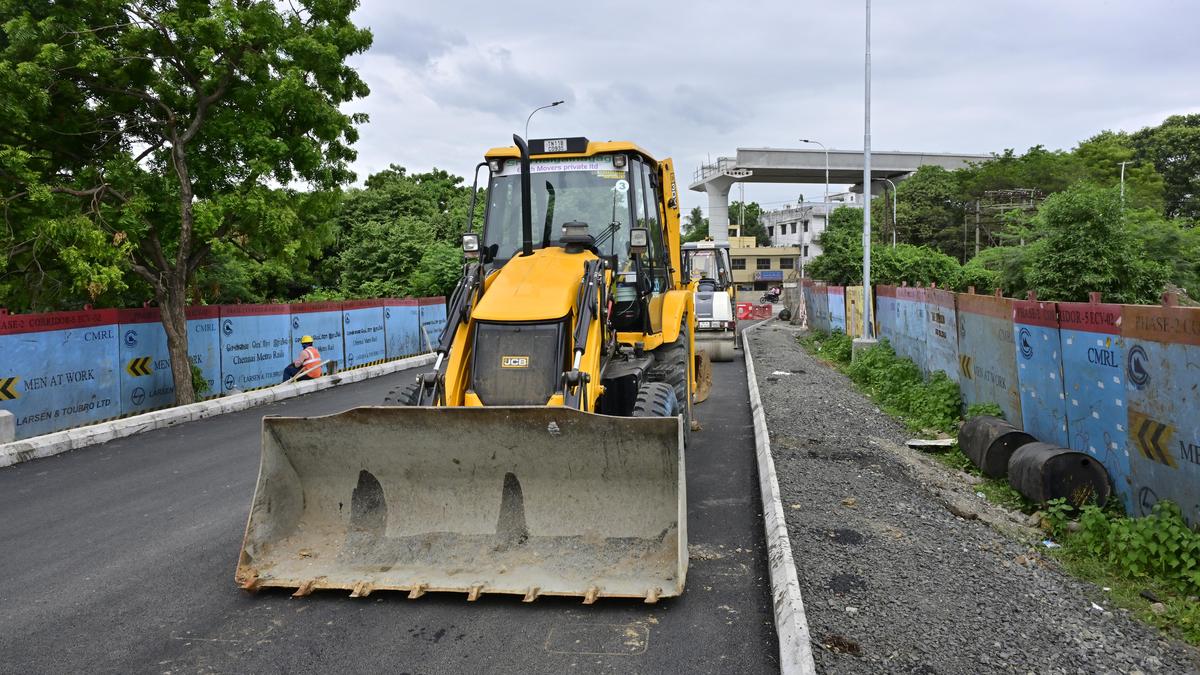
Image used for representation | Photo Credit: B. Velankanni Raj The Greater Chennai Corporation (GCC) has directed its engineers to remove the existing bituminous surface through milling before relaying roads wherever necessary, to prevent road levels from rising with repeated resurfacing as well as to ensure proper drainage.In a circular dated October 27, 2026, Commissioner G.S. Sameeran said engineers must inspect the condition and levels of roads, their slope, and drainage arrangements, as well as the levels of adjoining properties, before starting work. Repeatedly adding fresh layers of bitumen and raising road levels must be avoided, he said.The circular followed a demonstration by and a letter from Arappor Iyakkam, an anti-corruption NGO, to the Additional Chief Secretary, Municipal Administration and Water Supply Department, on October 6, and subsequent instructions from the latter.Engineers have been asked to use mechanical milling machines to remove the existing surface to a depth generally equivalent to the thickness of the new layer. They must check and record the depth and quantity of material removed before relaying the road. The surface must also be cleared of dust, loose stones, and debris before the new bitumen layer is laid. They must ensure that photographs of the milled surfaces are displayed at the work site.Notably, the Municipal Administration and Water Supply Department recently issued orders to improve over 500 km of bituminous, cement concrete, and interlocking pavement roads under the Chief Minister’s Integrated Urban Development Mission (CMIUDM), 2026-2031. The common condition in all three orders was that urban local bodies must carry out road relaying works “without raising the existing road levels.”Your road should not become higher every time it is repaired: That is the message behind this Greater Chennai Corporation circular After concerns over roads being repeatedly raised without removing old layers, the GCC has directed engineers to mill existing bituminous surfaces wherever necessary before relaying them. This is to prevent roads from rising above the levels of adjoining homes and affecting drainage. The October 27 circular asks engineers to check road levels, slopes and drainage before work begins. Where machines cannot reach, including around trees and manholes, the surface must be removed manually. They must check and record the depth and quantity of material removed before relaying, surface is cleared of dust, loose stones and debris before the new bitumen is laid and must ensure photographs of the milled surfaces must be displayed at the work site. The circular follows a representation by @Arappor to the MAWS Department on October 6. @THChennai @the_hindu @chennaicorp— R Aishwaryaa (@AishRavi64) October 31, 2026Where machines cannot be used, particularly along road edges and around trees and manholes, the existing surface must be removed manually or with suitable equipment. Manhole covers, utility chambers, footpaths, and drains must be brought to the level of the finished road. Photographs of the milled surface must be kept at the work site.The instructions apply to all relevant bituminous road works across Chennai. The GCC has asked engineers at all levels, contractors, and project management consultants to ensure compliance. Published - October 31, 2026 04:14 pm IST
Chennai Corporation directs engineers to undertake milling before relaying roads to prevent rise in levels
Full Article
Original Source
Read the full article at Thehindu →KhanList aggregates and links to publicly available news content. We do not host full articles from third-party sources. Always verify important information with original sources.