
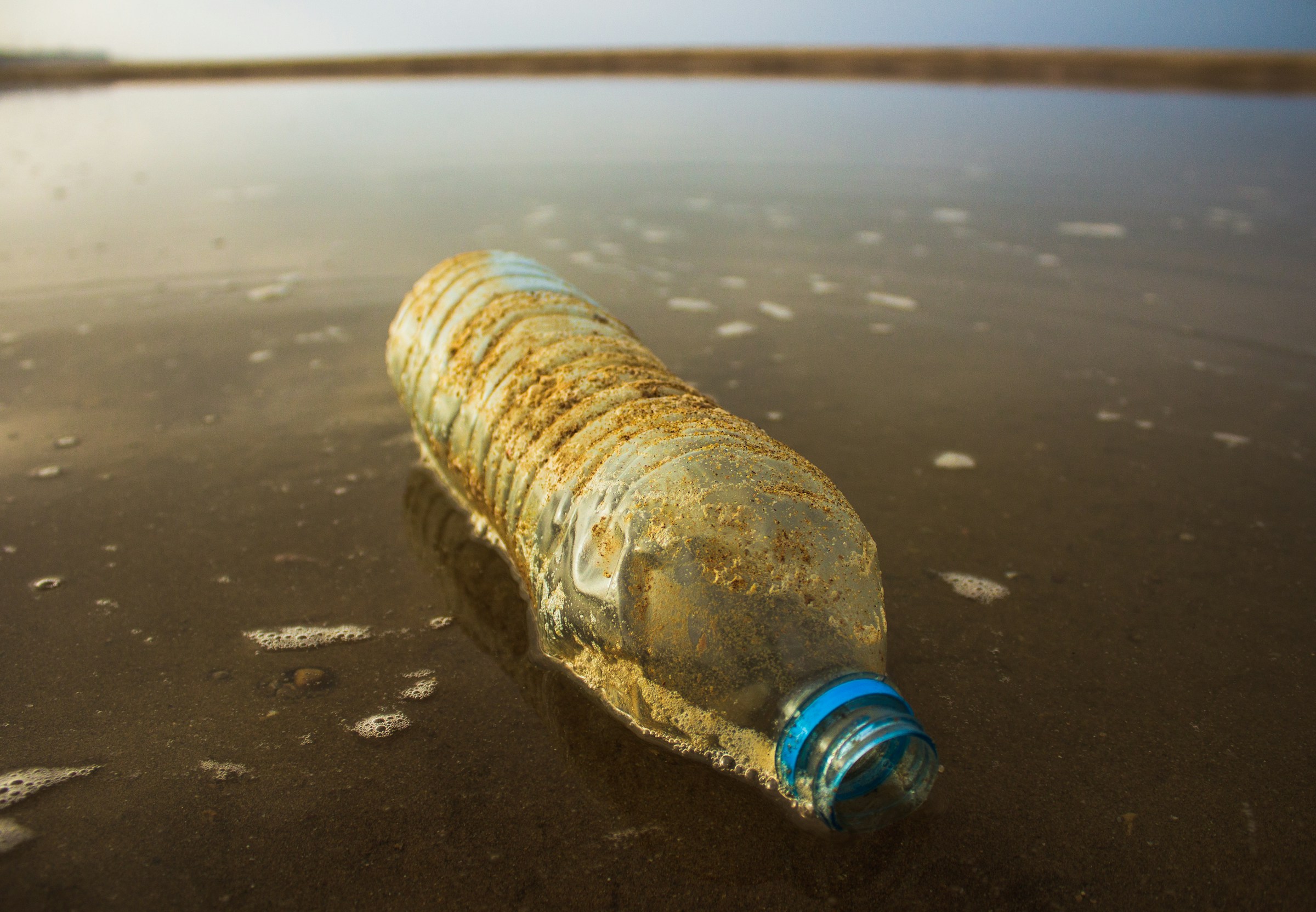
Microplastics and nanoplastics could react within the body to generate reactive radicals that can harm people.(CN) — It took less than twenty years for microplastics to go from scientific mystery to internet meme. Many people now simply accept the idea that consuming everyday food and liquid items causes the ingestion of nearly undetectable, particle-sized plastic fragments.But what happens to these fragments after going down the hatch is less known.Researchers in a study published Wednesday in the journal Nature indicate that microplastics don’t stay dormant, instead chemically reacting to water — which makes up the majority of human blood — in ways that can harm organic life.They say nanoplastic presence in the human bloodstream could be even more harmful than previously thought.“Our research found that when microplastics interact with water, as they do when they’re in bottled water, or when they’re absorbed into our bloodstream, they spontaneously generate what we call reactive oxygen species … textbook examples of the kinds of molecules that can damage animal and human tissue,” study co-author Naixin Qian said in a statement.Though classification isn’t exact, microplastics can range in size from a grain of rice to a single speck of glitter. After breaking into even tinier, invisible particulates, microplastics become referred to as nanoplastics.Smaller particles gain mobility and become more spread-out, causing greater plastic exposure to surrounding areas. This means nanoplastics can have an outsized effect on biological tissue, scientists at Columbia University and the University of California, Berkeley found.A group formed by Columbia chemistry professor Wei Min conducted experiments using laser-based microscope technology to better understand the results of previous studies, like research in the New England Journal of Medicine linking microplastics to serious health conditions.Researchers posit that the water itself is integral to the plastic’s reactivity.“Water molecules become chemically active when they come into contact with plastic, which is hydrophobic. Contact between the water and plastic creates an environment that facilitates electron transfer, and the formation of reactive radicals. When plastics fragment into smaller particles, their increasing surface-to-volume ratio creates more of these chemically active areas," Min said in a statement.In April, the U.S. Department of Health and Human Services announced a $144 million program “to create the definitive toolbox for measuring, researching, and affordably removing microplastics and nanoplastics (MNPs) in the human body.”President Donald Trump has personally advocated for single-use plastic products, which scientists say release trillions of nanoparticles during use. In an early 2025 Truth Social post, Trump pronounced, “BACK TO PLASTIC!”Categories / Health, ScienceSubscribe to our free newslettersOur weekly newsletter Closing Arguments offers the latest about ongoing trials, major litigation and rulings in courthouses around the U.S. and the world, while the monthly Under the Lights dishes the legal dirt from Hollywood, sports, Big Tech and the arts.Additional Reads
‘Chemically active’ microplastics can react to water and human blood
Full Article
Original Source
Read the full article at Courthousenews →KhanList aggregates and links to publicly available news content. We do not host full articles from third-party sources. Always verify important information with original sources.