
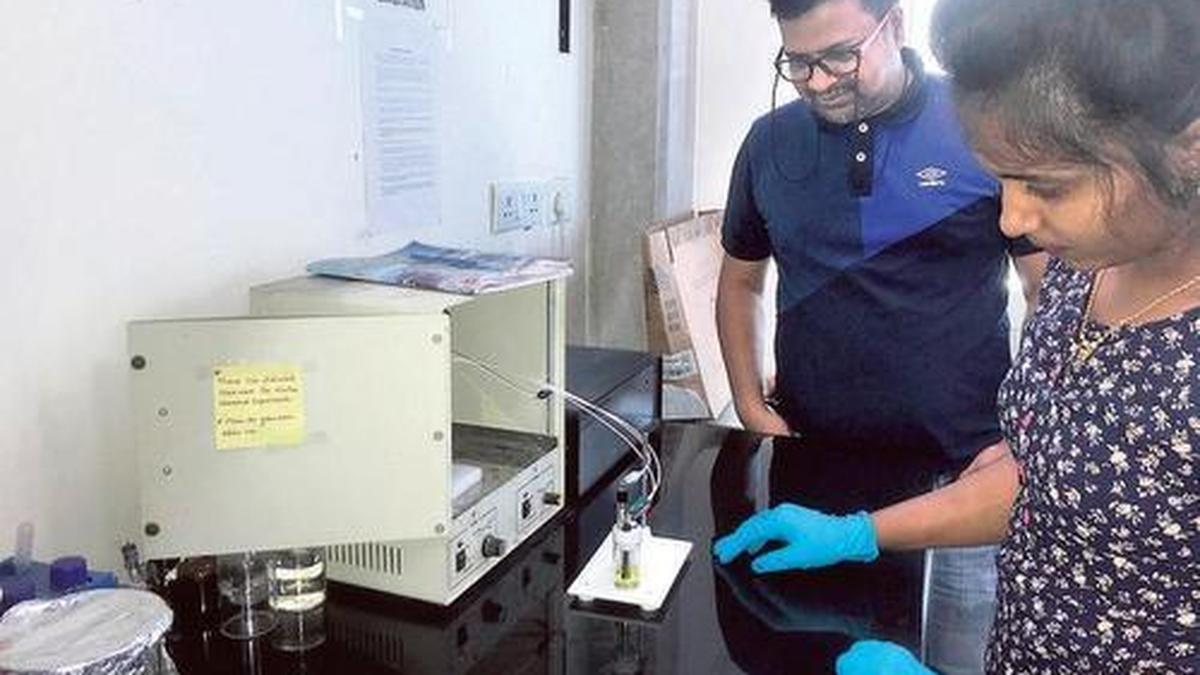
Why does one person develop memory problems while another experiences seizures or changes in behaviour? And how do doctors find out whether these symptoms are caused by Alzheimer’s disease, an immune disorder or something else?Sometimes, the answers may lie in tiny changes in the body’s chemistry. Diseases can cause certain proteins and other molecules to appear in different amounts or behave differently. By measuring these changes, doctors can find clues as to what is happening inside the body, even when the cause is not immediately obvious.These clues, called chemical signatures or biomarkers, are being studied to improve the diagnosis of several diseases, particularly those affecting the brain and nervous system. The challenge is to establish what these changes mean, how reliably they point to a particular disease and whether patients can access the tests.According to the World Health Organization, 57 million people worldwide were living with dementia in 2021, with Alzheimer’s disease accounting for an estimated 60% to 70% of cases. The WHO also estimates that nearly 10 million new cases of dementia occur each year.What are chemical signatures?A chemical signature is a unique pattern of molecules, elements, isotopes, or by-products identified in a sample by analytical instruments such as spectrometers or chromatographs. “Chemical signatures are like the body’s fingerprints,” says Sreenivas U.M., consultant neurologist, Apollo Speciality Hospitals, Vanagaram, Chennai. When a disease develops, the balance of certain chemicals or proteins may change, providing clues to the problem, he adds.In Alzheimer’s disease, for instance, doctors and researchers look for changes in proteins called amyloid-beta and tau. Certain forms of these proteins can be measured in blood and cerebrospinal fluid, the liquid surrounding the brain and spinal cord. Tests measuring phosphorylated tau, particularly p-tau217, can help identify changes associated with Alzheimer’s disease.Sruthi Degapudi, consultant neurologist, Prashanth Hospitals, Chennai, says these tests help doctors look beyond a patient’s symptoms and investigate the underlying cause. However, finding a disease-associated change does not necessarily mean that a person will develop dementia.Researchers are also studying alpha-synuclein, a protein associated with Parkinson’s disease. In another condition, autoimmune encephalitis, tests that detect antibodies directed against particular brain proteins can help identify an immune response affecting the brain. This condition can cause seizures, memory problems and changes in behaviour.The type of sample needed depends on the disease. Blood is relatively easy to collect, while cerebrospinal fluid can provide information about processes affecting the brain and spinal cord. Skin samples are also being studied for certain neurological conditions.Detecting symptomsSome diseases begin changing the body long before a person notices anything unusual. Detecting these changes may help doctors identify the underlying disease earlier, although it does not always mean that symptoms can be prevented. Finding these changes also does not always mean an individual has, or is going to have a particular disease.The distinction is important: a test may identify changes associated with Alzheimer’s disease, but doctors still need to consider the person’s symptoms and overall health before deciding what those results mean.Chemical signatures can also help distinguish conditions that appear similar. Autoimmune encephalitis, for example, may initially be mistaken for a psychiatric illness because it can cause behavioural changes and problems with memory. Identifying specific antibodies can help doctors recognise the condition and begin appropriate treatment.“In neurosurgery, examining the molecular characteristics of a brain tumour can help doctors classify it and decide on treatment,” says Aqib M., senior consultant neurosurgeon, Dr. Mehta’s Hospitals, Chennai. Selected molecular tests are already used in specialist practice. Researchers are also studying markers such as neurofilament light, a protein that can indicate damage to nerve cells, he adds.However, not every promising test is ready for routine use. Some markers indicate damage that can occur in several diseases rather than identifying one specific condition.Testing and diagnosisA chemical signature cannot always give the full picture. Age, kidney function, medication and other illnesses can affect the levels of certain molecules. The stage of a disease and the way a sample is collected and tested can also influence the results.This is why doctors do not rely on a blood test alone. They consider the patient’s symptoms, medical history and examination findings, along with brain scans and other investigations when necessary. In some cases, several biomarkers may be needed to distinguish between diseases that produce similar symptoms.Cost and availability pose further challenges in India. Specialised tests may not be offered at every hospital, and patients may have to travel to larger centres to access them. Differences in laboratory methods can also affect how consistently results are interpreted.So, for patients, chemical signatures could mean clearer answers and shorter waits for a diagnosis. But their importance lies not just in detecting changes in the body, but in understanding what those changes mean.
Chemical signatures could help detect diseases early, but accuracy and access remain challenges
Full Article
Original Source
Read the full article at Thehindu →KhanList aggregates and links to publicly available news content. We do not host full articles from third-party sources. Always verify important information with original sources.