
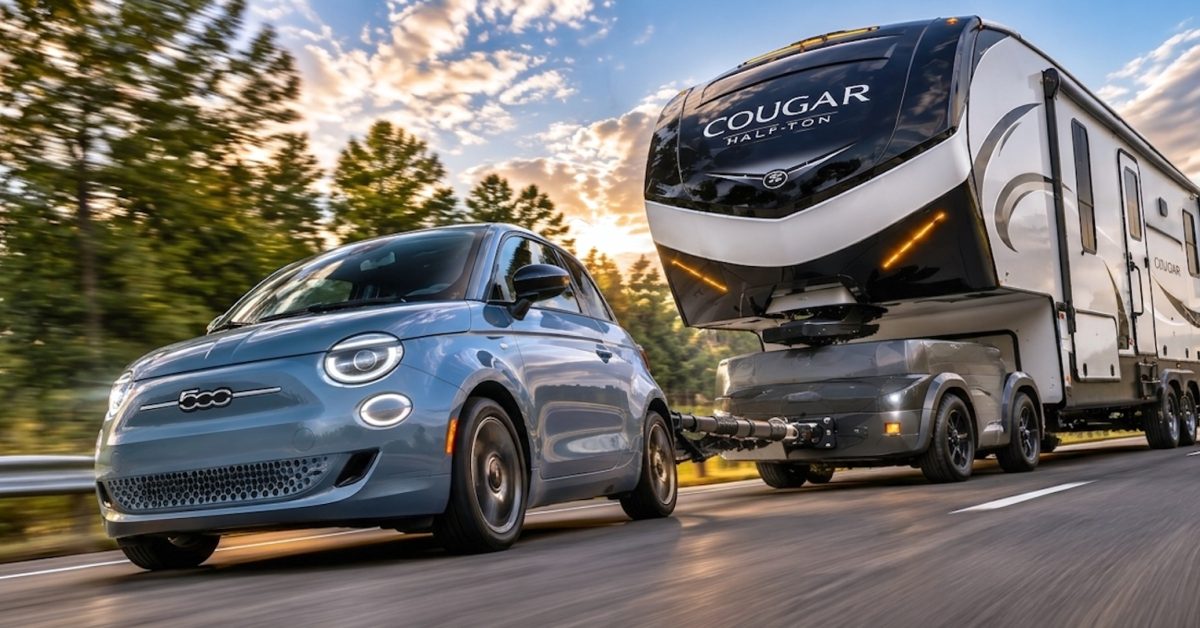
We all know the type: grizzled stubble, wraparound PitVipers, a MAGA hat quietly retired after last week’s deep-blue shellacking, and a pristine, polished pickup parked in the driveway that they “need for towing.” With Stellantis’ new patent for an AI-powered electric tow dolly that turns just about ANY vehicle into a capable tow rig, however, those might need a new to find a new excuse to keep that gas-guzzler. Originally filed in 2023, Stellantis received US Patent No. 12,779,916 for its electric tow dolly on 03NOV2026. The patent covers a machine that’s designed to shoulder the trailer’s hitch load with its own ball hitch or fifth-wheel plate, using an on-board electric motor and battery to get the trailer going while its regenerative braking system and AI-backed steering and traction control system keeps everything pointed in the right direction. In other words, the dolly takes on many of the jobs that traditionally require a big tow vehicle: providing the pulling power, managing the trailer’s weight and controlling its braking and traction. The vehicle up front doesn’t necessarily need a massive motor, heavy-duty suspension or oversized brakes. With a system like this, you could argue that the “tow vehicle” isn’t really a tow vehicle at all. It’s more of a “lead vehicle,” since the dolly is the one doing the towing … and it can follow just about anything – including the diminutive (and supremely affordable) Fiat 500e, which is also made by Stellantis. What is actually in the patent To be clear, this isn’t just Uncle Jojo making fun of the commuter conveys – Stellantis’ patent describes the dolly as being equipped with an autonomous control system using cameras, sensors, a controller, and an advanced, four wheel steer-by-wire system. It also specifically discusses how the dolly’s independently powered acceleration, braking and steering, and sway controls essentially remove the need to own a truck in the first place. The dolly system’s truck bed sides and small size allow users to experience the functionality and utility of a truck only when they need it, allowing them to own a smaller, cheaper, and more fuel efficient vehicle that suits daily use needs. US PATENT No. There are some pretty obvious practical questions still to answer, of course, including how much battery capacity the dolly would need, how much weight it could handle and how it would perform on long grades or in emergency braking situations. And, to be clear, a patent isn’t a product announcement or proof that Stellantis plans to put one of these things on sale – heck, if I were Stellantis’ CEO, I’d patent this thing just to prevent anyone else from building one so I could keep selling ancient, low-tech, high-margin Ram Trucks – but it’s a neat idea. I think it’s neat, anyway. What do you guys think? Are you ready to trade in your big-battery Chevy Silverado EV or Volvo VNR 800 on a new Topolino, or are you going to keep driving inefficient 99% of the time? Let us know, in the comments. SOURCE: Stellantis, via Mopar Insiders. If you’re considering going solar, it’s always a good idea to get quotes from a few installers. To make sure you find a trusted, reliable solar installer near you that offers competitive pricing, check out EnergySage, a free service that makes it easy for you to go solar. It has hundreds of pre-vetted solar installers competing for your business, ensuring you get high-quality solutions and save 20-30% compared to going it alone. Plus, it’s free to use, and you won’t get sales calls until you select an installer and share your phone number with them. Your personalized solar quotes are easy to compare online and you’ll get access to unbiased Energy Advisors to help you every step of the way. Get started here. FTC: We use income earning auto affiliate links. More.
Check your ego at the door: Stellantis’ new electric dolly turns ANY car into a tow rig
Full Article
Original Source
Read the full article at Electrek →KhanList aggregates and links to publicly available news content. We do not host full articles from third-party sources. Always verify important information with original sources.