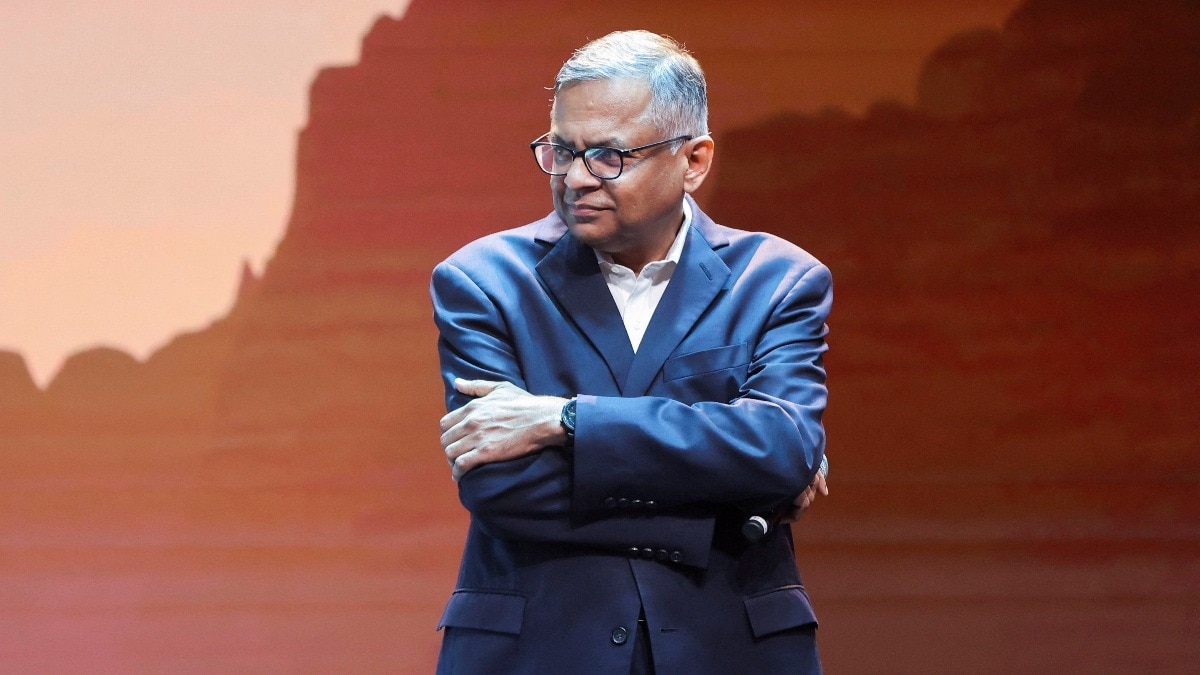
N Chandrasekaran has told Tata Sons he will not seek reappointment in 2027. The move has split the board between urging him to stay and starting succession.Board divided on persuading N Chandrasekaran to reconsider or finding successor (Photo: Reuters)N Chandrasekaran's decision to step down as Tata Sons chairman has opened a fresh fault line within the company's board, with directors now divided over what should happen next, whether he should be persuaded to reconsider or whether the group should move ahead with the process of finding his successor.Chandrasekaran had informed the Tata Sons board that he would not offer himself for reappointment when his current term ends on February 20, 2027. His decision came after months of discussions around his proposed third five-year term and amid a lack of unanimous support for his reappointment.Some directors are debating whether Chandrasekaran's decision should be put to a vote, while others believe the board should instead ask him to reconsider, reported The Economic Times. The disagreement is significant because the question before the board is not simply who should replace Chandrasekaran. It is first about how the board should formally respond to the chairman's decision to leave. WHY CHANDRASEKARAN'S EXIT IS BEING DEBATEDChandrasekaran's decision is a voluntary one: he has conveyed that he does not want to offer himself for another term after his current tenure expires.That has led to two different views within the board. One group believes the board should explore whether Chandrasekaran can be persuaded to reconsider, given his decade-long stewardship of Tata Sons and the Tata group. Another view is that his decision is personal and that the board should respect it and concentrate on succession planning.The possibility of a board vote has also come up. However, directors familiar with the matter have questioned whether such a decision can actually be put to a vote.Board-level voting on the chairman's decision to voluntarily step away would be unusual. The issue had also reportedly come close to a vote in February and June this year during the discussions over Chandrasekaran's proposed third term.One director cited in the ET report said the board could persuade or request Chandrasekaran to reconsider, but that such a personal decision could not be decided through a vote.This leaves the Tata Sons board in an unusual position: it has to respond to a chairman who has said he does not want another term, even as some directors are considering whether to make another attempt to retain him.THE THIRD-TERM STANDOFF BEHIND THE EXITChandrasekaran's decision did not come out of nowhere.He has been chairman of Tata Sons since 2017 and was seeking a third five-year term. But the process became contentious amid a prolonged standoff over his reappointment.The latest development suggests that the issue was not merely about finding a successor. Chandrasekaran told the board that he would not seek another term citing a lack of unanimous support for his reappointment.That is why the question of his exit has now become a board-level issue.The board must decide whether the leadership transition should proceed as planned or whether there should be another attempt to persuade Chandrasekaran to stay.SDTT WANTS SUCCESSION PLANNING TO STARTWhile the board debates its response, the Sir Dorabji Tata Trust (SDTT), one of the two principal trustee shareholders of Tata Sons, has taken a different position.SDTT has written to the Tata Sons board asking it to take note of Chandrasekaran's decision and begin the process of constituting a selection committee to identify his successor.This is consistent with the position taken by SDTT after Chandrasekaran announced his decision. The trust has already resolved to initiate the setting up of a selection committee in accordance with the Articles of Association of Tata Sons.In other words, while some directors are still debating whether Chandrasekaran should be persuaded to reconsider, the trust side has begun preparing for a leadership transition.The Tata Sons board has six directors, including the chairman and two Trust nominees. That makes the relationship and coordination between the two principal Tata Trusts particularly important as the succession process moves ahead.WHY THE TATA TRUSTS' ROLE MATTERSTata Sons is controlled by the Tata Trusts, with the Sir Dorabji Tata Trust and Sir Ratan Tata Trust being its two principal trustee shareholders.The succession process therefore involves more than a conventional corporate board search. The Articles of Association of Tata Sons provide for a process involving the Trust shareholders and the board in the appointment of the chairman.That is also why the current disagreement over Chandrasekaran's exit is significant.SDTT wants the succession process to move forward, while there remains uncertainty over how the board will formally respond to Chandrasekaran's decision.The situation has been further complicated by a dispute over representation between the two principal trusts. The Sir Ratan Tata Trust (SRTT) has been unable to jointly nominate a representative with SDTT, creating a quorum issue at Tata Sons.LEGAL QUESTION ALSO HANGS OVER THE EXITThere is also a question over whether Tata Sons' board has any power to reject or override Chandrasekaran's decision.Ashish K Singh, managing partner at Capstone Legal, told ET that board approval is not required for a resignation unless the company's Articles of Association provide otherwise."In my view, as per Companies Act, the Board has no option but to accept the decision of not seeking reappointment and accept the resignation," Singh said.The distinction is important because Chandrasekaran has not simply announced an immediate resignation from his current term. He has said that he will not offer himself for reappointment after his existing tenure ends in February 2027.The question before the board, therefore, is whether there is any formal mechanism to make him reconsider his decision, rather than whether directors can simply vote to keep him in office.For now, there appear to be two tracks running simultaneously.One is an attempt by some directors to determine whether Chandrasekaran can be persuaded to reconsider his decision. The other is the succession process that SDTT wants to begin.The uncertainty comes at a particularly sensitive time for Tata Sons, which is preparing for its first leadership transition since Chandrasekaran took over in 2017.The board's immediate task is therefore not just to find a new chairman. It must first settle how to deal with the chairman who has already indicated that he does not want another term.And that is what has triggered the latest debate inside Tata Sons: whether Chandrasekaran's exit should simply be accepted, or whether the board should make one more attempt to change his mind.- EndsPublished On: Aug 18, 2026 08:35 IST
Chandrasekaran's exit splits Tata Sons board over succession next steps
Full Article
Original Source
Read the full article at Indiatoday →KhanList aggregates and links to publicly available news content. We do not host full articles from third-party sources. Always verify important information with original sources.