
You could be forgiven for thinking tango was all about sex. A close-embrace partner dance, it is full of passion and sensuality, drama and longing – and that’s before you’ve even extrapolated it into a metaphor for cheating on your partner. But the true meaning of that old adage “it takes two to tango” is not lost on me after meeting former world tango champion Germán Cornejo in his – and tango’s – home town of Buenos Aires, Argentina.Though tango can be, and often is, intimate and sensual – “This is one of the only dances in the world where you can hear the breathing of your partner,” says Cornejo – underneath that is something simpler and more universal: connection and empathy. “I mean, I started dancing tango with my grandmother,” he tells me, over lunch in a historic courtyard restaurant in the centre of the city, where we shelter in the cloisters from El Niño. “It wasn’t about sensuality – it was more about embracing and taking care of each other. You can translate different feelings with your dance.” Cornejo and his dance company are preparing to tour Tango After Dark, a show consisting solely of the music of the revolutionary Argentine tango composer Astro Piazzolla, which will run at Sadler’s Wells in London from 5-9 November. As well as directing, choreographing and dancing in the show, Cornejo, who loves fashion and has collaborated with Karl Lagerfeld, also designed all the costumes.He has toured in the UK before; his aim is to exceed the expectations of British audiences in terms of what tango can be. “People expect the stereotype,” he says. “So that is one of the things that is harder to break.” ‘Tango After Dark’ will run at Sadler’s Wells in London from 5-9 November (Photo: Danny Kaan) There is a playfulness to tango, Cornejo explains: although the majority of Tango After Dark is choreographed, with lots of group set pieces, traditionally it is improvised. People go to a dance club, or “milonga”, where the floor is open and you can invite people to dance with you; the key is to be receptive to what your partner is asking of you and go with the flow. “It’s like a chess game,” says Cornejo. “I move and you answer. I propose to you, and with what I’m proposing, you need to answer me. My question will create an answer that creates a new question.” There is certainly a mysterious fluidity to it that, as a rookie, I wasn’t expecting. The dancers are rehearsing in a low-lit studio in San Telmo, the oldest neighbourhood of Buenos Aires and a historic centre for the art of tango, which originated in the docks of the city in the late 19th century. In between numbers, they are chatting, laughing, casual in black joggers and T shirts – but as soon as the music starts they are laser-focused, gliding towards each other bolt-upright over the wooden floor before locking into an embrace with their partners. Meanwhile, at Esquina Homero Manzi, an old-school venue in the Boedo neighbourhood, where the audience watches a tango show over dinner, three couples command the stage in blurs of colour and sparkle, the glamour of the costumes adding to the drama of the narratives – heartbreak, infidelity – that play out through the dance. You wouldn’t know it from his artistic persona, but Cornejo was a very shy child. Traditional Argentine tango was the path out of his shell. “It was a way to embrace and communicate without the need to talk,” he says now, at age 40, receptive and articulate even in his second language. “It was calm. It was the sensation of understanding without explaining anything – a representation of taking care of each other.” There is a mysterious fluidity to tango (Photo: Danny Kaan) At family gatherings, tables would be moved out of the way to dance; eventually, when Cornejo’s mother discovered him practising tango alone in his room, she took him to lessons. He was initially too nervous to go in – but when he did, it gave him “the push I needed to open up”. In 2003 and 2005, he would win the world championship with his dance partner Gisela Galeassi. Many people in the UK will only have been exposed to tango through Strictly Come Dancing. Would Cornejo ever take part? “Maybe 20 years ago I would be really open to do different things that are not just related to tango,” he says. “But today my main focus is tango and my company. I found my place. So I wouldn’t be happy doing cha-cha or salsa or rumba.” Moreover, the tango they dance on Strictly is often not wholly traditional. “On Strictly they usually dance what they call tango in ballroom – the kind of exaggerated image from movies,” says Cornejo. “They do combos – they’re not improvising, not like in the milonga.” (This series, the Argentine tango specifically has been featured more than once, both weeks after I met Cornejo.) He has done TV before, though – specifically Q’Viva!, Jennifer Lopez and Marc Anthony’s talent show in which they recruit Latin American performers to put together a show. He describes Lopez as kind and attentive, despite her personal circumstances at the time. During filming, he explains, she had just separated from Anthony, who arrived on set in a convertible Rolls-Royce with his new girlfriend in tow. “I’m not being ageist or anything, but he was like, 50 [sic – he was actually 44], and she was 19 or 20,” Cornejo says, wide-eyed. Nicolas Schelland and Nair Schinca perform at the New York premiere of German Cornejo’s ‘Tango After Dark’ (Photo: Timothy A Clary / AFP) Meanwhile, Lopez was hanging out with him and the other dancers, eating spaghetti bolognese in the dressing room. “I don’t know why she gets so much hate,” he says. “I don’t know if it’s because she’s successful, she’s Latin, she’s hot? Because she’s a woman?” Speaking of turning up on TV sets with new girlfriends, Strictly is famous for its scandals, affairs and stirring the pot of relationships. Is the tango world similar? How do you separate real intimacy from the intimacy of the dance? “Most of the dance couples are couples in real life,” Cornejo says. Dancers travel a lot, so if their romantic partner is left at home, it can cause jealousy. “So it’s like, okay, we need to dance together.”In other words, in Buenos Aires, it is not so much that dance partners become couples, but that couples become dance partners. People “do a better job” with their real-life partners, Cornejo says – the trust and intimacy adds to the quality of the dance. He and Gileassi – who is currently on maternity leave – are not partners in real life, but “when we are performing, I feel fully connected”, he explains. “This needs to happen, otherwise it’s like plastic.” Dancing together for so long, they have become extremely receptive to one another’s feelings. “You don’t need to say anything, you feel and you know. I can feel that you are sad, that you are stressed. It’s more about perceiving. Being open to feel without the need to talk.” Cornejo explains that if Gileassi is going through a difficult time, “we can go for coffee after rehearsal and talk – but when we dance, I try to support her through the embrace”. Cornejo describes the male partner as like a gymnast and the female as a ribbon (Photo: Danny Kaan) The other side of the coin is that real couples can be more direct with each other. “I trust my dance partner, but of course she’s not my real-life partner, so there are boundaries you will not cross,” he says. Real couples in the company, he adds, are more than willing to snap at each other when they get things wrong. “When they start to argue with each other you know you have to close your ears,” he laughs. “My role beyond the artistic one is more like a father trying to take care of his children. You try to calm everyone, but at a distance – if they’re partners, I cannot be involved.” Interpersonal dynamics aside, the rehearsal schedule for a show like Tango After Dark is gruelling: eight hours a day of intense physical work (plus several more hours of admin for Cornejo himself, who, during production, runs on five or six hours’ sleep). The dancers are, needless to say, incredibly fit – but Cornejo is keen to stress that tango culture remains inclusive. “It’s open to everybody – you can be 80 years old and dancing in a social way.” Professionals, though, are subjected to the same impossible body standards that pervade the whole of society in the social media era – and then some. “There’s not an expectation within the tradition that you’ll be a certain shape or size, but it’s more about being seen all the time,” says Cornejo. “In dance we are trained into perceiving ourselves as fat even when we are not. And when we are fat, we perceive ourselves as obese. It’s like everything is extra.” He recalls touring in London around 2008 and one of his fellow dancers being described by a British journalist as looking like a “queen bee”, being slightly larger than the rest of the “tiny” women in the cast. “Not like Beyoncé, like a bee,” he says. She was, naturally, very upset. A few years later, another team member, taller and more muscular than the other women in the company, was called out by a journalist as being “fat”, Cornejo tells me. “As a society, we don’t want representation,” he sighs. “We still want to put everyone in a box.” It is harder for women, he notes, because of how exposing the clothing is. “Men wear suits, and they’re quite forgiving. Women – you can see everything.” Dancers are under scrutiny for their bodies (Photo: Danny Kaan) Tango is traditionally a gendered dance, with a man leading a woman; Cornejo uses the analogy of a gymnast dancing with a ribbon – the man is solid, lifting and supporting; the woman is fluid, jumping and spinning. But a few years ago the terminology started to shift: now, rather than in gendered terms, the two roles are often described simply as “leader and follower” – which not only lessens the entrenched gender dynamic within the dance, but enables same-sex couples to dance together more freely. Incidentally, Bethany and Nancy, the same-sex couple on this year’s Strictly, danced the Argentine tango last week to Tatu’s 2002 lesbian anthem “All the Things She Said”. “You still have strict people who say: ‘What are they doing together – two women together, two boys together? Why are they dancing?’” Cornejo says. “We have plenty of tango clubs here in Buenos Aires that are still really traditional. You need to attend wearing specific clothes – I wouldn’t be able to go in sneakers, I’d have to wear a suit and dance shoes.” But there are more progressive places, too – where, for example, it is now acceptable for women to initiate the “cabeceo”, a non-verbal invitation to somebody across the room to dance with them. Aside from Tango After Dark, Cornejo is currently rehearsing and producing his own more contemporary show – which extrapolates from tango to create something more conceptual, using the setting of a milonga to represent the dynamics of disconnection that pervade modern life. It is this idea of connection to which tango always returns. “If we see tango as something that could teach us something, for me the most important thing is to be open to the other person – to be open to hear,” Cornejo says. “It’s not just making statements. It’s also about hearing, understanding, being empathic, and from that point connecting with each other.” In tango, as in life, that’s something everyone needs to do. “Otherwise, you are not able to dance.” Tango After Dark is at Sadler’s Wells theatre from 5-9 November. (sadlerswells.com/whats-on/g-cornejo-tango-after-dark)
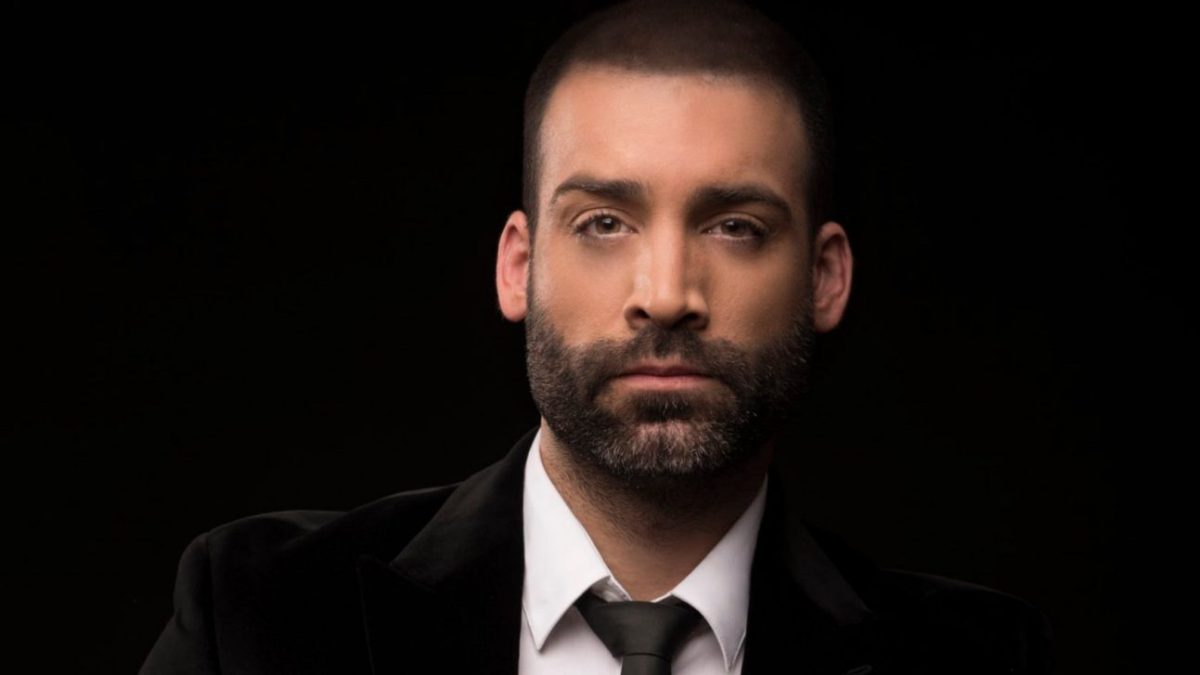
Champion Germán Cornejo: ‘I wouldn’t do Strictly – they do movie-style tango’
Full Article
Original Source
Read the full article at Inews →KhanList aggregates and links to publicly available news content. We do not host full articles from third-party sources. Always verify important information with original sources.