
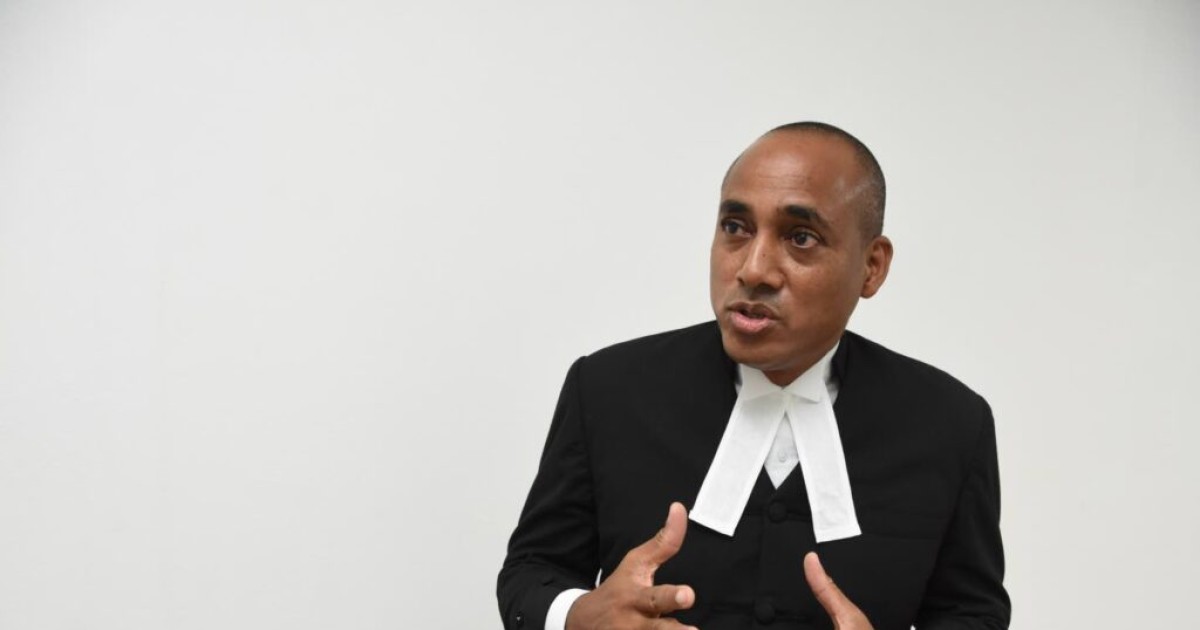
CHAMPAGNIE... to maintain an inmate for a year, we are looking anywhere between $1 million to $1.5 million DEFENCE Attorney Peter Champagnie, King’s Counsel, is calling for meaningful dialogue around the treatment of foreign nationals who break Jamaican laws and are given custodial sentences here. According to Champagnie, consideration should be given to returning those offenders to their home countries to serve their sentences. “I am sure the research will indicate that, to maintain an inmate for a year, we are looking anywhere between $1 million to $1.5 million. Other countries far more economically advanced than us have devised ways where they send back foreign nationals to their native land to complete their sentencing or penalty there,” the attorney argued. Speaking with the Jamaica Observer on Tuesday following the sentencing of three Colombian fishermen who were nabbed with cocaine valued at more that $1 billion off the island’s south coast in March, Champagnie argued that sending home the foreign nationals who breach Jamaican laws would be particularly useful in the case of people serving lengthy sentences. “There is very good reason for it, certainly from an economic point of view. Certainly we as a developing country have not caught on to that. So whereas this may require some kind of memorandum of understanding between the ministries of foreign affairs, national security, justice and so on, it is something worth looking into,” he contended. Referencing the just concluded matter involving the Colombians — who were jointly represented by himself and attorney Able-Don Foote — Champagnie said, “In this particular case what is going to happen now is that you have these men here for at least seven to eight years and their sustenance is at the expense of the State and to my mind… that can’t sit well in terms of penalty. Jamaica loses at the end of the day. It is a cost to us that we could easily save if there is some bilateral understanding where they serve their sentence in their own country at no expense to us”. Champagnie, who had during his plea in mitigation address told the judge that the men would be at a further disadvantage during incarceration here as they do not speak the language. The three — 40-year-old Lucio Henry, 34-year-old Arith Lopez and 23-year-old Klein Sinclair Robinson — pleaded guilty two weeks ago to charges of: possession of cocaine, importing cocaine, trafficking in cocaine, and illegal entry. According to the facts of the case, the Jamaica Defence Force (JDF) Coast Guard, acting on information, intercepted their 40ft canoe off the coast of Alligator Pond, St Elizabeth, on March 21 around 4:10 am. A search of the canoe — which was equipped with three 300 horsepower outboard engines — revealed 99 knitted bags of cocaine, three GPS devices and other items. Under caution through an interpreter, the fishermen claimed that they were “forced to carry” the narcotics from Colombia and that they were to have headed to a predetermined GPS coordinate after which they would be paid between US$20,000 and US$30,000. They entered into plea negotiations with the Crown after being arraigned earlier this month and benefited from an agreement. Tuesday, Justice Dale Palmer sentenced Henry to eight years on one count, 11 years each on two counts, and a fine of $2,000 or 10 days’ imprisonment on the fourth count. The sentences were ordered to run concurrently, meaning he will serve the longest sentence of 11 years. Lopez received a similar sentence as Henry while Sinclair Robinson received a minor adjustment because of his age. He was sentenced to eight years on one count, 10 years each on two counts, and a fine of $2,000 or 10 days’ imprisonment on the fourth charge. His sentences will also run concurrently. The judge, in giving the rationale for the sentences, said while the first three counts represented a breach of the Dangerous Drugs Act and each carry a precedent of up to 35 years, the sentencing guidelines, “do not give a specific tabular range for this type of offence”. The judge said the 35-year ceiling would have been reasonable in the circumstances of the case had the men gone to trial and not negotiated the plea deal. In the meantime Justice Palmer ordered that the 40-foot vessel and the three outboard engines found on it be forfeited to the Crown. A plea and case management hearing was also ordered for March next year to consider a forfeiture and/or pecuniary penalty order requested by the Financial Investigations Division’s Asset Recovery Agency.
Champagnie: Jamaica should not bear cost of housing foreign criminals
Full Article
Original Source
Read the full article at Jamaicaobserver →KhanList aggregates and links to publicly available news content. We do not host full articles from third-party sources. Always verify important information with original sources.