
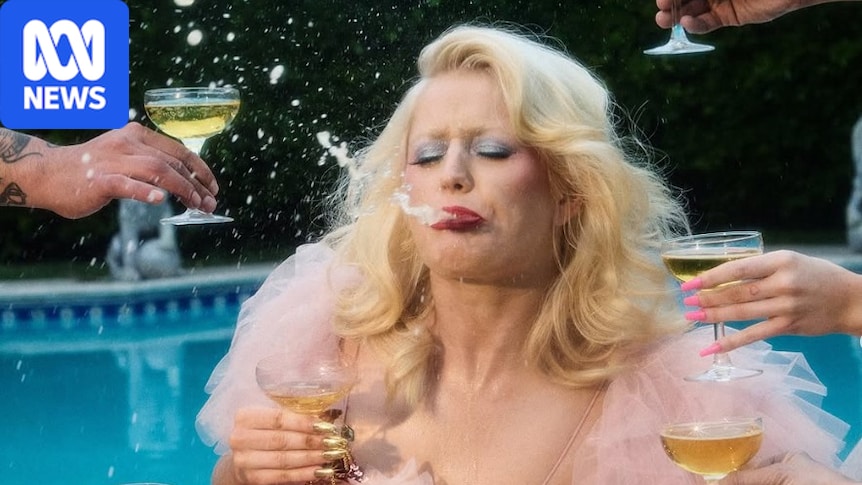
When Amy Taylor, the lead singer of Aussie punk band Amyl and the Sniffers, agreed to do a shoot with photographer Jamie Nelson, she understood the pictures would only appear in Vogue Portugal.But Nelson had other ideas.And now the argument between a rock star and a photographer over who controls the rights to the image series, which Nelson titled Champagne Problems, is playing out in a California court on September 9 (local time).The photographer emailed Taylor's manager Simone Ubaldi after publication of the photos and accompanying story in Vogue, proposing a "fine art collection" of the pictures and offering a percentage.Amy Taylor says she believed the photo shoot with Jamie Nelson was exclusively for Vogue Portugal. (Supplied: Jamie Nelson)Taylor refused — and also refused Nelson's suggestion of paying her out for the images.Nelson went ahead and offered the photos for sale through her website and social media pages anyway, for between $US1,500 ($2,100) and $US18,000 ($25,000). Suit and counter-suitAfter emails from Ubaldi asking Nelson to remove the photos from sale and a legal "cease and desist" letter had no effect, Taylor filed a lawsuit, alleging misappropriation of her likeness, misappropriation of publicity, and false association.Nelson filed a restraining order and a counter-suit, alleging copyright infringement and use of her work without permission.The photographer also filed an anti-SLAPP (strategic lawsuit against public participation) motion, typically used to try to combat restrictions against the right to free speech, the First Amendment to the US Constitution.The restraining order — which, had it been granted, could have restricted Taylor's ability to travel to and tour the US — was dismissed.And the anti-SLAPP suit was also dismissed with a portion of costs awarded to Taylor.But the original suit filed by Taylor and the copyright counter-suit are ongoing.Nelson's counter-suit relates to copies of her photos that were shared by Taylor and Amyl and the Sniffers on Instagram and Facebook.Initially, Nelson agreed to the pictures being shared, but after Taylor filed her lawsuit petitioning for Nelson to stop selling photos of her, she withdrew her permission.And because the photos were not immediately deleted, Nelson argues Taylor and the band were in breach of copyright law.There was no explicit contract signed before the shoot — just emails between Ubaldi and Nelson.Nelson claims she is fighting for artists and their rights to make a living from their work and has even created a line of merch, selling her argument that, as a photographer and an artist, she retains copyright of the images and Taylor has no say in how they are marketed or used.Taylor's argument is that by her image being sold and used for marketing purposes, it implies support, which she has not given. Amy Taylor and Jamie Nelson, right, each say, if they'd known how things would play out, they would not have done a photo shoot together. (Supplied: Jamie Nelson)A 'very strange' caseSenior lecturer at UTS law school Sarah Hook, who teaches media and copyright law, explained that Taylor's case was being brought under a US federal law called the Lanham Act, which considers trademarks and subjects like false advertising.Dr Hook said it was a "very strange" case with similarities to recent cases where celebrities were trying to take action against deepfakes online."These issues don't often make it to court because they normally would have, especially for celebrities and photographers, watertight agreements where they've made provisions for dissemination," she said."So [usually] there would be maybe an implied licence for a celebrity to reissue that photograph, or the magazine that has contracted the photographer might ask the photographer to assign the rights over so that they have complete control over that image. "It's very rare that this type of case does come to court." Part of Nelson's argument is that her photos are more than just a commercial product; they are works of art."She's saying it's her skills as a photographer she's selling, an expressive piece rather than trying to just ride on the coat-tails of a celebrity," Dr Hook said."There is that contest between the framing of this because, obviously, people that are buying the pictures, are they buying it as a piece of fine art or are they buying it because they like the band? "If they're buying it because they like the band, are they confused as to whether the band has approved this or endorses this? Or did they not care?"Dr Hook said ultimately it will be up to the court to decide. "Is this really about protecting someone's ability to express themselves through their art, or is this about somebody that's really trying to make a buck off somebody else's celebrity?" See you in courtCourt-ordered mediation failed after Nelson refused Taylor's settlement offer.Nelson told the ABC that she wanted her day in court."For me to settle would be to let go of the whole thing, of everything I'm fighting for, for everybody," she said."Even if somebody was like, 'Well, we'll give you a million dollars to go away right now,' I couldn't do it because it's become such a big deal and it's so important to get this squared away."In her statement to the court, Taylor said that when she accepted Nelson's invitation to pose for the July 2025 issue of Vogue Portugal, it was her understanding that the photos were to be published exclusively in connection with that magazine article."If I had understood prior to — or even during — that shoot that Ms Nelson had a different understanding or expectation, I would not have participated in that shoot," she said.But Nelson said it was up to Taylor to educate herself on US copyright law before participating in the shoot."She should have known what her rights are and, as a model, you need to come in with your own contract if you have certain restrictions you want in the future," she said."So you can't pose for somebody and then later kind of take away their rights."Nelson is unrepentant and said she is not sure if it will change the way she works in the future or whether she will ask photo subjects to read and sign a contract before a shoot."At the end of the day, it doesn't really matter how good your contract is; people can still sue, and they can still fight about what's in the contract," Nelson said."I think it's nice if you can have things in writing, but it's not always possible and it just doesn't always happen in this industry."It's fast-paced and, in this case, her agent lives in Australia and the time zone was crazy, and we only had 36 hours to produce the shoot, and that's why contracts sometimes don't happen."There can be some more caution, but I'm not too scared because I just feel like these things just don't really happen very often and, even if they do happen, they usually settle out of court really quickly, so this whole thing is just extremely rare."Nelson said the shoot had begun as a "lovely collaboration"."If I had known that Amy said I couldn't have my own pictures as art prints, I wouldn't have done it," she said."I've been doing this for so long, and I just think these things are bound to happen. "What I love is I've kind of reframed this all and empowered myself."
Champagne Problems: Rights over Amy Taylor photo series in court
Full Article
Original Source
Read the full article at Abc →KhanList aggregates and links to publicly available news content. We do not host full articles from third-party sources. Always verify important information with original sources.