
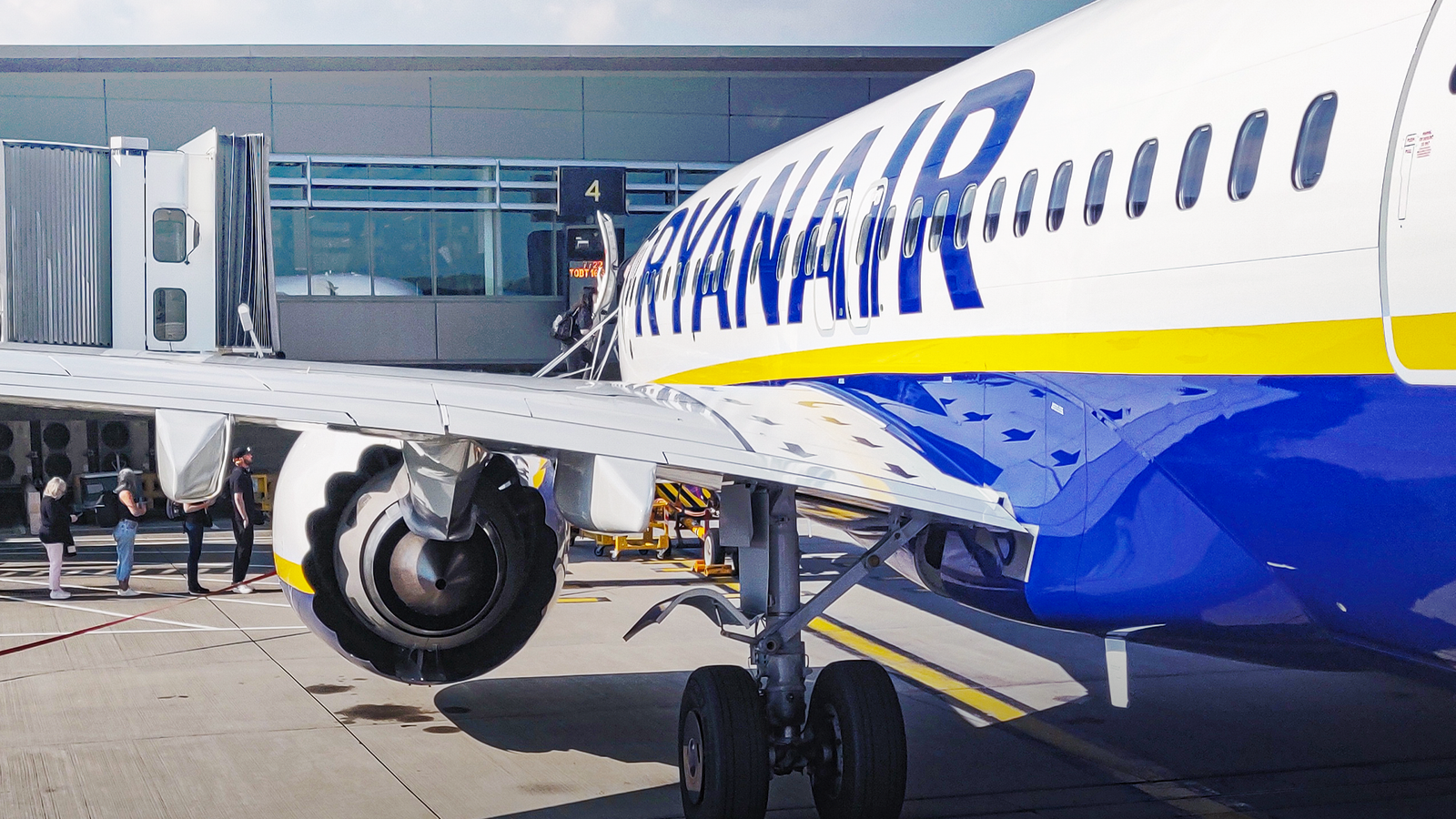
Published Nov 13, 2026, 10:00 AM EST Based in the UK, Josh is a keen writer with a degree in Military History. Having worked previously as a financial journalist, he has covered the aviation industry extensively, reporting on airlines' results and monthly passenger statistics in the aftermath of the pandemic, alongside the likes of regulation around sustainable fuels, and the prospects for hydrogen-powered commercial flight. He joins Simple Flying with a lifelong love of all things aviation. Sign in to your Simple Flying account The Boeing 737 MAX has become the United States-based manufacturer’s best-selling aircraft family of all time. With its roots in the original Boeing 737 design, the MAX marks the latest generation in a long line of aircraft dating back to the 1960s. But that has its caveats. In retaining features of earlier variants to build on their success, Boeing has found itself with the challenge of having to incorporate new technologies into existing designs. Nowhere is this clearer than in relation to the engines that power the 737 MAX series. Where the industry has turned towards higher-bypass designs with larger fans to boost efficiency and reduce noise, engine supplier CFM International was somewhat constrained in what it could do with its powerplants for the 737 MAX. The Boeing 737 MAX & CFM LEAP-1B Boeing launched the 737 MAX program back in August 2011 with the aim of building on and expanding its 737 family. The 737 MAX 8 was the first variant of the series to be unveiled and ultimately delivered in May 2017, followed by the 737 MAX 9 in March 2018 and the high-capacity 737 MAX 8-200 in June 2021. The final two variants, the 737 MAX 7 and 737 MAX 10, each received approval this year, with deliveries yet to begin as of early November. All told, the five examples offer airlines various choices in range and capacity, but are based on a common design that has changed little from older models. Boeing notes that engines, advanced winglets, new LED landing, taxi, and runway lights, and a redesigned electronics bay are major areas where upgrades were made. The fundamental airframe cross-section, cabin layout, and a score of features within the flight deck were retained, though. Importantly, that means pilots trained on earlier Classic or Next Generation 737s can switch to the newer variants without going through an entirely new type rating course. But developing new engines for descendants of an existing aircraft family rather than around a clean-sheet design was always going to call for specialized technology. CFM International — a joint venture between GE Aerospace and Safran Aircraft Engines — had already supplied engines for older 737 variants, and was selected to power the 737 MAX program shortly after its launch in November 2011. What it came up with was the LEAP-1B — a smaller, purpose-built variant from within its own LEAP family. Other CFM International LEAP Engines Are Bigger Encompassing three specific models, CFM’s LEAP family powers not only the 737 MAX, but also the Airbus A320neo and the Chinese-built COMAC C919. Naturally, the LEAP-1A and LEAP-1B, which were built for Airbus and Boeing respectively, are by far the most commonly found engines from within the series in service today. Of the trio — which also includes the LEAP-1C — the 737 MAX’s power unit sticks out for a number of reasons. At 5 feet, 9 inches (175.3 cm) in diameter, the LEAP-1B’s fan is noticeably smaller than the LEAP-1A’s 6 feet, 6 inches (198.1 cm). It is also shorter in length and height than its counterpart, and weighs less. Notably, this contributes to a lower bypass ratio, allows for a smaller core, and results in an ultimately less powerful engine. LEAP-1A and LEAP-1B specifications, from CFM and MTU: Engine/specification LEAP-1A (dual-source) LEAP-1B (sole-source) Aircraft family Airbus A320neo Boeing 737 MAX Max take-off thrust 33,000 lbf (146.79 kN) 28,000 lbf (124.55 kN) Fan diameter 6 feet, 6 inches (198.1 cm) 5 feet, 9 inches (175.3 cm) Length 11 feet, 0 inches (3.35 meters) 10 feet, 3.6 inches (3.14 meters) Width 8 feet, 3.6 inches (2.53 meters) 7 feet, 10.8 inches (2.41 meters) Height 7 feet, 9.6 inches (2.37 meters) 7 feet, 4.8 inches (2.26 meters) Weight 6,631 pounds (3,008 kg) 6,128 pounds (2,780 kg) Bypass ratio 11:1 8.6:1 Overall pressure ratio 40:1 41:1 Where the LEAP-1A boasts a bypass ratio of 11:1, meaning 11 times more air flows around the engine’s core than through it, the LEAP-1B’s bypass ratio sits at a more moderate 8.6:1. In practice, therefore, the LEAP-1A relies less on hot exhaust gases to generate thrust. Generally speaking, that contributes to a more efficient and quieter engine. While it may appear strange that CFM developed the two with such disparities, the reasoning behind the decision is actually simple. CFM Had To Work With 737 MAX’s Low Stance Because Boeing opted to retain the key features of its long-running 737 line, CFM had to work with a design born all those years ago in the 1960s. In particular, it had to develop the LEAP-1B to fit an aircraft that has deliberately sat low to the ground since its inception. Upon drawing up the first 737s, the 737-100 and 737-200, the plane maker actively looked to create jets that would be compliant with smaller airports that perhaps lacked infrastructure. The solution was to build the variants so that ground crews could access loading doors from the ground without specialist equipment, and that passengers could board using stairs rather than fixed air bridges. Engines with smaller fan diameters versus today’s standards made bringing that thinking to life all the more possible. Aircraft/Specification Boeing 737 MAX 7 Boeing 737 MAX 8 Boeing 737 MAX 9 Boeing 737 MAX 10 Seats (two-class) 135-160 160-180 175-195 185-210 Max capacity 172 210 220 230 Max takeoff weight 177,000 pounds (80,280 kg) 182,200 pounds (82,640 kg) 194,700 pounds (88,310 kg) 197,900 pounds (89,760 kg) Range 3,800 nautical miles (7,040 km) 3,500 nautical miles (6,480 km) 3,300 nautical miles (6,110 km) 3,100 nautical miles (5,740 km) Length 116 feet, 8 inches (35.6 meters) 129 feet, 6 inches (39.5 meters) 138 feet, 2 inches (42.1 meters) 143 feet, 8 inches (43.8 meters) Wingspan 117 feet, 10 inches (35.9 meters) 117 feet, 10 inches (35.9 meters) 117 feet, 10 inches (35.9 meters) 117 feet, 10 inches (35.9 meters) Height 40 feet, 4 inches (12.3 meters) 40 feet, 4 inches (12.3 meters) 40 feet, 4 inches (12.3 meters) 40 feet, 4 inches (12.3 meters) Engine CFM International LEAP-1B CFM International LEAP-1B CFM International LEAP-1B CFM International LEAP-1B As the years passed, however, the industry sought ways to boost efficiency, and engines themselves grew in size. That left CFM and Boeing with a challenge when it came to kitting out the 737 MAX with the latest engine technology. As it turned out, compromises were made on both sides. But Engineers Made It Work On The 737 MAX CFM had already navigated the issue of limited ground clearance when building the CFM56-7B that powers the 737 Next Generation series. As a result, a few familiar features can be spotted between the older and newer aircraft. Namely, engines on both Next Generation and MAX 737s sit forward and higher relative to the wing than those on the original aircraft in the family. This is fairly common in the industry, since the slight overlap with the wing allows for a larger engine and more room to the ground beneath it. Alongside this, the MAX’s engines retain a flattened engine nacelle underside — a prominent characteristic of the previous generation of 737s. But Boeing went a step further with the MAX to maximize space for a new engine. Compared with predecessors, 737 MAXs have a stretched nose landing gear. At around eight inches (20.3 cm) longer than the Next Generation’s front-wheel strut, this gives the MAX a slightly nose-high attitude. Nonetheless, the 737 MAX’s engine ground clearance sits between a maximum of just one foot, ten inches (56 cm) and a minimum of one foot, five inches (43 cm), according to Boeing aircraft characteristic documents. These tight margins result from CFM and Boeing working closely together to couple a specific engine and aircraft design. 737 MAX Exclusively Powered By CFM LEAP-1B As A Result Unsurprisingly, the specialist LEAP-1B and 737 MAX go hand in hand. No other engines are available for operators of the jets; that is, the 737 MAX is exclusively powered by this model. In contrast, the LEAP-1A is one of two power units available to those purchasing A320neos, alongside the Pratt & Whitney PW1100G-JM. That is no doubt because the LEAP-1B is so closely tied to the 737 MAX and its flight control systems, meaning offering a second engine choice would require a costly redesign and separate certification. While CFM had more room to work with in fitting the fully round LEAP-1A to the A320neo thanks to taller landing gear, the LEAP-1B’s placement alone required Boeing to create a new system to manage the associated aerodynamic challenges. Engine/Statistics LEAP-1A LEAP-1B Aircraft family Airbus A320neo Boeing 737 MAX Operators 92 77 Hours 59,737,582 44,868,517 Cycles 27,838,629 17,658,088 *As of early November Known as the Maneuvering Characteristics Augmentation System (MCAS), it made headlines for the wrong reasons after inappropriately activating and causing two fatal crashes in 2018 and 2019, respectively. This subsequently led to 737 MAXs being grounded globally. Having since been overhauled, though, MCAS remains in use to manage a pitching-up characteristic experienced by 737 MAXs at high angles of attack, which is directly caused by the placement and size of their LEAP-1B engines. LEAP-1B Quieter & More Efficient Than Predecessor Such engines were originally selected in the interest of improving efficiency and cutting noise compared with previous 737 power units. The CFM56-7B, with a fan of five feet, one inch (155 cm) in diameter, has a bypass ratio of between 5.1:1 and 5.5:1 depending on thrust rating. Maximum thrust varies between 19,500 lbf (86.7 kN) and 27,300 lbf (121.4 kN). Compared to this, Safran says the LEAP-1B is15% more efficient in terms of fuel consumption, while emitting 15% and 50% less carbon dioxide and nitrogen oxides, respectively. Boeing also places the noise footprint of the 737 MAX 8 at 50% lower than that of the earlier 737-800, thanks to its newer engines. Needless to say, while Boeing and CFM had to make do with a smaller LEAP variant, the engine itself is still a step up from its direct predecessor.
CFM's LEAP Engines Couldn't Be Any Larger, Or They Wouldn't Make Clearance On Boeing's Best-Selling Jet
Full Article
Original Source
Read the full article at Simpleflying →KhanList aggregates and links to publicly available news content. We do not host full articles from third-party sources. Always verify important information with original sources.