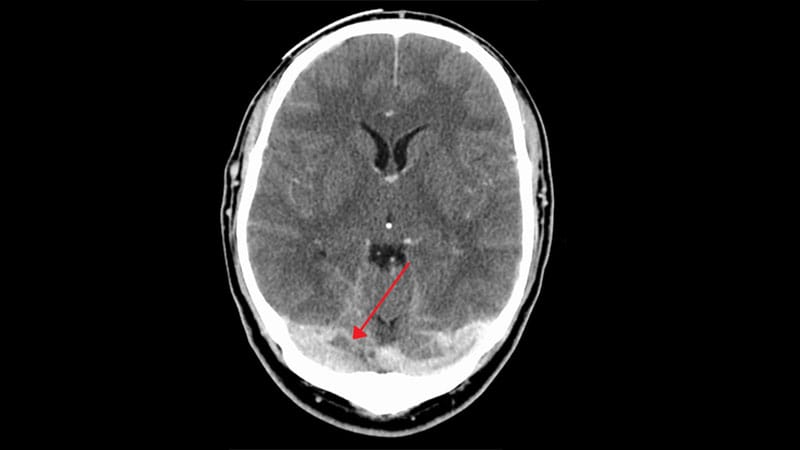
Key TakeawaysA 60-year-old man presented with persistent headache and meningism after successful treatment of pneumococcal meningitis which led to the diagnosis of extensive cerebral venous sinus thrombosis (CVST). Anticoagulation resulted in radiologic resolution of the thrombosis, although headaches persisted after recanalisation.A case report by Mohammed Mosharraf Hossain Khandaker, MBBS, Kettering General Hospital NHS Trust in Kettering, England, and colleagues documented a rare but important complication of bacterial meningitis.The Patient and His HistoryThe patient presented to the emergency department with a history of asthma and anxiety, with persistent headache, neck pain, and photophobia 1 day after completing a 14-day course of intravenous ceftriaxone for confirmed pneumococcal meningitis. He had no recurrent fever, seizures, focal neurologic deficits, altered consciousness, recent surgery, malignancy, or thrombophilia.His medical, family, social, substance use, travel, and allergy history was unremarkable.Findings and DiagnosisThe patient’s vital signs were measured upon admission. Respiratory rate, heart rate, blood pressure, oxygen saturation on room air, and body temperature were all within their respective normal ranges.Inspection, auscultation, palpation, and percussion of the patient’s body revealed no significant findings.The laboratory test results revealed no abnormalities. The patient declined a lumbar puncture.Brain MRI showed loss of the normal flow void within the right transverse sinus, right sigmoid sinus, and proximal right internal jugular vein, raising suspicion of CVST. MRI venography subsequently confirmed extensive thrombosis involving the right transverse sinus, sigmoid sinus, and the proximal right internal jugular vein.Therefore, enoxaparin treatment was initiated. The underlying prothrombotic disorders, including antiphospholipid syndrome, polycythaemia vera, and paroxysmal nocturnal haemoglobinuria, were negative.After the initial treatment, he was switched to apixaban but developed generalised pruritus, prompting a return to the therapeutic dose of enoxaparin. He completed approximately 4 months of anticoagulation before electing to discontinue treatment because of medication-related adverse effects.Five months after the diagnosis of CVST, complete resolution of the thrombosis was observed.Discussion“CVST is a rare but important complication of pneumococcal meningitis that may be underrecognised, particularly in patients without overt neurological deterioration. This case highlights that CVST can present in a delayed manner, after completion of appropriate antimicrobial therapy and normalisation of inflammatory markers,” the authors wrote.This story was translated from Univadis Germany, part of the Medscape Professional Network.
Cerebral Venous Sinus Thrombosis Following Meningitis in Man
Full Article
Original Source
Read the full article at Medscape →KhanList aggregates and links to publicly available news content. We do not host full articles from third-party sources. Always verify important information with original sources.