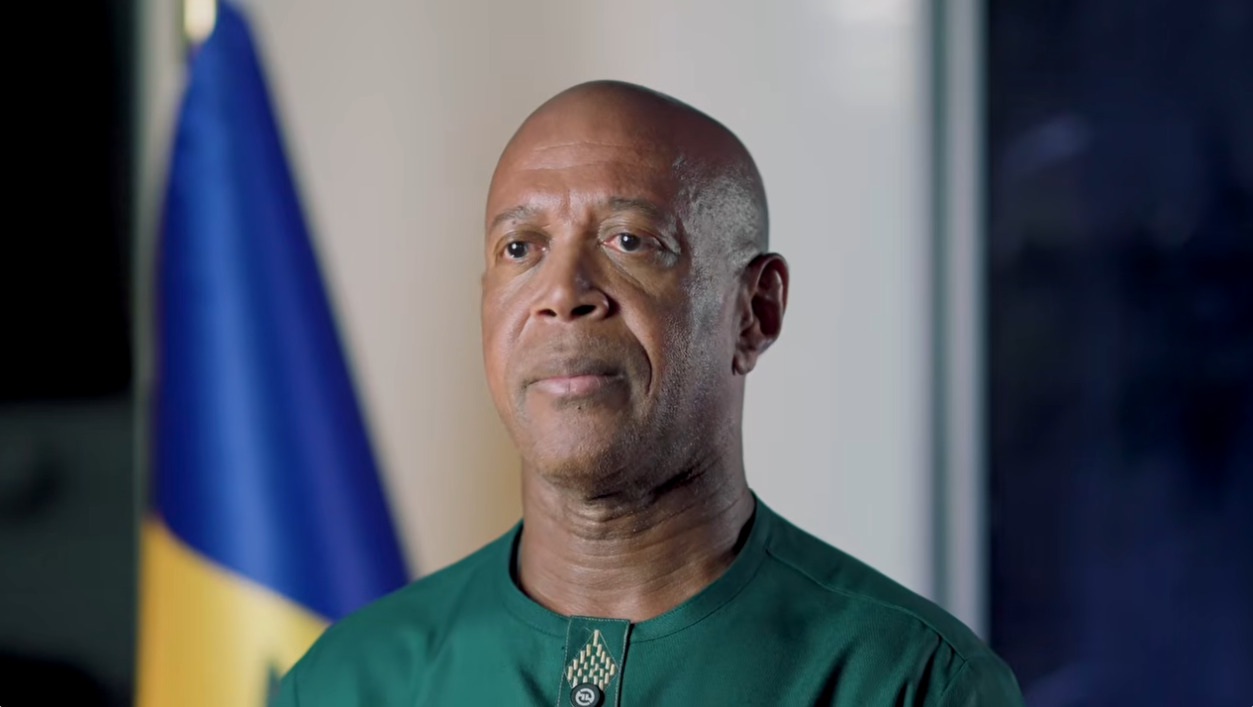
Central Bank Governor Dr Kevin Greenidge (Photo Credit: Central Bank of Barbados) A new tax on some of the world’s largest multinational companies based here helped boost government revenue by more than $150m during the first quarter of the financial year, with the Central Bank stressing that households and small businesses will not be directly affected. The Qualified Domestic Minimum Top-up Tax contributed heavily to the Government’s revenue during the first quarter of the 2026–27 financial year, Governor Dr Kevin Greenidge told Barbados TODAY. The tax – introduced in 2024 – applies to very large multinational enterprise groups with annual consolidated revenues of at least 750 million euros. Dr Greenidge also said it allows Barbados to collect the difference between the tax paid domestically and the global minimum effective corporate tax rate of 15 per cent introduced by the world’s richest nations. Elaborating on the government’s fiscal accounts, he said revenue increased by $78.7m to approximately $1.4bn during April to June, the first quarter of financial year 2026/27. Corporate income tax receipts accounted for most of the increase, rising by $156.8m to $641.8m as the first partial payment of the Qualified Domestic Minimum Top up Tax for income year 2024. You Might Be Interested In Dr Greenidge said: “The measure does not directly tax ordinary households or small businesses. Instead, it enables Barbados to retain tax revenue that another country, usually the home jurisdiction of a multinational’s parent company, could otherwise collect. “That additional revenue helps the government finance public services and infrastructure, reduce debt, and respond to economic shocks without placing the same burden on households.” But the higher tax hail comes amid a drop in net financial inflows. However, Dr Greenidge said it did not mean a collapse in investment over the past six months of this year. He said: “Foreign reserves strengthened despite lower financial inflows. Barbados received fewer one-off capital transfers and lower net financial inflows during the first half of 2026, but the figures do not signal a collapse in investment or a weakening of the country’s external position.” He noted that the balance of payments capital account recorded a deficit of $15.3m, compared with a surplus of $19.9m one year earlier. “The change largely reflected the absence of exceptional capital transfers received in 2025, including donated buses and medical equipment,” he said. “In practical terms, Barbados did not receive the same level of large one-off gifts as it did last year. It does not mean that the government’s capital investment programme recorded a loss, or that public investment stopped.” The financial account balance also declined by $416.4m to $350.8m, as public, private and foreign direct investment flows all came in below the corresponding period of 2025. Net foreign direct investment remained at $338.3m, $29 million below the previous year’s level. Net long-term public sector flows fell from $364.1m to $79.1m, “mainly because the 2025 figure included proceeds from the benchmark bond government issued on international markets in June of that year”, the governor said. Net long-term private flows shifted from an inflow of $87.6m to an outflow of $45.6m, he added. But despite these lower financial inflows, Barbados’ international reserves increased by $91.8m to approximately $3.1bn at the end of June — equivalent to 25.9 weeks of imports, more than twice the international benchmark of 12 weeks. Dr Greenidge said: “For the average Barbadian, the strong reserve position means the country remains well placed to pay for essential imports such as food, fuel, medicine and machinery. It also supports confidence in the fixed exchange rate of two Barbados dollars to one United States dollar”. Personal income tax and other direct taxes also increased, by $4.2m and $8.7m respectively. But property tax collections fell by $79.2m to $22.1m as the government delayed the issuance of land tax bills, reflecting the timing of collections rather than a permanent loss of revenue. Indirect tax receipts fell by $15.6m to $476.m . The Central Bank said this partly reflected measures announced in the March Budget, including reductions in charges on selected imported goods. Excise taxes and external value-added tax receipts declined, while higher VAT refunds offset stronger collections of domestic VAT and outstanding VAT liabilities. Total VAT receipts consequently fell by $3.8 to $289.2m. Other indirect taxes decreased by $5m, reflecting lower fuel taxes and taxes on other goods and services. Non-tax revenue increased by $3.3m to $42.7m, supported by higher general and driver’s licence receipts and growth in other revenue streams. The central banker was upbeat about the overall fiscal picture: “Overall, the figures show that Barbados received fewer exceptional external inflows than it did in 2025, but maintained a strong reserve position. At the same time, the new international tax arrangements strengthened government revenue by allowing Barbados to collect more tax from qualifying multinational companies operating here.” (EJ)
Central Bank: Lower inflows not investment collapse
Full Article
Original Source
Read the full article at Barbadostoday →KhanList aggregates and links to publicly available news content. We do not host full articles from third-party sources. Always verify important information with original sources.