
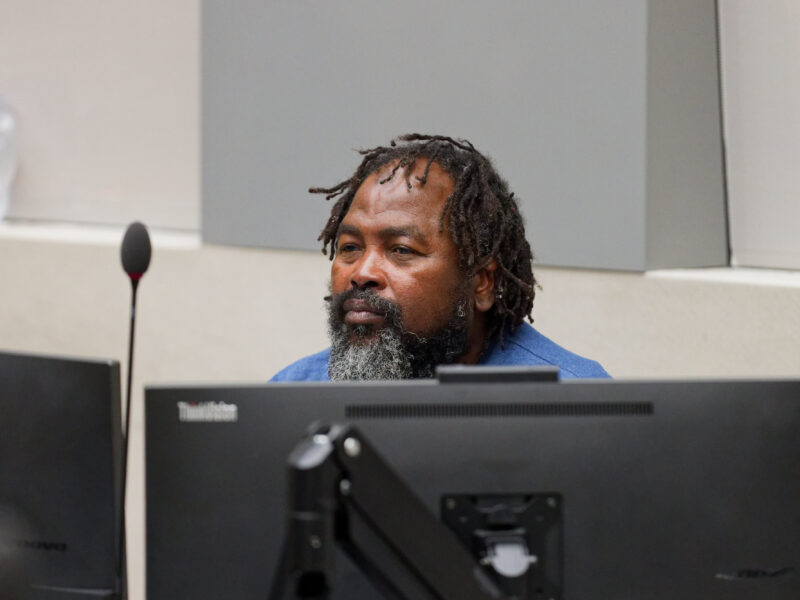
The International Criminal Court found Mahamat Said Abdel Kani guilty of crimes against humanity for abuses in Bangui, where rebel fighters detained and tortured suspected supporters of an ousted president.THE HAGUE, Netherlands (CN) — A rebel commander who turned a Central African Republic police headquarters into a torture chamber for suspected political enemies was convicted Wednesday at the world’s war crimes court.The International Criminal Court found Mahamat Said Abdel Kani, 56, guilty of four counts of crimes against humanity: imprisonment, torture, other inhumane acts and persecution. Prosecutors sought convictions on seven counts for abuses against suspected supporters of ousted President François Bozizé in 2013. Judges cleared Said of three war crimes counts and some individual incidents.The Seleka, a predominantly Muslim rebel coalition from the country’s neglected northeast, demanded political inclusion and an end to the region’s marginalization. Its fighters launched an offensive in December 2012. A January peace deal collapsed; by March, they had captured Bangui, the capital, and Bozizé had fled. Human Rights Watch documented widespread killings and looting under the new rulers.Said took command at Bangui’s anti-banditry police headquarters in April. He ordered beatings and participated in mistreatment, judges found. Although he answered to more powerful figures, he played an essential part in the campaign against perceived enemies.The defense portrayed the fighters as helping police restore order at the headquarters, known by its French acronym OCRB. Judges rejected that account. “The systematic manner in which the rights of those detained at the OCRB were not respected demonstrates a clear intention on the part of the Seleka to target and abuse detainees,” they wrote.War crimes convictions, however, required proof of an armed conflict. The majority concluded Bozizé’s defeat ended the original conflict in March 2013. The forces that later opposed the Seleka had different leaders and membership, initially lacked military capacity and did not fight them in that period.Judge María del Socorro Flores Liera disagreed in a separate opinion. Bozizé’s forces had regrouped, she wrote; a lull in fighting did not end the conflict. She warned of a gap in civilians’ legal protection but supported the acquittals because prosecutors had not proved Said knew the circumstances establishing an armed conflict.Annyssa Bellal, executive director of the Geneva Peacebuilding Platform and an international humanitarian law specialist whose evidence was heard during the trial, welcomed the majority’s approach, saying it was consistent with earlier United Nations assessments.“Classifying a situation as an armed conflict is not an exact science, but it is essential that the threshold be applied rigorously and consistently: The credibility of war crimes prosecutions depends on it,” she said. She stressed that human rights law still protected the population and crimes against humanity could still be prosecuted.Central African authorities referred the situation for investigation in 2014; Said’s trial opened in September 2022. Established in The Hague in 2002, the court prosecutes individuals for atrocities when national authorities don’t or can’t.At the headquarters, prisoners relied on relatives for food and water. Some were held underground; fighters bound detainees’ limbs behind their backs. Judges established Said’s authority there but could not determine his rank within the wider coalition.One victim described being bound before he was suspended and beaten: “[i]t was just like taking cattle to slaughter.” He said his hands remained paralyzed for about nine months. Said was convicted of torture for the abuse.Judges refused to allow expanded torture claims beyond those approved before trial. The victims’ legal representative said the identified incidents were examples, not an exhaustive list, a reading earlier judges had supported.“For many of the victims we represent, this means that the full extent of what they endured remains unrecognized in the verdict,” they said. The representative welcomed recognition after more than 13 years but planned to review the judgment and consult victims before commenting further on the acquittals.Mame Mandiaye Niang, acting prosecutor at the court, credited cooperation with national authorities and affected communities. “While no judgment can erase that suffering, accountability can affirm the rights and dignity of victims,” he said. His office pledged to review the dismissed charges and support domestic prosecutions.Violence has eased since a 2025 peace agreement, but insecurity and displacement persist. UNICEF estimates 2.3 million people will need humanitarian assistance this year.Lewis Mudge, Central Africa director at Human Rights Watch, called the first verdict against a high-level Seleka commander a milestone. “But this should only be considered a first step,” he said, calling for greater support for international and domestic justice. He said acquittals were appropriate where guilt had not been proved beyond reasonable doubt but prosecutors needed to build stronger cases.Said’s defense did not respond to a request for comment.Both sides can appeal: Said can challenge his convictions and prosecutors the acquittals. Judges will hear further submissions on his sentence in November before setting a date to announce his punishment.Courthouse News reporter Eunseo Hong is based in the Netherlands.Subscribe to our free newslettersOur weekly newsletter Closing Arguments offers the latest about ongoing trials, major litigation and rulings in courthouses around the U.S. and the world, while the monthly Under the Lights dishes the legal dirt from Hollywood, sports, Big Tech and the arts.Additional Reads
Central African rebel commander convicted of torture, cleared of war crimes
Full Article
Original Source
Read the full article at Courthousenews →KhanList aggregates and links to publicly available news content. We do not host full articles from third-party sources. Always verify important information with original sources.