
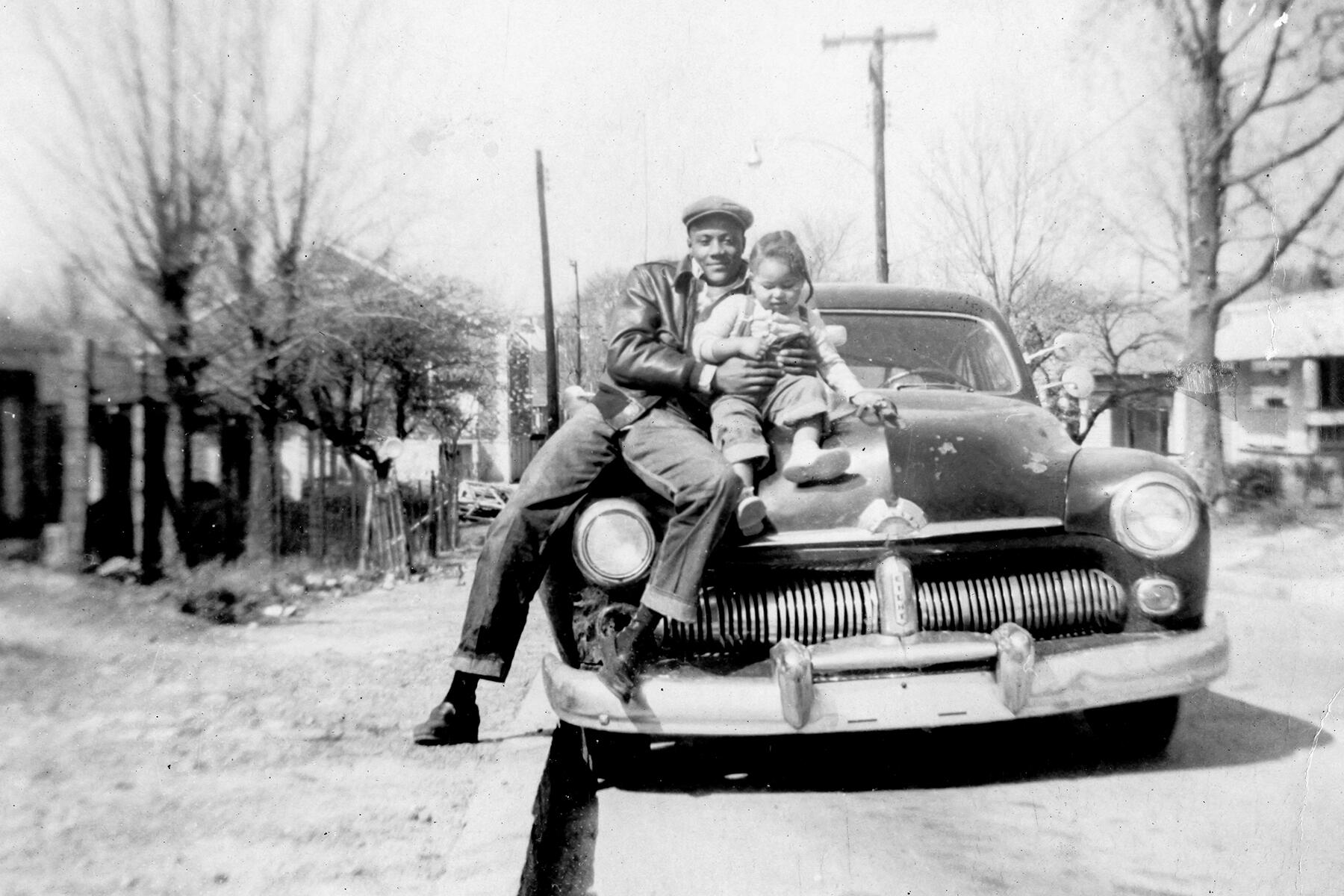
The mother road celebrates 100 years, but Black travelers didn’t always experience freedom on the interstateVisualizing Route 66 conjures images of America’s quintessential road trip–cruising along the interstate, stopping at mom-and-pop shops along the way, and letting adventure take the wheel. As Route 66 turned 100 this year, images of the classic Americana road trip come even closer into the periphery, but part of this nostalgic memory misremembers what driving on the interstate was like for Black drivers.“There’s this mythology around Route 66, specifically around freedom, adventure, open roads,” says Dr. Jocelyn Brown, the director of African American Studies at Radford University. “For Black Americans, in reality, that mobility was never about those things, freedom and adventure.”Traversing the mother road for Black Americans was full of risk and challenges to their dignity and safety. According to a report by a retired historian of the National Park Service, in 1930, nearly half of the communities that crossed through the Route 66 were sundown towns. By 1950, 25 of 73 communities along the path of the interstate were identified as such. Continue Reading Article After Our Video Recommended Fodor’s Video Alfredo Graham, Public domain, via Wikimedia CommonsSundown towns are communities that use or threaten violence to keep non-white people, particularly Black Americans, out. That meant in Route 66’s heyday, Black people also had to navigate segregated towns and Jim Crow laws, where they could be turned away from eating a hot meal or finding a bed to safely sleep in at night. Most of these sundown towns weren’t in the South–they’re more prevalent across Northern and Midwestern states like Illinois and Missouri.“When people think sundown town, they think the South,” Brown shared on her viral threads post that contained two images: one of sundown towns and another of Route 66. The side-by-side photos show how often the two overlap. “The north had them beat by a [country] mile. Route 66 was completed in 1938 in between the two waves of The Great Migration. Northerners absolutely hated seeing Black Americans travel through their towns and reacted accordingly.”Victor Hugo Green, Public domain, via Wikimedia CommonsDriving With DignityEven though sundown towns presented an immense threat to the Black motorist, driving still offered a degree of flexibility and anonymity that wasn’t extended to the Black train or bus traveler, who had to ride in Jim Crow sections, according to a paper written by a National Park Service historian called Courageous Motorists: African American Pioneers on Route 66. Driving allowed Black travelers to create a safety bubble, or at least, the illusion of one. The challenge came in mitigating all the risks that could occur while driving through unfamiliar towns with unknown racial hierarchies. Black drivers came up with a number of solutions to mitigate the risk of racial harm. Some drove through the night without stopping. Others packed food for the drive so they’d never need to eat at an unknown restaurant. But for those who were either willing to take the risk or found themselves in a predicament, they’d often drive around towns looking for a familiar face to stop and ask, “Where can I get something to eat?” or “Where can we rent a room for the night?”FREDERIC J. BROWN/AFP via Getty ImagesGuiding Black Travel: The Green BookVictor Green’s The Green Book meant Black travelers no longer needed to ask, they could be sure. The 20th-century travel guides for Black travelers listed restaurants, hotels and motels, and even tourist homes–private homes in which families were willing to take in travelers for the night–a listing of simple bed-and-breakfasts that provided more than comfort, but tranquility and dignity.This map created by the National Park Service marks all known Route 66 locations listed in every edition of the Green Book. Today, this map documents much of what we’ve lost from Route 66’s Green Book history; fewer than 100 of the 365 Green Book-era properties are currently standing, with many Midwestern sites demolished. A few pillars remain: The Threatt Filling Station of Luther, Oklahoma, now a foundation working to preserve more of the Black-owned gas station’s history.Heading farther west along the map reveals a few more buildings, and even a couple of businesses that remain, such as the Fred Harvey Airport Restaurant in Albuquerque, New Mexico, and La Posada Hotel in Winslow, Arizona, which is still in operation today.Fifth-generation Flagstaff resident and former Flagstaff mayor Coral Evans knows the importance of keeping alive the memories of such Green Book stops. As she and her daughter walked by the Pearl Polk ice cream shop and tourist home in downtown Flagstaff, she stopped to ask her if she remembered its significance.“The fact that those buildings are preserved shows that we care about history and care about the importance of it,” Evans said. The city of Flagstaff also created a self-guided Green Book tour for visitors to recognize the important role these restaurants and tourist homes played in safely guiding Black travelers along the interstate. While Evans and others honor the history of the Green Book and the courageous Black traveler, a new focus emerges as Route 66 moves into its next 100 years.“How do we make sure that the concept of a Green Book isn’t necessary?” Evans asks, “Because we as a society have evolved to a point that we understand that diversity is not a threat.”
Celebrating Route 66 Means Confronting Its Dark Past, Too
Full Article
Original Source
Read the full article at Fodors →KhanList aggregates and links to publicly available news content. We do not host full articles from third-party sources. Always verify important information with original sources.