
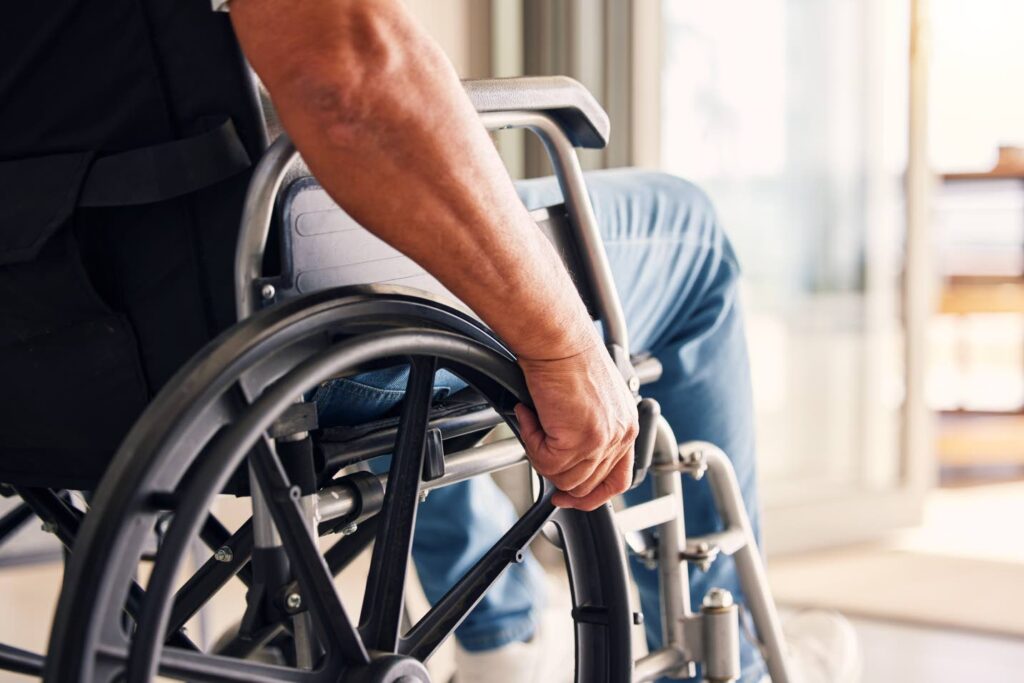
The Combined Disabilities Association says a dedicated ministry would give disability affairs a stronger voice at the highest level of Government. Adobe Stock Photo THE Combined Disabilities Association (CDA) has welcomed the reported $32.9 million disbursed by the Jamaica Council for Persons with Disabilities (JCPD) through its grant programmes during the 2026/2027 financial year but says this is far from enough. In a media release on Wednesday the CDA said, while it recognises and appreciates the Government’s efforts to provide assistance to persons with disabilities the announced spend is nowhere near enough to address the needs of Jamaica’s disability community. “While every dollar spent makes a difference, we must look beyond the announcement and examine the realities facing thousands of Jamaicans with disabilities,” said coordinator of the CDA Shavane J Daley. He noted that the World Health Organization estimates that approximately 16 per cent of the global population, or one in six persons, experiences significant disability. “Although this is a global estimate and not a confirmed figure for Jamaica, it demonstrates the scale of the population that disability policies and services must address,” said Daley. He argued that with approximately 17,000 persons registered with the JCPD the question must be asked how can $32.9 million adequately support the needs of thousands of people through the council’s three major grant programmes — the Economic Empowerment Grant, Assistive Aid Grant, and Rehabilitation Grant. Daley pointed to a recent media report that more than 160 people benefited from the JCPD grant programmes and that applications were temporarily closed on August 3 due to overwhelming demand. “This should serve as a wake-up call. The demand for assistance is greater than the resources currently reaching those who need them. “We are not suggesting that the $32.9 million represents the JCPD’s entire budget. Rather, we are highlighting the inadequacy of the reported grant support in relation to the scale of need within the disability community,” added Daley as he appealed to the Government to establish a dedicated Ministry of Persons with Disabilities. “Persons with disabilities cannot continue to be an afterthought in national planning and development. Our issues cannot remain scattered across various ministries and Government agencies without a strong central institution with the authority, resources and responsibility to drive meaningful change. “A dedicated ministry would give disability affairs a stronger voice at the highest level of Government. It would provide strategic leadership, coordinate services, strengthen accountability, and ensure that disability inclusion becomes a national development priority rather than an occasional Government intervention,” argued Daley. “Equally important, we are demanding a dedicated and clearly identified line item for disability affairs in the national budget. Without specific and adequate funding, meaningful policies will remain on paper, programmes will struggle to meet demand, and persons with disabilities will continue to be left behind,” said Daley. He argued that this is not an impossible undertaking as other countries have established dedicated ministries and government structures to address disability affairs. “Jamaica must demonstrate the political will to adopt an approach that works for our people,” declared Daley. Only a small number of countries operate a stand-alone ministry or full Cabinet-level portfolio dedicated exclusively to disability affairs. Most countries place disability policy under broader departments — such as social affairs, health, or labour as in the case of Jamaica where responsibility for the disabled falls under the Ministry of Labour and Social Security headed by Pearnel Charles Jr. “We appreciate the work of the JCPD and acknowledge the assistance being provided through its existing programmes. However, the reality is that persons with disabilities need far more than grants. They need accessible health care, inclusive education, employment opportunities, affordable assistive devices, rehabilitation, accessible transportation and efficient, streamlined government services. “We do not want to be remembered only when grants are being distributed. We want to be recognised, represented, included and properly supported in every area of national development,” said Daley. He argued that the Government has an opportunity to send a powerful message that persons with disabilities matter and that their rights, dignity and development are national priorities. “The CDA is prepared to work with the Government, private sector, civil society and other stakeholders to make this vision a reality. However, partnership must be accompanied by action, investment and accountability. “Jamaica cannot continue to talk about inclusion while underfunding the very people it seeks to include. We are grateful for what has been done, but it is time to do more, do better and do it consistently. Persons with disabilities are not asking for special treatment. We are demanding equal opportunities, equitable support and a Government structure that takes our needs seriously,” added Daley. DALEY…we do not want to be remembered only when grants are being distributed. We want to be recognised, represented, included and properly supported in every area of national development
CDA wants stand-alone ministry for the disabled
Full Article
Original Source
Read the full article at Jamaicaobserver →KhanList aggregates and links to publicly available news content. We do not host full articles from third-party sources. Always verify important information with original sources.