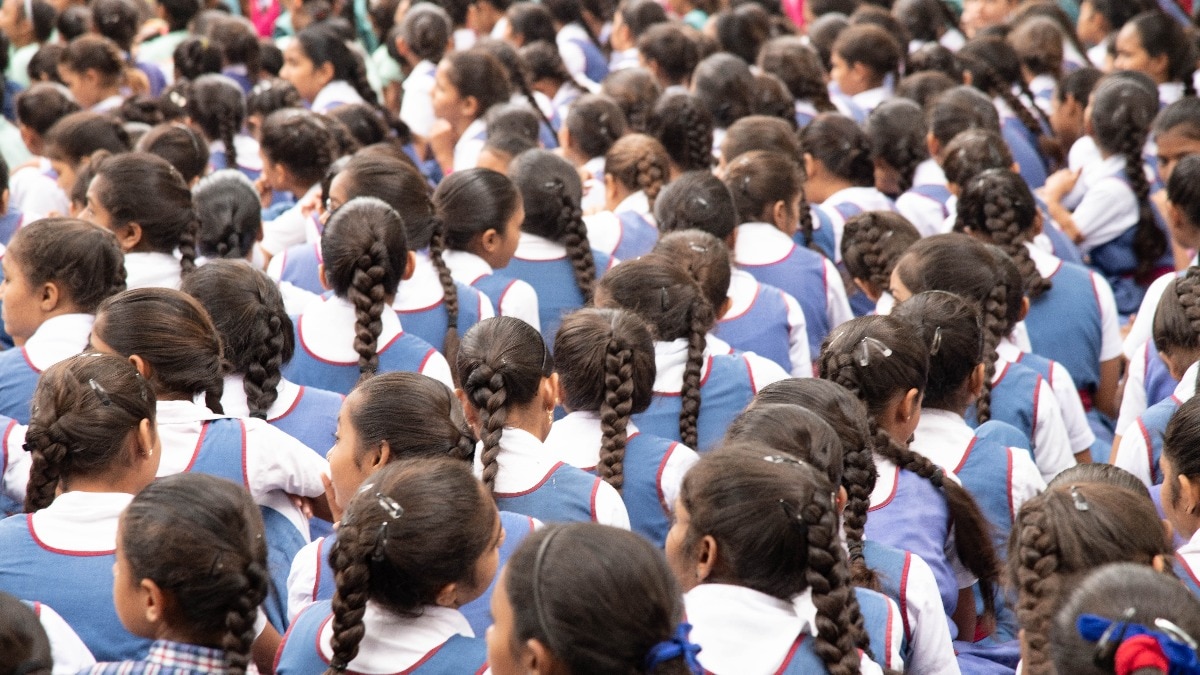
A parliamentary panel has flagged a gap between the new CBSE curriculum and its rollout in schools. It said missing textbooks, new exam patterns, training costs and funding gaps are straining the system.Parliamentary panel notes that non-availability of textbooks, application-based exam patterns creating academic stress among students (Pexels)A parliamentary panel has raised concerns over a widening gap between curriculum design and its implementation for Classes 9 to 12, noting that the shortage of textbooks and the shift towards application-based Board examinations are causing academic stress and confusion among students.The concerns were highlighted in the Tenth Report (Eighteenth Lok Sabha) of the Committee on Estimates (2026-27) on ‘Budget and Policy Aspects for Providing Affordable and Quality Education in the Country including Review of CBSE’. The report was presented in the Lok Sabha on Wednesday.The committee noted that the Central Board of Secondary Education (CBSE) has aligned the curriculum framework for Classes 9 to 12 with the objectives of the National Education Policy (NEP) 2020 and the National Curriculum Framework (NCF) 2023.However, the panel pointed to a major disconnect between curriculum development and its implementation. It noted that the National Council of Educational Research and Training (NCERT) is still in the process of introducing new textbooks for Classes 9 to 12. As a result, schools are often expected to deliver an updated, higher-order curriculum while continuing to rely on older study materials. PANEL CALLS FOR FASTER TEXTBOOK ROLLOUT, TEACHER TRAINING"The non-availability of textbooks and newer, application-based Board examination patterns are creating significant academic stress and confusion for students especially for the students appearing for the Class 10 and 12 examinations," the committee said.The panel asked the Education Ministry to take immediate measures to bridge this transition gap by expediting the development, printing and nationwide distribution of the remaining new textbooks. It also called on NCERT to coordinate closely with CBSE to ensure that the new curriculum-related initiatives are implemented effectively. The committee recommended launching a nationwide teacher-capacity building programme to help educators adopt application-based teaching methods, according to PTI.On teacher training under CBSE, the panel noted that the Board conducts capacity-building programmes (CBPs) across the country to support the professional development of teachers. Teachers and principals are required to undergo at least 50 hours of training every year, covering areas such as core values and ethics, subject knowledge and teaching practices.The committee appreciated CBSE for training more than 11 million participants through online and offline programmes over the past five years. It also noted that the training is provided free of cost to teachers from government schools.However, the panel expressed concern over the sharp decline in online teacher training, which fell from more than 5.3 million participants in 2022 to around 1,62,814 in 2025.The committee also highlighted the financial burden faced by teachers in private affiliated schools located in rural and difficult areas. While government school teachers receive free training, private schools in such regions are required to pay the regular training fee as well as an additional Rs 700 per teacher for single-day workshops."The Committee are of the view that some of the non-government schools in rural or semi-urban areas do not have enough budgetary resources to send their teachers on paid trainings," the report said.The panel recommended that the ministry ensure continuity in teacher-capacity building programmes and establish year-wise targets for completing teacher training within specified timelines.It further suggested reviewing the training fees to enable teachers from budget-constrained private schools, particularly those in rural areas, to participate in online training programmes.On digital infrastructure and transparency, the committee drew attention to a decline in student enrolment in secondary and higher secondary classes. It noted that 22,51,812 students registered for the Class 10 examination in 2024, compared with 16,33,730 for Class 12.In 2025, the number of Class 10 registrations increased to 23,85,079, while Class 12 registrations stood at 17,04,367, according to the report.The panel also examined CBSE's examination fee structure. While visually impaired candidates are exempted from examination fees, the Board follows a uniform fee structure for other students, charging Rs 1,600 for five subjects for candidates appearing in India.The committee noted that CBSE does not currently provide financial concessions or fee waivers for students from socio-economically disadvantaged sections.It recommended that the ministry introduce targeted fee waivers and exemptions for economically weaker sections and socially disadvantaged groups to reduce their financial burden and help them continue their education.The panel also called for greater transparency in the CBSE answer-sheet evaluation process, recommending the publication of standardised and objective evaluation procedures.It further recommended continuous upgrades to the Board's digital infrastructure under Pariksha Sangam to ensure "foolproof security and efficiency". The panel said the infrastructure should support not only Board examinations but also major national selection tests such as the Central Teacher Eligibility Test (CTET) and Jawahar Navodaya Vidyalaya Selection Test (JNVST).On public spending on education, the committee noted that one of the key objectives of NEP 2020 is to raise public expenditure on education to 6 per cent of the Gross Domestic Product (GDP). However, the panel pointed out that combined spending by the Centre and states currently stands at only 4.1 per cent of GDP, indicating a continuing shortfall as NEP 2020 approaches its final year of implementation.The Union Budget 2026-27 allocated Rs 1,39,286 crore to the Ministry of Education, an increase of 8.27 per cent over the previous year.The committee also noted that the Department of School Education and Literacy accounted for only 1.52 per cent of the total budgetary allocation during 2024-25, within the overall 4.1 per cent of GDP spent on education.According to the report, the committee considers education fundamental to national growth and development, with the creation of a large pool of literate and educated citizens being essential for the country's progress.The panel therefore called for adequate budgetary allocations to address challenges related to infrastructure expansion, improvement of learning outcomes and enhancement of the overall quality of education.It strongly recommended that the ministry prepare a dedicated, time-bound financial roadmap requiring both the Centre and state governments to increase spending on education."To bridge the GDP gap, the Ministry should move away from marginal incremental budgeting and ensure a mandatory annual baseline increase of 10% in the education budget to gradually converge with the 6% GDP target," the committee said.With the second phase of NEP now in the pipeline, the panel also recommended setting up a specialised, non-lapsable education fund. Such a fund, it said, could support long-term investments in infrastructure, digital expansion and inclusive education across multiple financial years without the risk of funds lapsing.- EndsPublished By: Mridusmita DekaPublished On: Aug 13, 2026 10:08 IST
CBSE textbook delays, new exam pattern raise stress, says Parliamentary Panel
Full Article
Original Source
Read the full article at Indiatoday →KhanList aggregates and links to publicly available news content. We do not host full articles from third-party sources. Always verify important information with original sources.