
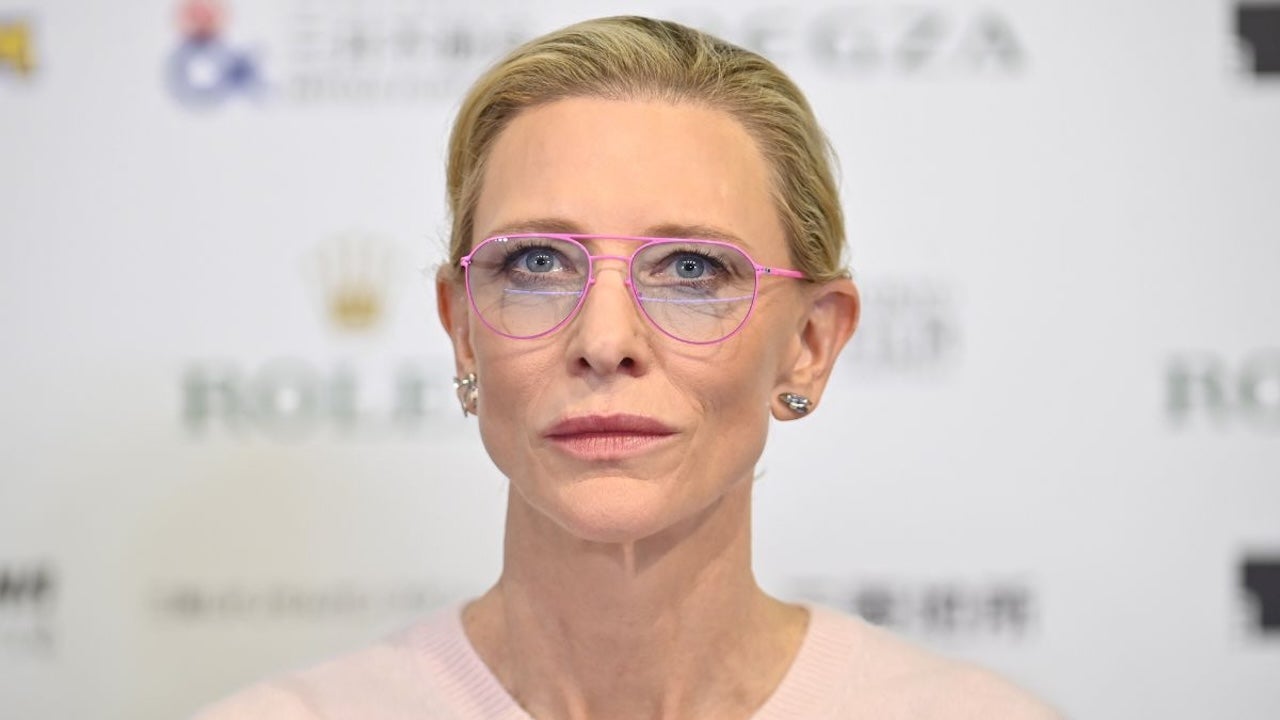
The Human Consent Foundation, Cate Blanchett’s nonprofit advocating for control over how AI uses people’s work and likenesses, and a coalition of Hollywood artists and organizations filed an amicus brief Friday in the New York Times’ lawsuit against OpenAI and Microsoft, challenging the tech companies’ claim that licensing copyrighted works for AI training is “impossible.”The 31-page document, which was filed in the Southern District of New York on Friday and obtained by TheWrap, was also co-signed by CAA, the Music Artists Coalition, National Association of Voice Actors, Creators Coalition on Artificial Intelligence. The brief included an appendix that featured a number of prominent Hollywood figures voicing their support for the filing – including Anne Hathaway, Bette Midler, Emma Thompson, Helen Mirren, Dan Levy, Ron Howard, Madonna and Olivia Wilde. “Defendants have argued that licensing creative works for AI training is cost-prohibitive,” the amicus brief argued. “Defendants also claim there is no settled means of valuing training data. The facts demonstrate otherwise. The creative industries already have in place a proven infrastructure and workflows to clear rights for dispersed works at scale and cost-effectively.” Elsewhere in the filing, the groups claimed, “The creative industries have operated collective licensing frameworks for over a century, and those frameworks now administer rights at scale that directly address the ‘dispersed owner’ concern. These organizations exist because collective licensing solves a transaction-cost problem. They operate as centralized clearinghouses that manage rights for entire repertoires through blanket licenses and automated, meta-data driven systems, rather than requiring individual negotiations for each work.” The document cited the International Confederation of Societies of Authors and Composers and Broadcast Music, Inc as examples. Additionally, Blanchett highlighted how, over her three-decade career, she has witnessed a “rigorous adherence to chain-of-title protocols and digital rights management.” “I’ve been working in film and theater for over 30 years, and in that time, the principle has never changed,” she stated. “If someone wants to use my face, my voice or my image, they ask me first. There is a contract. There is a conversation. This isn’t a new idea or a complicated legal framework, it is simply how we treat each other in this industry. Consent isn’t a barrier to creativity, it is the foundation of it.” Representatives for OpenAI and Microsoft did not immediately respond to TheWrap’s request for comment. This amicus brief followed SAG-AFTRA, the Writers Guild of America and the American Federation of Musicians’ own, in which the groups urged the court “to uphold the basic principles of copyright law and reject a categorical fair use exemption for AI training in accordance with court precedent.” “Unauthorized appropriation of human-created works without consent, credit and compensation severely harms creative professionals, devalues their labor and undermines developing licensing markets,” they added in a statement Thursday. As we reported back in December 2023, the New York Times sued Microsoft and OpenAI, the creator of ChatGPT, for copyright infringement, accusing the two companies of “unlawful use of The Times’s work to create artificial intelligence products” that compete with the news outlet’s work and “threaten” its ability to provide independent journalism. “While defendants engaged in widescale copying from many sources, they gave Times content particular emphasis when building their LLMs — revealing a preference that recognizes the value of those works,” the suit’s initial filing stated. “Through Microsoft’s Bing Chat (recently rebranded as “Copilot”) and OpenAI’s ChatGPT, defendants seek to free-ride on The Times’ massive investment in its journalism by using it to build substitutive products without permission or payment.” At the time, OpenAI told TheWrap that the company was “surprised” by the Times’ decision to file the suit, adding, “We respect the rights of content creators and owners and are committed to working with them to ensure they benefit from AI technology and new revenue models. Our ongoing conversations with the New York Times have been productive and moving forward constructively, so we are surprised and disappointed with this development. We’re hopeful that we will find a mutually beneficial way to work together, as we are doing with many other publishers.”
Cate Blanchett-Led Coalition Challenges OpenAI in New York Times Copyright Battle
Full Article
Original Source
Read the full article at Thewrap →KhanList aggregates and links to publicly available news content. We do not host full articles from third-party sources. Always verify important information with original sources.