
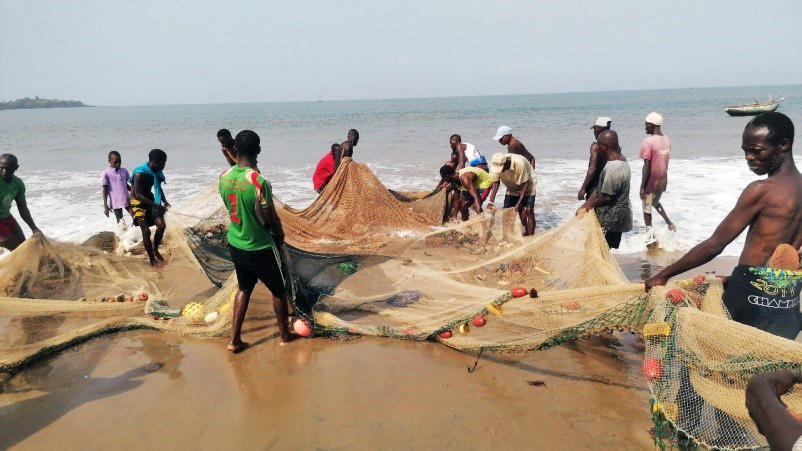
Plastic pollution is a widespread problem in coastal Sierra Leone, where fishers say removing the waste from their nets and repairing them takes time — and a financial toll.In one study, plastics accounted for 70% of the items assessed in research that recorded more than 70,000 pieces of litter in 11 months.“Plastic pollution threatens our ecosystems, biodiversity and public health. Tackling it requires stronger waste management systems and collective action,” Sierra Leone’s minister of environment and climate change says.Various initiatives have promoted beach cleanups, recycling and community participation to reduce plastic use and waste. PORT LOKO, Sierra Leone — On a rainy Saturday morning, 57-year-old fisher Sheriff Kamara sat among other community members inside a wooden makeshift shelter in Sierra Leone’s Mahera Beach, waiting for the weather to improve. Along the shoreline, discarded plastic bottles, water sachets, bags and food wrappers lay scattered among old footwear and foam. For Kamara, plastic waste has become a regular problem, increasingly affecting his ability to fish and earn a living. “When I started fishing, it was rare to find anything in my net besides fish. But now, it is a weekly, sometimes a daily, problem,” he tells Mongabay. According to Kamara, a lot of single-use plastic waste frequently gets caught in his fishing nets, particularly near the shore after a heavy rain. Removing the entangled plastic waste takes considerable time and effort. “I find all sorts of plastic in my net almost every week. Removing the plastics with my apprentice’s help takes a lot of time,” he says. For fishermen like him, plastic pollution is not just an environmental concern but an additional burden on their daily work and livelihoods. To support the fishing communities, the government launched a fisheries and marine resources strategy in 2025, which provides a 10-year framework for promoting sustainable fisheries management, protecting marine ecosystems and improving livelihoods. It also calls for sustainable use of marine resources and stronger protection for the fisheries sector. Plastic waste, including discarded bottles and containers, accumulated along the shoreline beneath fishing boats. Image by Patricia Sia Ngevao. Financial cost of plastic pollution In Mahera, a coastal community in Lungi, Port Loko district, the problem extends beyond the beach’s appearance. Plastic pollution is affecting fishing activities, increasing operating expenses and creating additional financial pressure for those who depend on the fishing trade. Plastic waste continues to damage Kamara’s fishing nets, forcing him to spend money on mending and replacements. He says a recent tear cost him 80 leones (about $3.50) to repair and halted his fishing activities for two days. “On certain days, my net catches only plastic and not fish,” he says. A typical fishing trip requires approximately 20 liters (5.3 gallons) of petrol, costing around 800 leones ($34.70), according to Kamara. The additional time spent removing plastic materials and repairing damaged nets increases the fisher’s cost of fishing. For Kamara, whose daily earnings depend on the quantity of fish he brings home, these additional expenses reduce his net income, making an already demanding occupation more difficult. Across Mahera, some families depend not only on fishing but other related activities including sand mining and petty trading, and plastic pollution threatens these sources of income. Sierra Leone’s medium-term national development plan (2024-30) estimates the country’s fisheries sector employs approximately 1 million people, or around 14% of the population. The industry produces around 150,000 metric tons of fish annually and contributes to about 12% of the country’s gross domestic product (GDP). Fisherman Sheriff Kamara sitting in the makeshift shelter at Mahera. Image by Patricia Sia Ngevao. Sheku Sei, acting director of fisheries at the Ministry of Fisheries and Marine Resources, agrees there are multiple costs due to plastic pollution. “Plastic pollution poses a growing threat to Sierra Leone’s fisheries, damaging marine habitats, threatening aquatic life and potentially affecting fish breeding grounds and productivity. Combined with overfishing, illegal fishing and other environmental pressures, it increases the vulnerability of fish stocks and fishing communities,” he says. The fisheries ministry, he says, recognizes the need for stronger marine protection, improved waste management and multistakeholder collaboration to tackle pollution and ensure sustainable fisheries and food security for present and future generations, he tells Mongabay. Women bearing financial burdens The economic consequences of plastic pollution, however, are not limited to fishers. Women who buy, process and sell fish in Mahera have to bear additional expenses when fishing activities are disrupted. Some women buy fresh fish directly from fishers for resale, while others smoke the fish and sell them farther inland. Isatu Jalloh has been involved in the local fishing business for more than a decade. She says sales are delayed when fishers have to spend time removing plastic waste from their nets, impacting the women who rely on timely delivery. When boats return late, women who buy fresh fish for resale sometimes have to first purchase ice to preserve fish. Those involved in fish smoking also require firewood, adding more expense to their business. “I spend between 80 and 90 leones [$3.47-$3.90] on ice blocks, while firewood can cost between 50-60 leones [$2.17-2.60],” she says. These additional expenses reduce the seller’s earnings, particularly when the quantity of fish available for sale is limited. Jalloh tells Mongabay that delays and smaller catches can also affect fish prices. When fishermen spend more time at sea, consume additional fuel but return with less fish stock, they increase the selling price to recover their losses. “As traders, we pay more, but buyers end up paying much more,” she notes. Discarded plastic bottles, sachets and other waste litter a stretch of beach. Image by Patricia Sia Ngevao. Widespread coastal pollution The situation in Mahera points to a much wider plastic waste problem affecting coastal communities across Sierra Leone. A 2024 study recorded 72,901 pieces of litter weighing 1,246 kilograms (2,746 pounds) across four beaches: Bailor, Tintafor, Kent and Chepo over a period of 11 months. Plastics accounted for approximately 70% of the items, mainly bottles, bottle caps and water sachets. The study covered four beaches in the country with its findings providing evidence of the wider coastal pollution challenge facing Sierra Leone. Stephanie Lavelle, the study’s lead author, recommends affordable beach monitoring involving schools, universities and local organisations to reduce plastic pollution. She also advocates efforts to help fishermen bring waste caught in their nets ashore. In her study, reference is made to the harmful practice of burning plastic waste, releasing chemicals to the atmosphere. Plastic pollution is particularly difficult to address because discarded materials can travel through drains and rivers or move along coastlines through tidal waves and ocean currents, making it difficult to trace their origin, Lavelle says in a video interview. Wider consequences of plastic pollution Beyond its impact on local fishing, plastic pollution also contributes to wider environmental and public health issues in Mahera. “Plastic pollution threatens our ecosystems, biodiversity and public health. Tackling it requires stronger waste management systems and collective action,” Sierra Leone’s minister of environment and climate change, Jiwoh Emmanuel Abdulai, tells Mongabay. Improper waste disposal contributes to flooding, while marine plastic waste threatens ecosystems and fishing livelihoods, says Mohamed Bah, communications director at Sierra Leone’s National Disaster Management Agency. The agency carried out cleanup campaigns in Susan’s Bay, Kroo Bay and Dwarzark in 2025, targeting waste, including plastics, while flood mitigation was undertaken in Makeni, Bo and Kenema in 2026, Bah tells Mongabay. He calls for collaboration among environmental authorities, fisheries institutions, local councils and recycling businesses to establish collection points for recovered plastics and damaged fishing nets, calling for regular drainage maintenance, reliable waste collection and stronger enforcement of environmental regulations. A beach cleanup at Lumley Beach, close to Mahera, by the NGO Propel Organization, 2022. Image by Fontay4 via Wikimedia Commons (CC BY-SA 4.0). Although the interventions he describes were undertaken in other communities, Bah agrees that the agency’s assessment highlights the wider connections between improper waste disposal, flooding, marine pollution and livelihoods in coastal settlements such as Mahera. Sierra Leone generates an estimated 130,000 metric tons of plastic waste annually, with more than half ending up in the environment. At a government media briefing in April, Mohamed Jaward Nyallay, strategic communications adviser to the Ministry of Information and Civic Education, referred to the tourism sector alone consuming about 42 million single-use plastics annually, with only 6% being recycled. “Plastic waste should not be seen only as an environmental problem but also as an economic opportunity. With the right government support, policies and investment, we can turn discarded plastics into valuable construction materials while creating jobs and reducing pollution,” says Walid Bahsoon, managing director of Premier Enviro Solutions Ltd., a company that converts discarded plastics into pavement tiles and building blocks. In 2024, PLANT Sierra Leone embarked on a voluntary environmental cleaning exercise in Port Loko township to reduce plastic littering. The organization urged residents to keep their communities clean, stressing that individual efforts were important in tackling plastic pollution. Speaking to Mongabay, Salieu Kabba Sankoh, a marine, fisheries, environment and climate expert, says Sierra Leone’s beach conditions reflect deeper failures in the country’s waste management system. He says that preventing plastics from entering the ocean requires effective waste collection and disposal systems. Addressing the problem, he says, requires improved waste collection, stronger local regulations and active community participation. Sustaining cleanup initiatives A 2024 beach-cleaning initiative in Mahera launched by the Ministry of the Environment and Climate Change, in collaboration with the World Bank, has since ended, leaving the community without the same level of support, says senior headman Pa Morlai Kargbo. However, other efforts have sought to address plastic pollution through recycling and community participation. The World Bank-supported PROBLUE program, under its Waste to Wealth: Leveraging Tourism for a Blue-Green Economy in Sierra Leone project, supported efforts to identify sources of plastic waste and promote its reuse. The program introduced plastic reduction initiatives in hotels, bars and restaurants, supported small businesses working on plastic alternatives and recycling and provided mentorship, particularly for women-owned businesses. At Mahera Beach, the initiative recorded the recovery of 48 metric tons of plastic waste within three months. The recovered plastics were sold to a local recycler, supporting more than 30 households, mostly women-led. Meanwhile, Port Loko district has seen recent efforts to promote proper waste management and environmental cleanliness. In 2025, city Mayor Alie Badara Tarawallie launched another phase of the council’s “Clean the City” project to promote proper waste disposal, environmental education and community participation. Speaking to Mongabay, Mayor Tarawallie acknowledges the impact of plastic pollution on fishing communities and marine life but notes that extending cleanup activities to Mahera would require stronger coordination and additional financial support. He also suggests that fishers could complement organized cleanup programs by participating in efforts to recover marine waste. Back in Mahera, fisher Kamara says fishers could help remove plastic waste from the sea if they had access to designated collection points and reliable waste collection services. Such facilities, he says, would encourage them to bring recovered plastics ashore. “I would be willing to bring it back if there was a proper place to put it,” he says. Banner image: Fishers pulling in their net at Lumley Beach, close to Mahera. Image by ODC-SIERRA-LEONE via Wikimedia Commons (Public domain). Citation: Lavelle, S., Preston-Whyte, F., Lamin, P. A., Sankoh, S. K., Timbo, I., & Maes, T. (2024). Troubled water: Tracing the plastic tide on Sierra Leone’s beaches. Cambridge Prisms: Plastics, 2. doi:10.1017/plc.2024.27 Credits Topics
Catching more plastic than fish in Sierra Leone’s coastal Mahera
Full Article
Original Source
Read the full article at News →KhanList aggregates and links to publicly available news content. We do not host full articles from third-party sources. Always verify important information with original sources.