
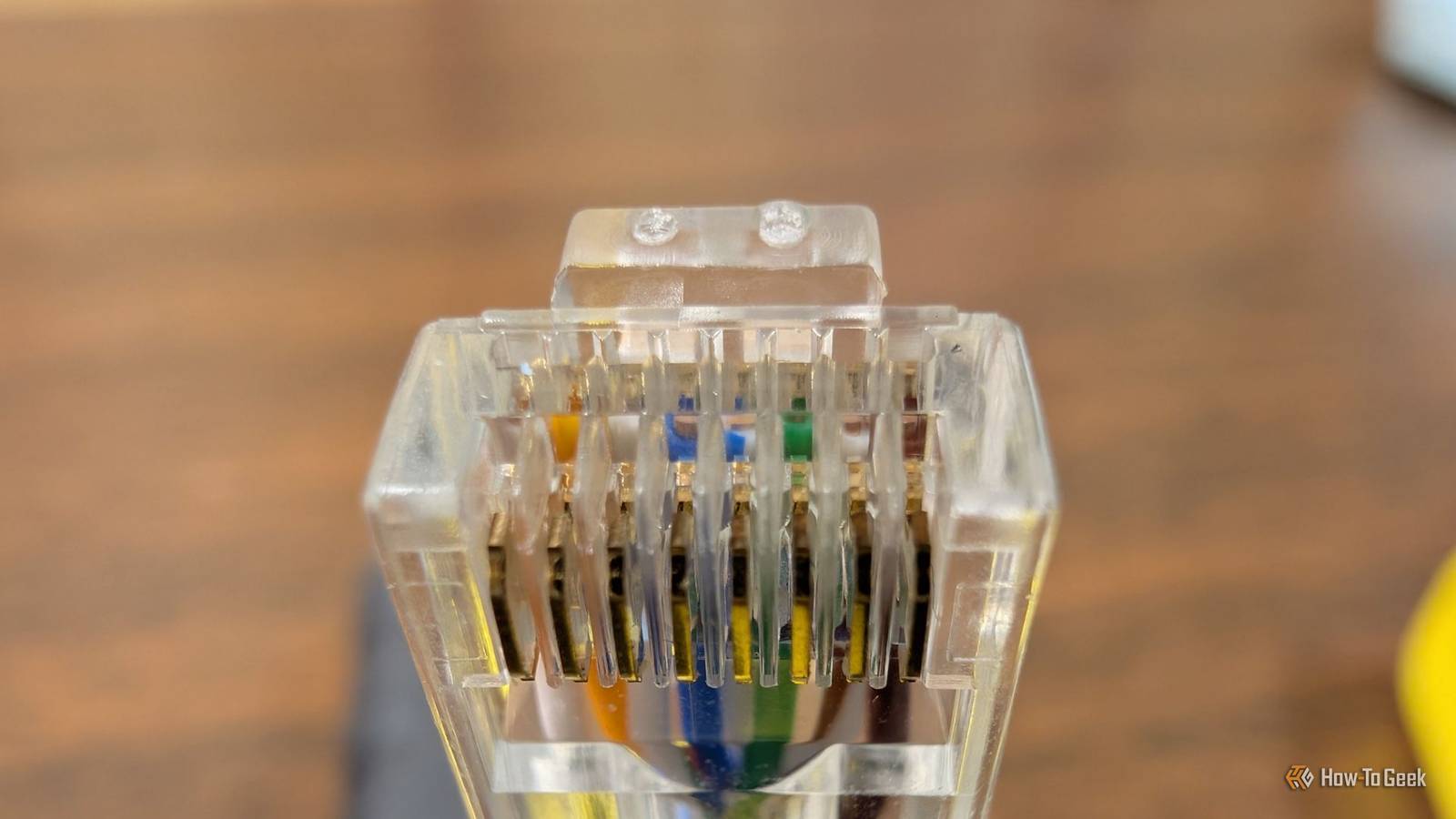
Published Oct 15, 2026, 11:30 AM EDT Monica J. White is a journalist with over a decade of experience in covering technology. She built her first PC nearly 20 years ago, and she has since built and tested dozens of PCs. PC hardware is her main beat, and graphics cards and the GPU market at large are her main area of interest, but she has written thousands of articles covering everything related to PCs, laptops, handhelds, and peripherals. From GPUs and CPUs to headsets and software, Monica's always willing to geek out over all things related to computing. Outside of her work with How-To Geek, Monica contributes to TechRadar, PC Gamer, Tom's Guide, Laptop Mag, SlashGear, Whop, and Digital Trends, among others. Her ultimate goal is to make PC gaming and computing approachable and fun to any audience. Monica spends a lot of time elbow-deep in her PC case, as she's always making upgrades, testing something, or plotting out her next build. She's the go-to tech support person in her immediate circle, so she's never out of things to do. Whenever she has spare time, you'll find her gaming until the early hours and hanging out with her dog. Remember when everyone tried to tell you that gold-plated HDMI cables were the (forgive me) gold standard of home theater? Or gold-plated audio cables, that was also a thing. Well, I think that home networking has finally found its equivalent, and it comes in the form of Cat 8 Ethernet cables. Cat 8 is a legitimate standard, but it wasn't designed for your home Those 40Gbps speeds come with a pretty big catch Cat 8 is a legitimate standard, of course. Amazon sellers didn't invent it just to sell you the next "big thing" in networking. Cat 8 has impressive specs, too. It was developed to support 25GBASE-T and 40GBASE-T Ethernet, meaning speeds of up to 40Gbps. It also supports frequencies up to 2,000MHz, compared to 500MHz for Cat 6A. Big difference, but don't confuse these jumps with actual network speeds, as they're not one and the same. The catch? Cat 8 was primarily designed for data centers, where both servers and switches need incredibly fast connections over relatively short distances. According to Fluke Networks, Cat 8 supports 25Gbps and 40Gbps over channels up to just under 100 feet long. It can still handle 10Gbps and slower connections over 328 feet, but that's hardly a compelling reason to choose such cables over something that can do the same thing without any caveats. Right, so, will your network implode if you use this data center-adjacent Cat 8 cable at home? Of course not. It works just fine with ordinary equipment, assuming the cable is well made. But I still don't think you should use one, be it for wiring up your entire home or for a single run from your router to your PC. Your router doesn't care that your cable supports 40Gbps It's not like that cable can level up your Ethernet ports The beautiful (and simultaneously annoying) thing about networking is that it's never just one thing. As the name itself implies, I guess... What I'm getting at is that even if you buy yourself a fancy Cat 8 cable, the equivalent of a gold-plated HDMI cable, the snake oil of networking (but not really), you won't suddenly get those super fast speeds everywhere. Every network is only as fast as its weakest link, after all, and buying the best cable money can buy usually means that the cable itself won't be the weakest link. If your router has 1Gbps LAN ports and your PC has a 1Gbps Ethernet adapter, that's all you've got. You'll still be stuck at 1Gbps no matter the cable, as the devices on either end of the link negotiate a connection speed based on what they both support, and no amount of expensive cabling can change that. Even if you've upgraded to a faster Ethernet adapter or a router with 2.5Gbps ports, Cat 8 is still a massive overkill. Cat 5e can already handle 2.5Gbps over standard Ethernet distances, while Cat 6A supports 10Gbps over 328 feet. To actually take advantage of Cat 8's headline 40Gbps speeds, you'd need compatible 40GBASE-T equipment, which is hardly standard in home networking. The promises of better gaming performance sound awfully familiar Cat 8 won't fix your ping any more than gold-plated HDMI fixes your picture This is where that whole gold-plated comparison I've got going on really starts to make sense. Just like those expensive HDMI cables promised better picture quality, you'll find Cat 8 cables advertised as being perfect for gaming, with promises of lower latency and more stable connections. Except that's not really how Ethernet works (if only). If your existing Cat 6 cable is already delivering a reliable 1Gbps connection, swapping it for Cat 8 won't magically improve your ping. Most of your gaming latency comes from the ISP, and as I've learned in my own experience, there's often no reasoning with your ISP on any such matters. Network congestion and distance to the game server can also play a part. Of course, a damaged Ethernet cable can mean a lot of problems, but using a cheaper, less performant cable likely won't make a difference in your gaming experience. A fancy gaming router and Ethernet cable won't always fix your gaming lag. You're also paying for shielding you probably don't need More complicated cabling isn't automatically better Another big selling point of Cat 8 is its shielding. Unlike Cat 6, which is available in both shielded and unshielded variants, Cat 8 requires shielding to meet its specifications. This helps protect against electromagnetic interference and crosstalk, which is when signals from nearby cables interfere with one another. That's genuinely useful in data centers, where you've got massive bundles of cables running alongside each other. But even though it might feel like you have a mini data center at home, the scale is something else entirely. There's another catch (because there always is). Shielded cabling needs proper termination and grounding to deliver its intended benefits, and improperly terminated Cat 8 shielding can seriously degrade its resistance to interference. These cables can also be thicker, less flexible, and generally more annoying to route around furniture. Meanwhile, a decent unshielded Cat 6 cable will work perfectly well in most homes without any extra considerations. Cat 6A is the sensible upgrade And even that might still be overkill Credit: Andrew Heinzman / How-To Geek If you're sitting on some super old Ethernet cables, Cat 6A is often a much more sensible choice. It offers more than most households need, and it's affordable and easy to come by. Will you spend way more by buying Cat 8? Not always, but the point is that you really don't need these cables, and if you do need them, you don't need my article to tell you otherwise. They come in handy in specific use cases, so there's no need to throw away a perfectly good older-gen cable just because newer ones exist. Buy for the network you actually have Before you shop for anything else, check what your existing network even supports. You might find obstacles along the way that cost way more than a simple Ethernet cable, and if that's the case, there's no point in future-proofing before the entire network is ready for the big upgrade.
Cat 8 cable is the new gold-plated HDMI cable for home network shoppers
Full Article
Original Source
Read the full article at Howtogeek →KhanList aggregates and links to publicly available news content. We do not host full articles from third-party sources. Always verify important information with original sources.