
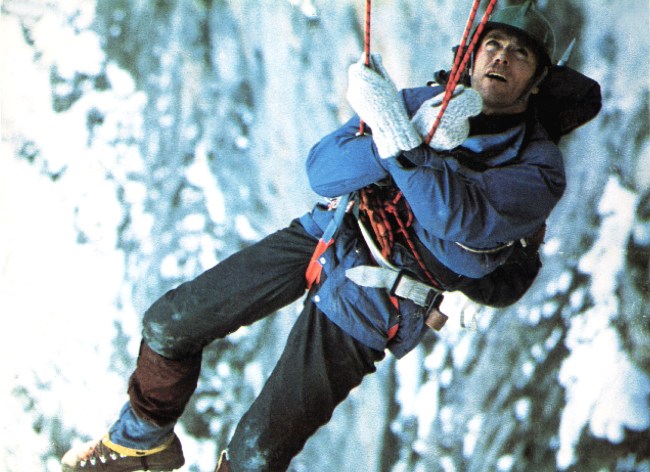
When director Denis Villeneuve selected Robert Pattinson to play secret agent 007 in the next James Bond movie, he broke with tradition by casting an undeniable movie star in the role. Earlier Bonds were either relatively unknown (Sean Connery, George Lazenby, Daniel Craig, Timothy Dalton) or big names in television who hadn’t yet proven themselves on the big screen (Roger Moore, Pierce Brosnan). Yet Villeneuve and producers David Heyman and Amy Pascal’s choice of Pattinson isn’t completely at odds with the franchise’s history. At several points in the last 64 years, some of the box office’s biggest draws have flirted with the role and either turned it down or been rejected by the filmmakers. Right from the beginning, Bond producers were torn between going after a bankable name and letting the character be the star. Cary Grant was one of the world’s most famous actors when producers Albert “Cubby” Broccoli and Harry Saltzman began pre-production on “Dr. No,” the first feature film to showcase James Bond. (The character had previously been played by “The Shining” hotel manager Barry Nelson in a 1954 TV adaptation of “Casino Royale.”) He was also a close friend of Broccoli’s — so close, in fact, that he was best man at the Broccoli’s wedding. Alas, that personal relationship wasn’t enough to get Grant to play Bond as Broccoli wanted. Grant was already starting to wind down his career and wanted to leave the public with their impression of him as a dashing young man. By 1966, he was done, so signing a multi-picture contract to star as Bond in 1962 didn’t appeal to the soon-to-be retired actor. Broccoli and Saltzman’s requirement that their Bond sign a long-term contract was also an obstacle for two other famous actors they approached. Both James Mason and Peter Lawford bristled at the idea of being committed to Bond for three or more films. Rex Harrison and David Niven both wanted the part but were turned down in favor of Sean Connery, whose most prominent role to date was in the Disney movie “Darby O’Gill and the Little People.” “Dr. No” and its sequels made Connery a star, and for many viewers he remains the definitive Bond. By the time the sixth 007 movie, “On Her Majesty’s Secret Service,” rolled around in 1969, however, Connery was tired of the role and stepped away — launching the first major search for a new James Bond. Given that Connery wasn’t a household name when he made Bond an international icon in “Dr. No,” Broccoli and Saltzman were less inclined to go after a major movie star than they had been during the James Mason and Cary Grant discussions; most of the people seriously considered for “On Her Majesty’s Secret Service” weren’t particularly popular at the time, and are even less well known now. (Few modern movie buffs would be able to pick John Richardson or Anthony Rogers out of a lineup, though the more famous Terence Stamp did meet with Broccoli about the role.) The most popular actor Broccoli and Saltzman pursued was “Batman” star Adam West, who turned the part down because he felt 007 should be British — a response that would be repeated by other actors the next time a new Bond was needed, which turned out to be a lot sooner than Broccoli or Saltzman would have liked. Male model George Lazenby had almost zero acting experience when he secured the coveted role, but he took his good fortune for granted. In one of the great cinematic miscalculations in history, he assumed James Bond’s days were numbered in the age of “Easy Rider,” and declined to return for more 007 adventures. Back at square one, Broccoli and Saltman decided to reverse course and once again go after big movie stars, including American ones. They offered “Diamonds Are Forever” to Clint Eastwood, who, like West, turned down the role because he felt Bond should be British. He would, however, direct and star in his own Bond-esque spy adventure, “The Eiger Sanction,” a few years later. Burt Reynolds, as famous for the hits he turned down (“Die Hard,” “Pretty Woman”) as for the ones he made, turned down Bond for the same reason. John Gavin, best known today for his roles in Alfred Hitchcock’s “Psycho” and Douglas Sirk’s “Imitation of Life,” had no such reservations about playing Bond, and was the first American cast in the role. Unfortunately for him, Connery had second thoughts and decided to come back one last time, so Gavin was out, and Connery was in for “Diamonds Are Forever.” Gavin was briefly considered again for the eighth Bond picture, “Live and Let Die,” but by then the producers decided 007 should, in fact, be British and went with television star Roger Moore. Moore had actually been offered “On Her Majesty’s Secret Service” but had to turn it down due to an episodic series commitment. He became one of the longest-running Bonds, starring in seven 007 movies between 1973 and 1985. However, he began grumbling about leaving the series as early as 1979, leading the filmmakers to open discussions with Timothy Dalton (who turned down the role in “For Your Eyes Only” before committing to the series with 1987’s “The Living Daylights”) and James Brolin, whose bags were packed to play what would have been (again) the first American Bond in “Octopussy” when Moore had a change of heart. The tradition of actors who either turned down or missed out on Bond in earlier films coming back to play the character was a sturdy one: just as Moore and Dalton would play the character in multiple films after initial false starts, Pierce Brosnan lost out on “The Living Daylights” due to a scheduling conflict (with his series “Remington Steele”) before replacing Dalton in 1995’s “GoldenEye.” Before the producers committed to Dalton in “Living Daylights,” a wide range of actors were considered and approached. Brosnan was the frontrunner, but Sam Neill came close, and the studio wanted Mel Gibson, but Broccoli overruled it, once again wanting a Brit (never mind the near-casting of James Brolin). Pierce Brosnan in ‘Tomorrow Never Dies’©United Artists/Courtesy Everett Collection Although Brosnan was perhaps inevitable as Dalton’s replacement given the producers’ thwarted desire to have him in the 1980s, Hugh Grant, Sean Bean, and Liam Neeson were all considered for “GoldenEye.” Neeson turned the part down, later admitting that his girlfriend (and eventual wife) Natasha Richardson didn’t want him to play it. The producers wanted Bean but were overruled by MGM. Luckily for the actor, he made a strong enough impression to score a role as the picture’s villain. Brosnan would play Bond four times, from “GoldenEye” through 2002’s “Die Another Day.” After that, the producers decided to make a change (reportedly because Brosnan’s salary demands were getting too high) and reboot the franchise with “Casino Royale.” Several now noteworthy actors were considered before Daniel Craig snared the part and became (after a brief initial flurry of internet outrage) the franchise’s most beloved Bond since Connery; Clive Owen, Sam Worthington, and Matthew Rhys were all in the running, and Henry Cavill was high on director Martin Campbell’s list. Most intriguingly, Christian Bale turned down the part, which producer Barbara Broccoli said was his for the asking after she saw his stunning turn in Mary Harron’s “American Psycho.” Bale, amusingly, said he didn’t want to play Bond since he had already just played “a serial killer.” He also, according to the book “Christian Bale: The Inside Story of the Darkest Batman,” felt the role played into “despicable” stereotypes. Bale’s loss was Craig’s gain, as he led the Bond franchise into one of its most artistically and commercially successful periods — leaving Robert Pattinson with sizable shoes to fill.
Cary Grant, Clint Eastwood, and Christian Bale: The Stars Who Almost Played James Bond
Full Article
Original Source
Read the full article at Indiewire →KhanList aggregates and links to publicly available news content. We do not host full articles from third-party sources. Always verify important information with original sources.