
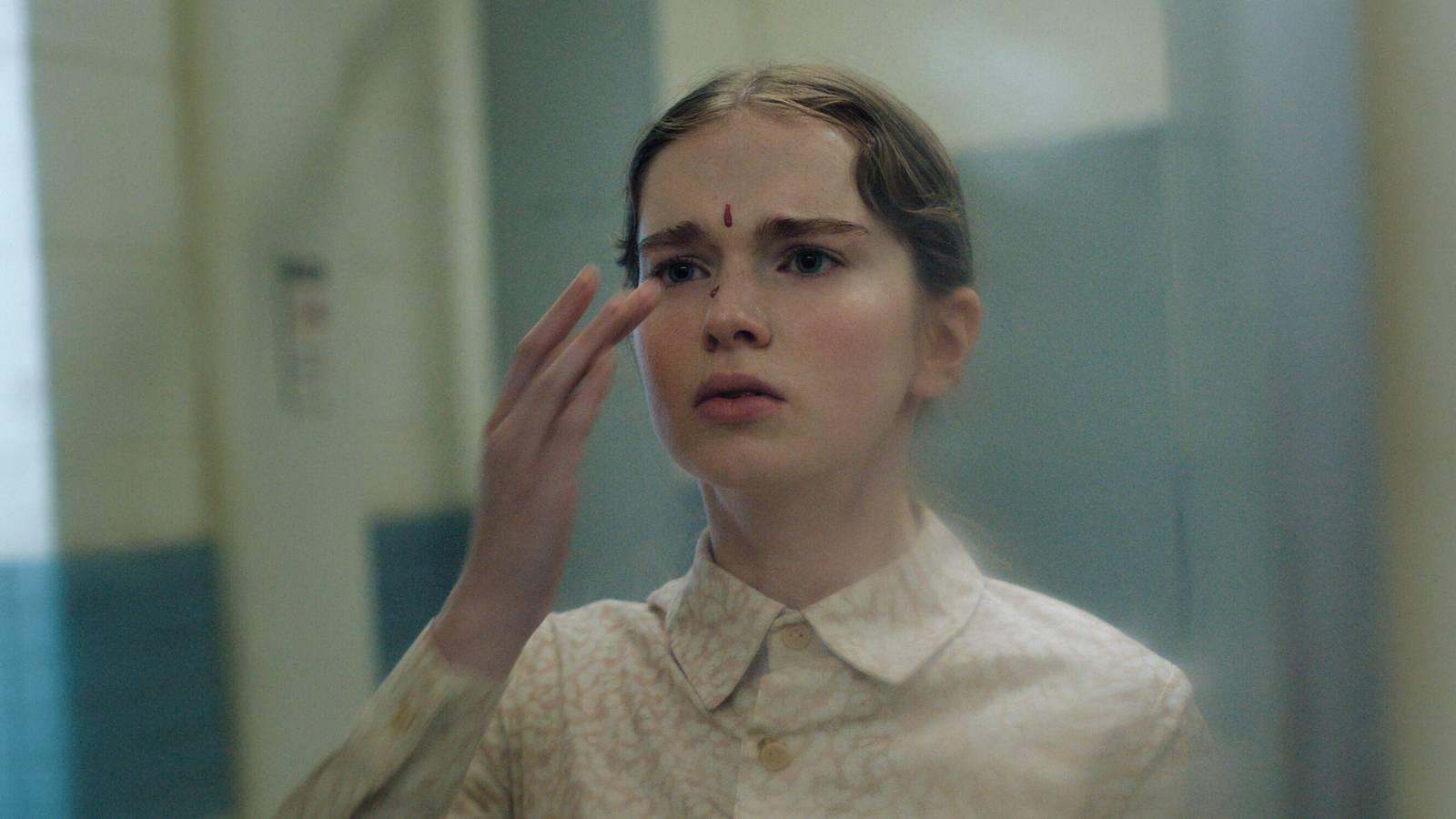
Published Oct 10, 2026, 10:00 AM EDT Ben Sherlock is a Tomatometer-approved film and TV critic who runs the massively underrated YouTube channel I Got Touched at the Cinema. Before working at Screen Rant, Ben wrote for Game Rant, Taste of Cinema, Comic Book Resources, and BabbleTop. He's also an indie filmmaker, a standup comedian, and an alumnus of the School of Rock. When Mike Flanagan announced he was turning Carrie into a TV series, I was as skeptical as anyone else. We’ve already seen plenty of different versions of Carrie — including Brian De Palma’s 1976 rendition, the original Stephen King adaptation — and there are countless King stories that are ripe for the screen and still haven’t been adapted for it. It didn’t feel necessary to remake Carrie at all, but especially not as a TV show. Carrie barely had enough material to qualify as a novel — King had to pad it out with epistolary chapters and newspaper clippings to get the word count up — so surely there wouldn’t be enough to sustain multiple seasons of a TV show. But, having just binge-watched the first season on Prime Video, I’m glad to have been proven wrong. Flanagan has taken the basic pieces of Carrie — the town and its inhabitants; the school and its staff and students; the impending prom massacre; the puritanical tyranny of Margaret White; a fateful period after gym class — and expanded it into another one of his masterful horror dramas in the vein of Midnight Mass or The Haunting of Hill House, where the characters would be compelling enough to keep watching whether there was something supernatural afoot or not, and the horror is there to symbolize and enhance their dramatic conflicts, not just to make you jump (although it does that, too). I consume a lot more movies and TV shows than books (it’s easier), so it’s rare that I go into a literary adaptation familiar with the source material. But I’ve actually read Carrie, and Flanagan’s TV show is a masterclass in adaptation. The show perfectly recaptures the feel of the novel, with the framing devices and different eyewitness accounts interspersed with Carrie’s perspective, but it restructures the narrative to suit its new medium. A series of letters and news articles worked on the page, but Flanagan translates that into a kind of Big Little Lies-style mystery drama. Carrie 2026 Truly Modernizes Stephen King's Classic Tale De Palma’s adaptation of Carrie has long been held as the gold standard. Carrie has been spun off, sequelized, and reimagined, but the De Palma movie — aside from the weird trying-on-tuxedoes montage — is about as perfect an adaptation as you could hope for, deftly translating the story from the page to the screen. But the story on the page is just the tip of the iceberg. De Palma’s movie brought King’s book to life, but subsequent adaptations have added backstory, fleshed out the characters, and reimagined the narrative for a new era. The big selling point of the 2013 remake, starring Chloë Grace Moretz as Carrie, was that it would modernize the story for the age of the internet and social media. That was the marketing hook for the remake — Carrie for the 21st century! — but, ultimately, that modernization didn’t amount to much. The remake only really made two significant changes to contemporize the technology: the shower scene was filmed on everyone’s phones, and Carrie Googled telekinesis when she started to discover her powers. Other than that, it mostly left the story intact (even that cringe-inducing tuxedo montage). Flanagan’s Carrie TV show, on the other hand, has truly updated the story; it truly is Carrie for the 21st century, with school shooter drills and an ultra-conservative Margaret White and a fake “CarrieRed” Instagram account. It’s the first post-De Palma Carrie adaptation — which is to say, the first adaptation of Carrie in 50 years — to actually justify its own existence and put a meaningful mark on the source material. Summer H. Howell May Not Look The Part, But She's A Perfect Carrie White The most common point of contention in Carrie adaptations, going all the way back to De Palma’s film, is the casting of Carrie White. In the book, King describes Carrie as a “chunky girl with pimples on her neck and back and buttocks.” But Hollywood is allergic to casting actors who aren’t conventionally attractive in lead roles, so they keep casting part-time models like Sissy Spacek and Chloë Grace Moretz to play Carrie. When Flanagan cast Summer H. Howell as his Carrie, we saw those same complaints all over again. Howell’s casting was criticized because she doesn’t look how Carrie is described in the book, but when you watch the actual show, that doesn’t matter. Howell may not look the part, but she’s a perfect Carrie White. She absolutely nails Carrie’s awkwardness and social ineptness and deep sadness and rage. It’s the best Carrie White performance since Sissy Spacek; Spacek similarly overcame not quite looking the part by perfectly embodying the character we know and love. Howell is the star, and she effortlessly carries the series on her shoulders, but Flanagan has assembled yet another stacked ensemble around her. Siena Agudong is an appropriately sympathetic Sue Snell; Matthew Lillard is reliably fun as the put-upon principal; Amber Midthunder is perfectly cast as Carrie’s no-guff-taking teacher. The only somewhat weak link is Arthur Conti, who I don’t buy as the brooding rebel badass here any more than I bought him as the brooding rebel badass in Beetlejuice Beetlejuice. Samantha Sloyan was born to play Margaret White. She’s not just doing a carbon copy of Piper Laurie and Julianne Moore’s portrayals of the character; she’s doing her own thing. Laurie and Moore played Margaret as a straight-up villain, and they both gave great performances from that angle, but Sloyan’s Margaret is a lot more complex. I never thought I’d side with Margaret White, but her workplace revenge and her social media crusade against the CarrieRed cyberbullies were oddly satisfying. To quote another Mike Flanagan work (quoting a Walt Whitman work), this version of Margaret contains multitudes. Alison Thornton’s turn as mean-girl ringleader Chris Hargensen is just as excruciatingly authentic as Nancy Allen’s, but the De Palma movie depicted Chris, like Margaret, as a straightforward antagonist. The TV show gives Chris a lot more depth; her ruthless hate campaign against Carrie grows out of a spiral of self-doubt and self-loathing as she weathers her dad going broke, her parents getting a divorce, and her best friend going off to college while her future remains frighteningly uncertain. It doesn’t necessarily make you like her, but it does make you understand where she’s coming from. A few of the changes to the source material — especially Carrie’s new ending — have rubbed some fans the wrong way. But all in all, Carrie is another home run for Mike Flanagan, both as a Stephen King adaptation and as a pitch-perfect blend of supernatural horror and human drama. Between Carrie and Spider-Noir and Reacher’s first spinoff Neagley, Amazon Prime has been killing it with the I.P. cash-grabs this year. Carrie Release Date 2026 - 2026-00-00 Network Prime Video Showrunner Mike Flanagan Directors Mike Flanagan, Axelle Carolyn, Hiromi Kamata, Kate Siegel, Kyra Sedgwick Cast Summer H. Howell Carrie White Samantha Sloyan Margaret White
Carrie's 2026 TV Show Does What The 2013 Remake Failed To Do
Full Article
Original Source
Read the full article at Screenrant →KhanList aggregates and links to publicly available news content. We do not host full articles from third-party sources. Always verify important information with original sources.