
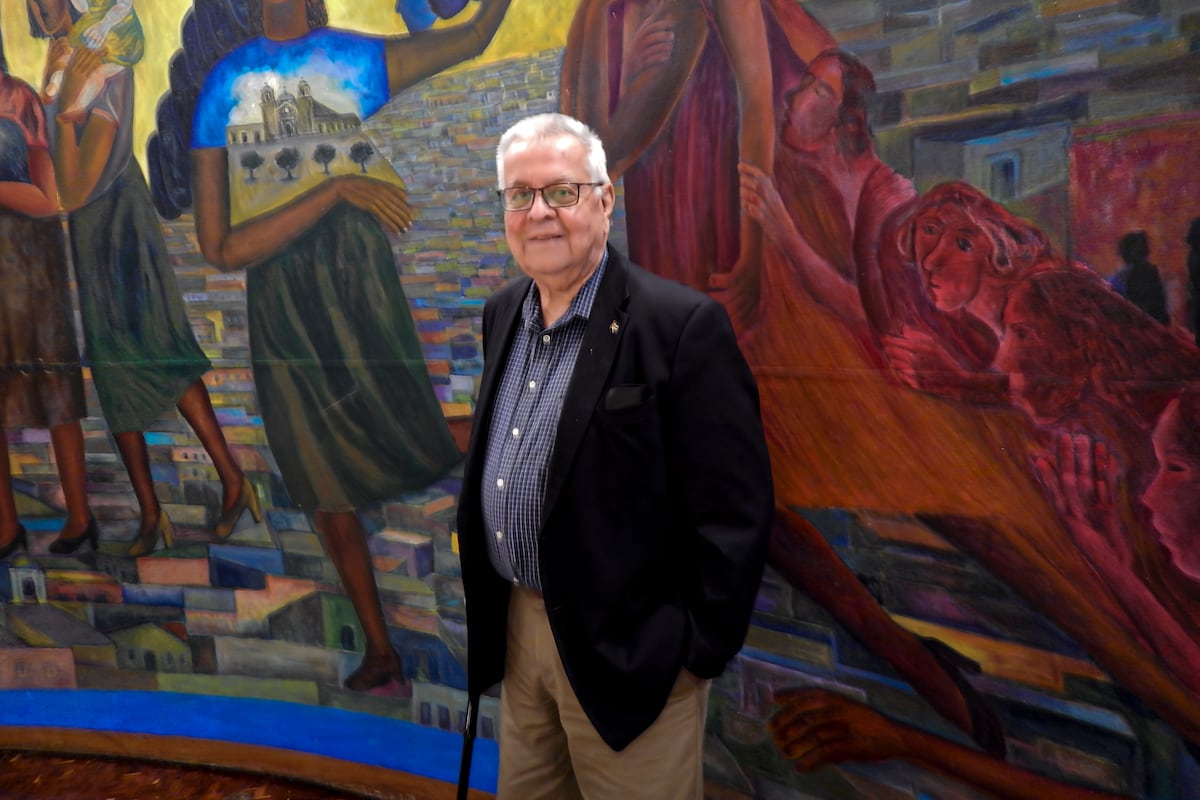
Carlos Alzugaray (Havana, age 83) knows the Cuban regime very well. He came up through its ranks. He was part of the Revolution’s first generation of diplomats when he joined the Ministry of Foreign Affairs. It was 1961, and two years had passed since the bearded rebels entered the capital. He represented the island in a handful of countries and before the European Union.That is why his off-the-cuff remarks attract attention and irritate both the opposition and hardliners within the government. You may or may not like what he says — or how he says it — but he doesn’t shy away from the issues. Alzugaray spoke with EL PAÍS at a hotel in Mexico City about the negotiations with Washington and the controversial role of Raúl Guillermo Rodríguez Castro, “El Cangrejo,” Raúl Castro’s grandson.Question. Donald Trump and Marco Rubio alternate between threats of invasion and signals of dialogue. Where is this headed?Answer. You have to understand the context. In the United States, there are two schools of thought. The first maintains that Cuba is an illegitimate state that must be overthrown. As a general rule, Republicans have held this view. The second is the normalization of relations, and within that camp there are those who believe that the best way to destroy the Revolution is by reaching out. Trump and Rubio come from the Republican tradition of regime change by force.Q. Do you believe Rubio’s version of seeking dialogue?A. He belongs to the far-right wing of the Cuban-American community. He has been aligning himself with Trump since Trump’s first term to achieve his goal: to bring down the Revolution. And how did he plan to do that? Through Venezuela. First came the [Juan] Guaidó strategy. The idea was: “We’ll topple [Nicolás] Maduro, and Cuba will fall.” It didn’t happen. Now they’ve done the same thing, only with violence — by kidnapping Maduro. When Rubio sees that the collapse isn’t happening, he changes course. He starts talking about negotiations. But on his own terms: when asked if he would go to Havana, he replied that he would — but only to tell them to leave.Q. It’s striking that in these negotiations they’re bypassing the government and choosing Raúl Guillermo Castro — El Cangrejo — as their interlocutor…A. Rubio comes with his Miami mindset. In Miami, Cuba isn’t a country — it’s the Castros’ estate. So you have to negotiate with a Castro. But Fidel is dead, Raúl is retired, and his son Alejandro — who negotiated with Obama — was out of the picture. So it seems they roped in “Raulito,” and he went along with it. The offer was for the Castro family to go to Moscow with their money, and they could do whatever they wanted. They also asked [Miguel] Díaz-Canel to resign. It didn’t work, because no one in the Castro family is going to hand over the country.All of this has been shrouded in secrecy. It’s not clear to me whether Raulito attended those meetings alone. I was told recently that he didn’t; that he was with a brother of his father’s [the late Luis Alberto Rodríguez López-Calleja, president of the Gaesa military holding company, which, according to independent estimates, controls nearly 40% of the economy].Q. One of the most striking images from recent months is that of El Cangrejo sitting with the Communist Party’s top leadership even though he didn’t hold an official position.A. He was a colonel in the Ministry of the Interior and held a position in personal security.Q. Yes, but he’s not part of the leadership…A. The man Raúl was counting on was his father, but he died. I see two interpretations. The first: when López-Calleja died, Raúl felt that the structure he had built had collapsed. Because he was Díaz-Canel’s replacement and the most important member of the family. Fidel’s sons don’t amount to much. So Raulito had to be positioned. The second: that this is being done with Raúl’s consent, because if he dies, the highest-ranking member of the family will be gone. That’s the impression I got from the profile USA Today wrote about him, where Raulito says he never thought he’d go into politics, but if they call him, he’ll go. He has a reputation as a playboy, and that isn’t looked upon favorably in Cuba. I don’t know if the generals agree. If Raúl dies tomorrow, what support does he have?Q. Is Gaesa behind this?A. It’s possible. His father was his father. Gaesa has risen significantly, but he isn’t popular. Theoretically, he reports to the Minfar [Revolutionary Armed Forces], but López-Calleja maneuvered — leveraging his family ties — to break free from that control and answer only to Raúl. That undermines the army’s structure.Q. Raúl distinguished himself from Fidel by being less of a one-man show. What does this apparent change imply?A. He has always been a man of institutions. Fidel did things his own way without caring about structures. Now, out of the blue, you take your grandson and put him above the generals and above Díaz-Canel, whom you promoted. Do you think the top officials at Minrex (the Foreign Ministry) find this amusing? They can’t possibly find it amusing. It’s a system similar to Fidel’s, but Fidel had all the authority, all the charisma, and was brilliant. And Raúl doesn’t have the charisma, nor the authority, nor is he as brilliant as Fidel.Q. How much truth is there to the saying that Díaz-Canel governs but doesn’t rule?A. The same thing was said about Raúl: he governs but doesn’t rule; Fidel is the one in charge. And that wasn’t true either. The thing is, there’s an information vacuum in Cuba. But if Raúl is promoting Raúl Guillermo, a power vacuum could arise. If an official says to him, “You can’t give me orders — where’s the order from my minister?” — constitutionally, that could happen. Perhaps no one would dare, but that builds up tensions. Furthermore, the erosion of Díaz-Canel’s standing is transferring to Raúl. That never happened with Fidel. In the corridors of power, there are also those who say he made a mistake [in choosing Díaz-Canel as his successor].Q. Do you see political reform accompanying the economic reforms? A Caribbean glasnost.A. When Raúl dies. I believe that after Raúl dies, Díaz-Canel won’t be able to hold on any longer. It all depends on the balance of power, and I don’t see any group with a truly democratic agenda. But that [reform] is gradually eroding the system.Q. Political prisoners are often used as bargaining chips by the regime. The latest release, under Biden, consisted primarily of common criminals. Why don’t they release them?A. I don’t know why they don’t do it. It could be presented as a humanitarian gesture, without appearing to be a concession. They have nothing to lose. Those releases, with all due respect, were a joke. It was handled poorly. Unfortunately, the leadership believes they can do things and no one will find out. It’s no longer the same leadership or the same environment.Sign up for our weekly newsletter to get more English-language news coverage from EL PAÍS USA Edition
Carlos Alzugaray, former Cuban diplomat: ‘After Raúl dies, Díaz-Canel won’t be able to hold on any longer’
Full Article
Original Source
Read the full article at English →KhanList aggregates and links to publicly available news content. We do not host full articles from third-party sources. Always verify important information with original sources.