
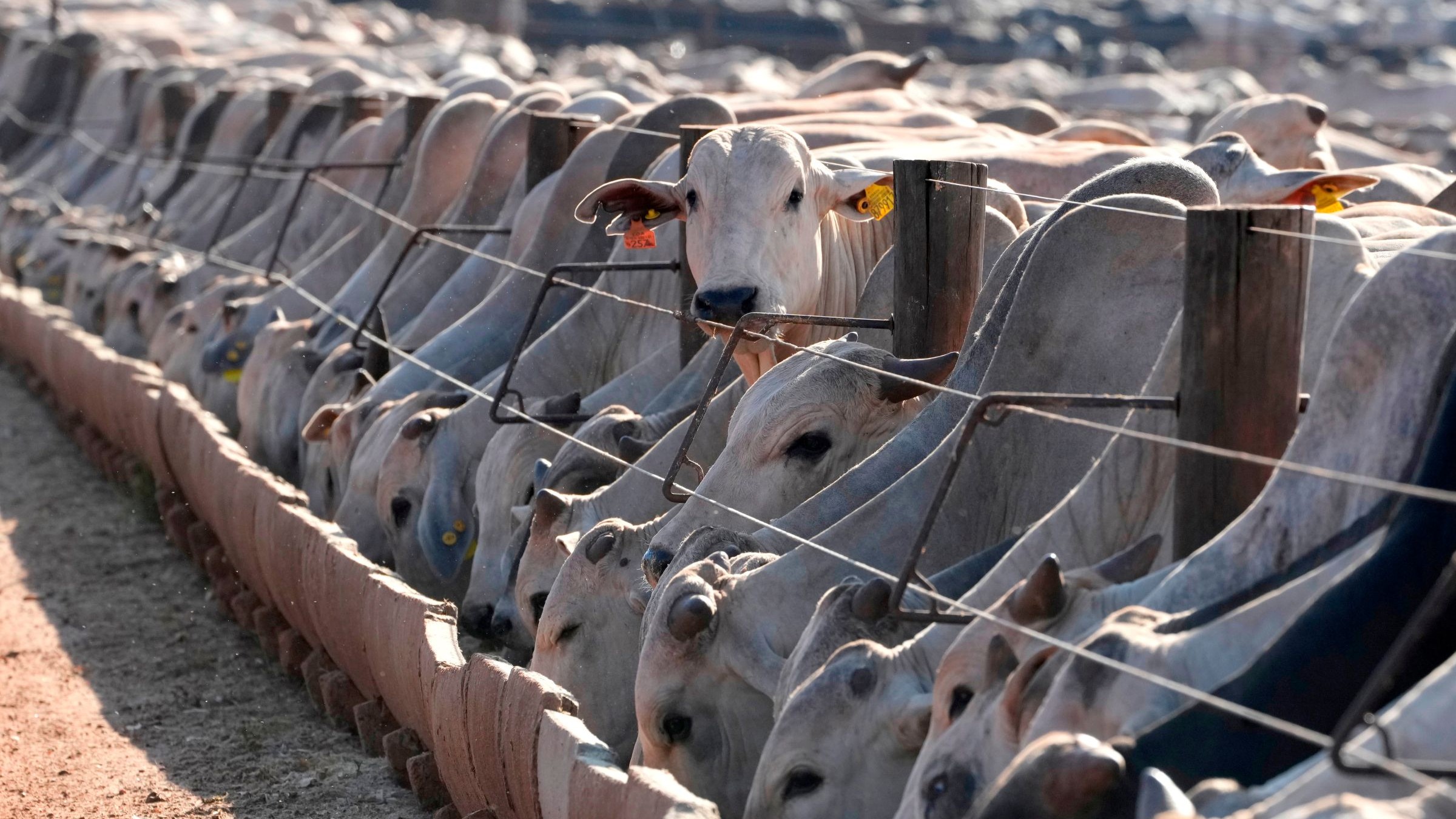
The EU Deforestation Regulation (EUDR), scheduled to take effect for large and medium operators Dec. 30, will require companies to prove certain commodities aren’t sourced from land that was deforested after 2020.Cargill, one of the world’s largest agribusiness companies, says it’s prepared to comply with the law. But it’s also been working behind the scenes to weaken the law and delay its implementation, according to a new investigation by Earthsight, an environmental nonprofit.Over the last several years, the company has met with European Commission officials and their staff to raise concerns about food shortages caused by the EUDR’s “regulatory complexity” and the “practical challenges with compliance and legality requirements.”Lobbying by industry groups has helped secure repeated delays of the EUDR, weaken its requirements, and even led to the removal of some commodities from its scope. Cargill, one of the world’s largest agribusiness companies, says it’s prepared to comply with the European Union’s new antideforestation law when it takes effect at the end of this year. But a recent investigation has found that the company has been simultaneously working behind the scenes to weaken the law and delay its implementation. The EU Deforestation Regulation (EUDR), scheduled to take effect for large and medium operators Dec. 30, will require companies to prove certain commodities aren’t sourced from land that was deforested after 2020. Cargill has lobbied against the law while publicly claiming to be prepared for its implementation, according to an investigation by Earthsight, an environmental nonprofit based in the U.K. “While publicly positioning itself as EUDR-ready, the agribusiness giant has been using a network of trade associations, parliamentary forums, business chambers and public affairs consultancies to push for changes to the law,” the investigation said. Cargill is one of the world’s largest traders of soy, beef, palm oil, and cocoa — all commodities subject to the EUDR once it goes into effect. In 2025, the company said it had mapped its direct suppliers in Argentina, Brazil, and Uruguay. It also said all soy from those countries would be deforestation- and conversion-free by the end of that year. But Earthsight’s investigation, published Nov. 10, uncovered Cargill’s campaign to influence policymakers in the other direction. In a series of meetings with European Commission officials and their staff in 2025 and 2026, it raised concerns about food shortages caused by the EUDR’s “regulatory complexity” and the “practical challenges with compliance and legality requirements.” The company also held meetings with members of the European Parliament (MEP) who have since been publicly critical of the EUDR, the investigation said. They include Renew MEP Benoît Cassart and European People’s Party MEP Stefan Köhler. A farm worker loads a seeder with soy seeds for planting at the Morada do Sol farm in Santa Cruz do Rio Pardo, Sao Paulo state, Brazil. (AP Photo/Ettore Chiereguini) During a July 9 Sustainable Livestock Intergroup meeting on environmental simplifications, Cassart said he was concerned about a “real dysfunction between the regulation as written and the reality in the field.” “Cargill is actively preparing to meet EUDR requirements as part of our broader efforts to advance deforestation- and conversion-free agricultural supply chains,” a spokesperson told Mongabay in an emailed response to questions about the Earthsight report. “Our engagement with policymakers and industry associations has focused on effective and consistent implementation, including greater legal clarity, harmonization across member states and practical guidance that enables compliance. We do not believe characterizing that engagement as an effort to ‘weaken’ EUDR accurately reflects Cargill’s position or the substance of that work.” Cargill is also a member of several powerful lobbying groups and trade associations that have pushed to influence the EUDR. These include the American Chamber of Commerce to the European Union, the German Association of Oilseed Processors, FEDIOL (the EU vegetable oil and protein meal industry association), and COCERAL (the committee for trade in cereals, animal feed, oilseeds, olive oil, oils and fats, and agricultural supplies). It’s also connected to lobbying efforts by the European Feed Manufacturers’ Federation (FEFAC) through various national member associations. Lobbying by these groups intensified while the law was being revised in 2025, the investigation found. This year, COCERAL also pushed for the creation of a database of laws and regulations for each product and country. Not long after, the European Commission proposed a similar idea in a report about ways to simplify the law. In a comment to Earthsight, COCERAL said it’s been actively engaged in stakeholder discussions on the EUDR with the European Commission and European Parliament regarding practical implementation concerns. FEDIOL took a similar position, saying it’s their responsibility to engage with policymakers on problems and concerns arising from the implementation of the law. The three trade associations didn’t respond to Mongabay’s request for additional comment by the time of publication. The Earthsight investigation argues that lobbying by Cargill and other industry groups has worked. Over the last several years, the regulations in the EUDR have been watered down and their implementation repeatedly delayed. The Council of the European Union announced a 12-month postponement in late 2024, arguing that producers and local governments weren’t going to be ready in time for the initial deadline of Dec. 30, 2024. The following year, it proposed another 12-month postponement. The European Parliament’s Sustainable Livestock Intergroup meeting held July 9. Image courtesy of Sustainable Livestock Intergroup. In July, several products that Cargill trades were removed from the law, including cattle hides and skins. Other products that were removed include leather, soybeans for sowing, and retreaded rubber tires. The European Commission argued that leather only contributed between 2.5% and 5% of deforestation in the cattle supply chain. Earthsight expressed concern about the impact that lobbying will continue to have on the EUDR ahead of its implementation — and not just by Cargill. “The question is bigger than one company,” the Earthsight investigation said. “If companies with the deepest pockets can influence the same legislation through multiple overlapping membership organizations and informal political networks, EU policymaking risks becoming a contest of access rather than evidence.” Banner image: Cattle eat at a feedlot operated by the Otavio Lage group in Goianesia, Goias state, Brazil. Image by Eraldo Peres via Ap Photo. See related from this reporter: Critics question oil and gas spending in Mexico’s proposed climate budget FEEDBACK: Use this form to send a message to the author of this post. If you want to post a public comment, you can do that at the bottom of the page. Credits Topics
Cargill publicly backs EU deforestation law while lobbying to weaken it, probe finds
Full Article
Original Source
Read the full article at News →KhanList aggregates and links to publicly available news content. We do not host full articles from third-party sources. Always verify important information with original sources.