Care workers could get specialist training in how to look after patients with dementia as part of Andy Burnham’s overhaul of social care. Health Secretary Yvette Cooper announced on Wednesday that a new Dementia Tsar – one of the early recommendations of Baroness Louise Casey’s social care commission – will be in place within weeks to “help drive forward much-needed improvements” in the sector. The Alzheimer’s Society said it stands ready to work with the Prime Minister for a “quick win” on social care such as training carers in how to deal with patients with dementia. Shorts Currently, there is no legal requirement that exists for care staff to undertake dementia training in England, Wales or Northern Ireland. All care workers are offered dementia training in Scotland. Recent research by the Centre for Dementia Research at Leeds Beckett University and IFF Research, conducted on behalf of the charity, found that fewer than half (47 per cent) of social care staff received dementia training as part of their induction. Cooper will chair a new ministerial group to accelerate the Government’s response to improving social care and introduce changes in the sector before Casey’s Commission completes its work next year. The ministerial group will look at improvements to the workforce, reform of the system and delivery of the Commission’s first recommendations, which include appointing a “Dementia Tsar” later this summer. No 10 and the Department of Health and Social Care could not say whether one of those improvements would be to give dementia training for care workers, but campaigners say it could be introduced relatively easily and make a big difference. And the problem of the care sector not treating dementia properly was raised by Casey herself on Wednesday, suggesting she will look to recommend improved training for care workers. She said dementia was a “big hidden problem” and needed to be treated in the same way cancer was in the NHS. The peer said: “It is absolutely extraordinary to me that we do not recognise or see dementia within society, but also within… public services. “It’s like it’s a big hidden problem. It’s the thing that we fear the most. So the public fear dementia, and at the same time, it’s the largest killer. “And so I found it really interesting and really deeply troubling that we seem to have one system in the National Health Service (NHS) for people that don’t have dementia, but say have cancer or heart disease.” The current system is “very, very medicalised, based in hospitals” and there is not enough “straightforward help for people in communities”, Casey added. Michelle Dyson, chief executive of the Alzheimer’s Society, said: “We warmly welcome and support the Prime Minister’s commitment to tackling social care. For people living with dementia, it is critical. “People living with dementia need good quality care as early as possible, but too often families are left to navigate a fragmented system, bearing huge emotional, practical and financial pressures. “Dementia is one of the biggest drivers of demand on the care system. Getting social care right depends heavily on getting dementia care right, making the most of the new opportunities afforded by scientific breakthroughs, which mean we can intervene earlier and keep people well for longer. “The public is fully behind us on this – our recent polling shows that four out of five people want dementia to be made a national healthcare priority. “Urgency is key. We are looking forward to working with our new Prime Minister on quick wins like dementia training for care workers, together with longer-term plans for reform that will leave a lasting legacy for people living with dementia now and in the future.”
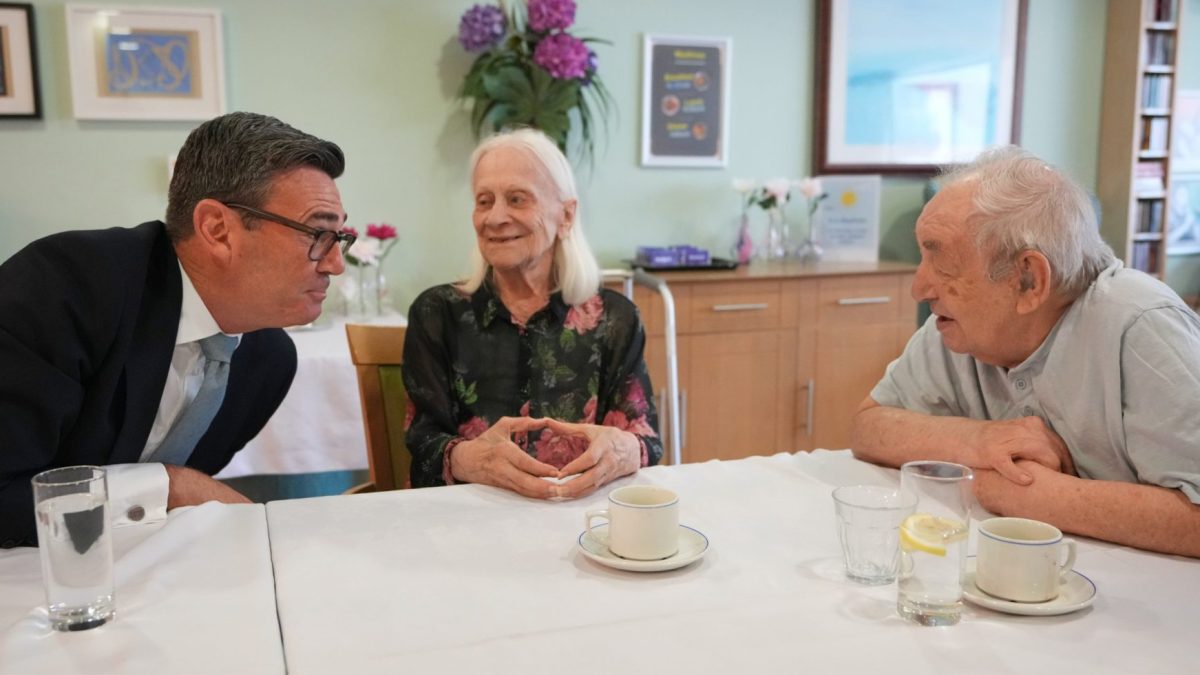
Care workers could be given dementia training – as more than half don’t receive any
Full Article
Original Source
Read the full article at Inews →KhanList aggregates and links to publicly available news content. We do not host full articles from third-party sources. Always verify important information with original sources.